



Tel Aviv, Washington cross red line with strikes on Iran







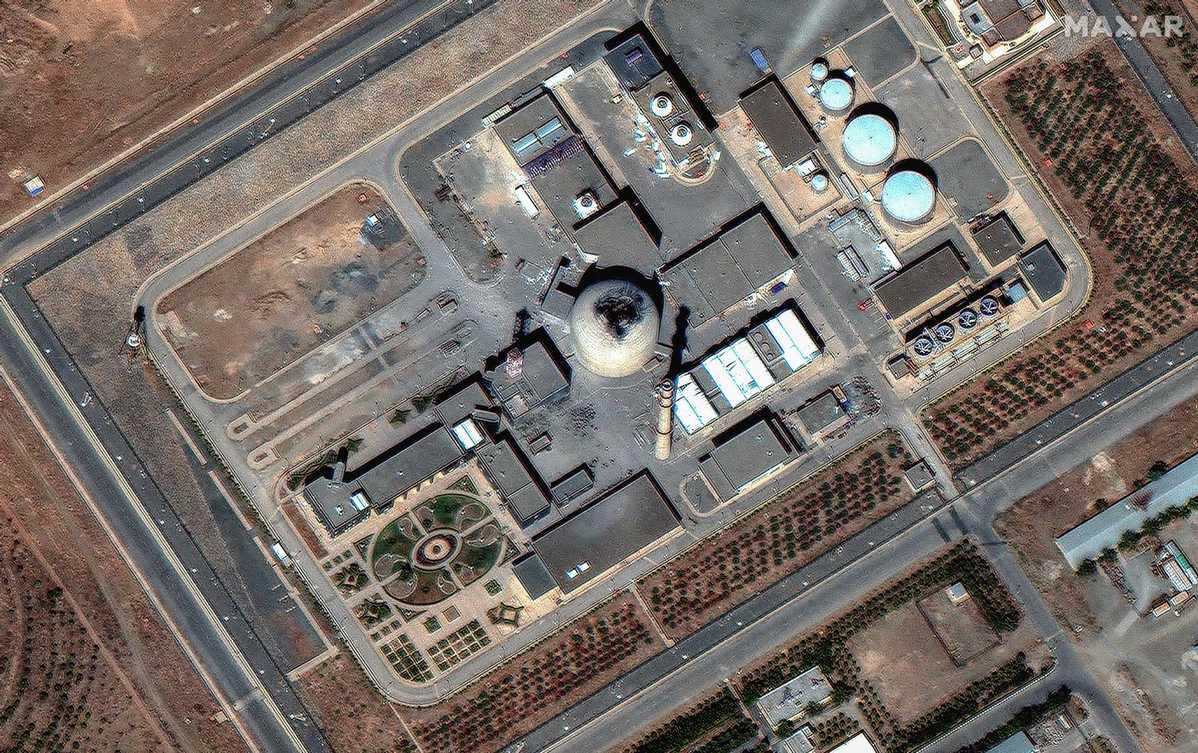
A dangerous threshold has been crossed. Israel's strikes on Iran's nuclear facilities signaled more than just another chapter in the Middle East conflict. It was only escalated by the United States' bombings of three key sites early on Sunday.
They mark the unraveling of one of the last global red lines: the sanctity of nuclear infrastructure. The implications go far beyond Israel and Iran. The entire international system — strained by great-power rivalries, weakened institutions and regional fragmentation — now teeters on the brink of collapse.
Nuclear sites — whether used for energy, research or enrichment — have long enjoyed de facto immunity from military targeting, because of the existential risk involved. The strikes on Iran's related facilities, especially in Natanz and Fordow, represent a deliberate breach of this understanding. Iran's immediate retaliatory missile strikes, which penetrated once-impeccable Israeli defenses, further underscore the normalization of catastrophic escalation.
This tit-for-tat exchange is taking place against a backdrop of international legal norms being eroded by power politics. Most alarming is not simply the military action, but the global reaction: muted, ambivalent, and in many cases, complicit.
The performance of Western leaders amounts to ridicule and trampling of truth, nuclear sanctity and rules-based order. US President Donald Trump dismissed the Congress testification of his own Director of National Intelligence Tulsi Gabbard that Iran was not building a nuclear weapon. He said he did not care what she said. In his view, Iran was "very close" to having a nuclear bomb.
In comments to the media at the G7 summit, German Chancellor Friedrich Merz said it was "dirty work Israel is doing for all of us" by carrying out strikes on Iran's nuclear sites, Deutsche Welle reported on Tuesday. Worse, instead of criticizing Israel for violating international law and risking nuclear contamination, Merz shocked the rest of the world by stressing: "I can only say I have the greatest respect for the fact that the Israeli army and the Israeli government had the courage to do this."
Yet in international law such "courage" and action Merz so cited are critical breaches of rules, violations of laws, and attacks on humanity and environment, spelling consequential disasters.
Still, Trump took the decision to strike Iran's atomic energy sites, boasting of US capability with "mother of all bombs" to strike the Fordow facility, which reveals disrespect for international law, lives and sovereignty, and disasters for the rest of the global community.
The Western community's response has exposed a deep hypocrisy. When Russian forces operated near the Zaporizhzhia nuclear facility in Ukraine, Western capitals erupted with outrage, invoking fears of nuclear catastrophe and triggering sanctions. Yet the strikes on Iran's nuclear sites — undeniably illegal under Article 2(4) of the United Nations Charter — have been met with equivocation. The very credibility of international law is collapsing under the weight of selective enforcement.
As some US critics pointed out, the presumption that Iran is close to developing nuclear weaponry has been circulated by Israel and the US for at least a decade, right before Iran, the US and Germany entered the Joint Comprehensive Plan of Action in 2015. Then it was the US under Trump's first term that broke its promise to Iran and other signatories, if not the whole world.
In contrast, Israel has been widely believed to have developed less than 100 nuclear warheads. Just before Israel's surprise attacks on June 13, Iranian authorities had been analyzing heavy loads of intelligence on Israel's nuclear weaponry. As Israel threatened all Muslim nations in the Middle East, leaders of Western powers remained silent, reticent if not encouraging, barring a rare outcry from Director General of the International Atomic Energy Agency Rafael Mariano Grossi on June 13 that "nuclear facilities must never be attacked, regardless of the context or circumstances, as it could harm both people and the environment".
The US and Germany are revealing to the whole world their ominous harboring of Israeli atrocities, and the fatuous nature of their disrespect for rules-based order their predecessors once touted as norms for all human beings. By trampling on international rules and norms on sovereignty and sanctity of atomic energy, Israel, the US and Germany are destroying their own credibility and raising concerns about the future safety of their nuclear facilities.
The precedent set by Israel will not remain geographically contained. India, for example, may feel emboldened to rethink its restraint toward Pakistan's strategic sites. Nuclear armament and the rhetoric of preemptive strike doctrine may be picked up by more countries, even US allies such as Japan and the Republic of Korea may reconsider their defense postures amid growing strategic ambiguity.
Principled approach
In this landscape of uncertainty, China and the Arab world have taken a principled stance, condemning Israel's strike as a violation of the United Nations Charter and calling for the observance of international norms prohibiting attacks on nuclear infrastructure under any circumstances. This position resonates with other members of the Global South, where resentment is growing against perceived Western double standards. This call is not simply rhetorical. It offers a blueprint for what a post-Western multilateral order could look like — one grounded in equity, sovereignty and universal application of international law.
Yet the danger of strategic nihilism is now real. The threshold to catastrophe is being lowered in plain sight. If the targeting of nuclear sites becomes an accepted part of warfare, no region, no matter how diplomatically neutral, is immune. The Middle East may be the epicenter today, but the shock waves will reach other regions tomorrow. This is not just a question of war or peace. It is about the future of mankind and whether we still believe in the idea of shared norms that transcend might.
The time has come for the Global South, including China, to move beyond condemnation. The threats posed by the collapse of nuclear restraint are too grave to be left to the usual diplomatic cycles. Practical, enforceable mechanisms must be established to prevent further acts of such character. Enhancement of international framework should be globalized or institutionalized through the UN or aligned with the China-proposed Belt and Road Initiative and Global Security Initiative, where all nations come together to ensure the security of each, one another and all.
Moreover, the role of the IAEA should be consolidated at the UN General Assembly, reaffirming that all strategic civilian infrastructure — nuclear facilities, dams, digital centers and energy hubs — must be declared off-limits, regardless of war or provocation, with due punishments for violating nations or parties.
The era of restraint is ending. A new architecture must rise in its place. The Global South cannot afford to be a bystander to the world's descent into strategic chaos. It must be its antidote. Time is no longer a luxury — it is a responsibility, for Western powers as well.
The author is a PhD in Political Science from the Department of Fundamental and Inter-Disciplinary Studies at the International Islamic University Malaysia.










