



Free trade agreement should be elevated to higher level







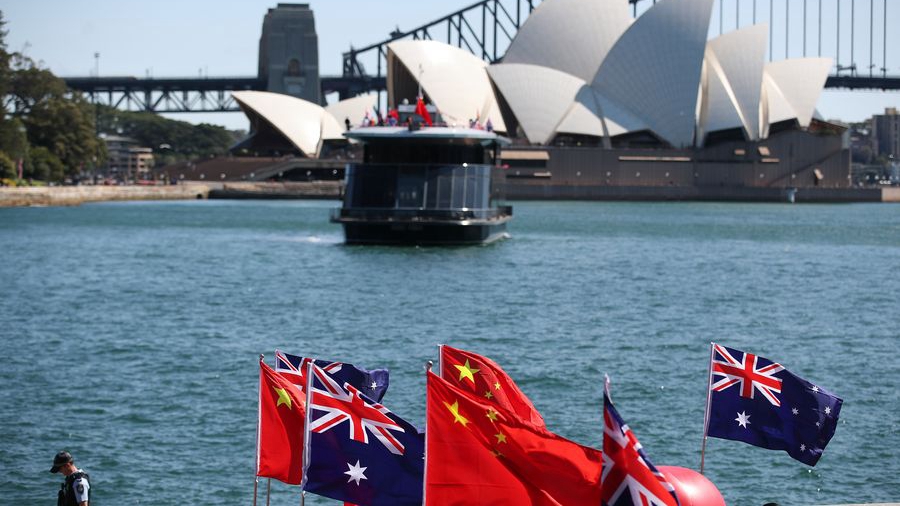
The negotiations for the China-Australia Free Trade Agreement began in 2005 and ran into the sand on several occasions, but officials on both sides persisted and kept it alive.
When I got involved in 2013, as Australia's Trade and Investment Minister, I found that officials from the Department of Foreign Affairs and Trade, led by Jan Adams, had a high level of enthusiasm and professional knowledge to get the deal done.
ChAFTA, which took shape in 2005 and was signed in 2015, was China's first comprehensive agreement with any G20 country and then had a long way to go.
My counterpart, Chinese chief negotiator and then commerce minister Gao Hucheng believed in the power of an open economy. He was keen to see an outcome that involved 100 percent zero tariffs on products and services traded between our two countries.
Despite initial skepticism in Australia and in the trade establishment in Geneva, Switzerland, Australia's trade with China has increased by 125 percent in the decade since its enactment, compared with an increase of 77 percent in Australia's trade with the rest of the world.
It confirms the view of then Australian prime minister, Tony Abbott, who said after the signing of ChAFTA on June 17, 2015: "What you have collectively done is history-making for both our countries — it will change our countries for the better, it will change our region for the better, it will change our world for the better."
Despite this evidence of the power of open economies, the Western world has begun moving from decades of integration and liberalization — which created millions of supply chains and removed billions of people from poverty — to a state of regression and of closing up economies.
We are seeing rising populism, growing isolation and nationalism, accelerating de-globalization and protection — all under the pretext of protecting economic security, where economic interdependence and trade reflecting comparative advantage is framed as a liability.
The emerging populist ideologies have no sustainable framework; they are a vehicle for expressing concerns about the pace and direction of change and current policies. While being destructive, they offer no effective alternatives.
Such populist ideologies offer short-term satisfaction by delivering a sense of revenge, but the inevitable major uncertainty in international politics and business stymies global investment, closes millions of supply chains, curtails economic growth and innovation and increases fears and apprehension of the general population.
History shows that this promotes authoritarianism and undermines hard-won freedoms, democracy and happiness, with the large and strong doing what they will, and the smaller and weak suffering what they must.
The United States does not become greater through making allies into supplicants. Australia is a sovereign nation not to be bullied and intimidated.
Most would wish to see a competent and responsible US presence, not one that forces them to choose between two systems.
So, what do we do given the astounding success of ChAFTA, but the progressive closing up of the West, and US attempts to Balkanize the world?
We can't just sit around complaining. We should shine a huge light on our fundamental opposition to returning to a closed world of elite narcissism.
We should make an unequivocal statement of where we stand by taking our existing free trade agreements to a higher level, and also by initiating a bold free trade initiative to create one truly Asia-Pacific free trade zone by combining the Comprehensive and Progressive Agreement for Trans-Pacific Partnership and the Regional Comprehensive Economic Partnership.
Such a combined trade agreement would recognize the reality that while the West is closing up their economies, Southeast Asian countries and India are rapidly opening up theirs. Billions of dollars are being invested and tens of millions of people are joining the middle class. Free trade works.
Finally, with regard to ChAFTA, nothing stands still. So much innovation has taken place in the 10 years since its signing.
Three yearly reviews are featured in the agreement, and I understand a comprehensive review and upgrading is taking place.
Issues such as open skies in Australia, high-tech healthcare and aged care, mining, education and training, water management and environmental services, fintech, agricultural services, renewable developments, artificial intelligence, data management, blockchain developments, manufacturing inputs, autonomous vehicles, drones, investment policies and so much more are up for review.
Developments on all these fronts are occurring in both our countries, and a comprehensive review of ChAFTA can set Australia and China on the path to another decade of spectacular growth in trade and investment.
China and Australia have proven the potential for peace and harmony by the establishment of diplomatic relations more than 50 years ago. This created the context in which the people of our two nations could slowly, but surely, grow in the knowledge of, and respect for, one another.
It created the growing awareness that what China was good at, Australia needed, and what Australia was good at, China needed — it gave effect to the highly complementary nature of our two economies.
ChAFTA gives impetus and substance to the fact that Chinese and Australian business people are very comfortable doing business with one another.
Long may it last.
The author was Australian minister for trade and investment from September 2013 to February 2016. The views do not necessarily reflect those of China Daily.










