Xi's upcoming visit to advance China-Central Asia community with shared future







BEIJING -- For centuries, China and Central Asian nations have shared close bonds through mutual learning and exchanges underpinned by deep historical ties, solid public support and strong practical needs.
Two years ago, the inaugural China-Central Asia Summit was held in Xi'an, capital of Northwest China's Shaanxi province. Since then, cooperation between China and Central Asian countries has yielded even more tangible and fruitful outcomes.
At the invitation of Kazakh President Kassym-Jomart Tokayev, President Xi Jinping will attend the second China-Central Asia Summit in Astana, capital of Kazakhstan, from June 16 to 18. The summit is expected to take the six countries on a new journey toward building a closer China-Central Asia community with a shared future.
GROWING PARTNERSHIP
More than 2,100 years ago, Han Dynasty envoy Zhang Qian's journey to western regions ushered in China-Central Asia friendly exchanges. The legacy of the ancient Silk Road has evolved and acquired more profound significance nowadays.
Xi first proposed in Kazakhstan in 2013 the initiative to jointly build the Silk Road Economic Belt, an essential component of the Belt and Road Initiative (BRI).
With the launch of the China-Central Asia mechanism and the regular China-Central Asia Foreign Ministers' Meeting mechanism in 2020, collaboration has deepened across sectors.
In January 2022, Xi chaired a virtual summit to commemorate the 30th anniversary of diplomatic relations between China and Central Asian countries. During the summit, the parties proposed upgrading the China-Central Asia mechanism to the level of heads of state.
Moreover, the decision to establish a mechanism for meetings among the heads of state of China and Central Asian countries was announced at the first China-Central Asia Summit held in May 2023.
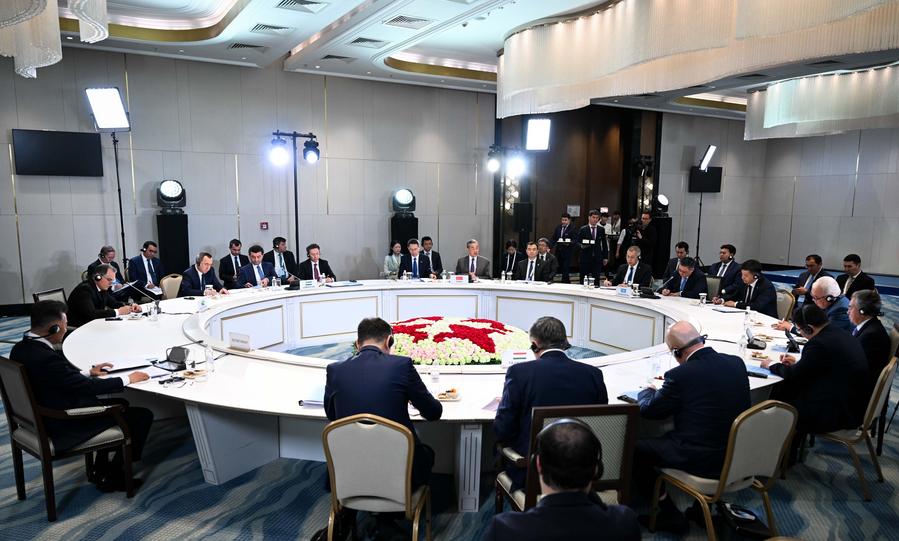
Deepening China-Central Asia cooperation is in line with the prevailing trend of the world and the expectations of the people, said Xi when addressing a welcome banquet for Central Asian leaders attending the first summit held in Xi'an, capital of Shaanxi province.
With the upgrading of the all-around and multifaceted framework, efficient ministerial mechanisms now support cooperation in trade, investment, agriculture, customs, public security and more.
Today, China has established comprehensive strategic partnerships, signed Belt and Road cooperation documents and implemented the vision of building a community with a shared future at the bilateral level with all five Central Asian countries.
Ismail Dairov, director of Kyrgyzstan's think tank the Regional Mountain Center of Central Asia, noted that Central Asia and China share a thousand-year history of exchanges. Today, within the framework of the BRI, both sides are strengthening ties and cooperation at an unprecedented pace, he said.
TOWARD MODERNIZATION
On April 29, the work to build three key control tunnels in Kyrgyzstan's section of the China-Kyrgyzstan-Uzbekistan railway commenced. The railway is an iconic BRI project backed by the three nations' leaders, symbolizing shared efforts to boost connectivity and prosperity in the region.
Kyrgyz political scientist Kubanychbek Taabaldiev called the move "a great achievement of bilateral relations between China and Central Asia" that would take the ongoing projects into a new phase and "bring benefits from both economic and political points of view."
"The world needs an interconnected Central Asia," said Xi in his keynote speech at the first China-Central Asia Summit. Since then, the two sides have explored further cooperation to enhance infrastructure development for seamless and efficient connectivity.
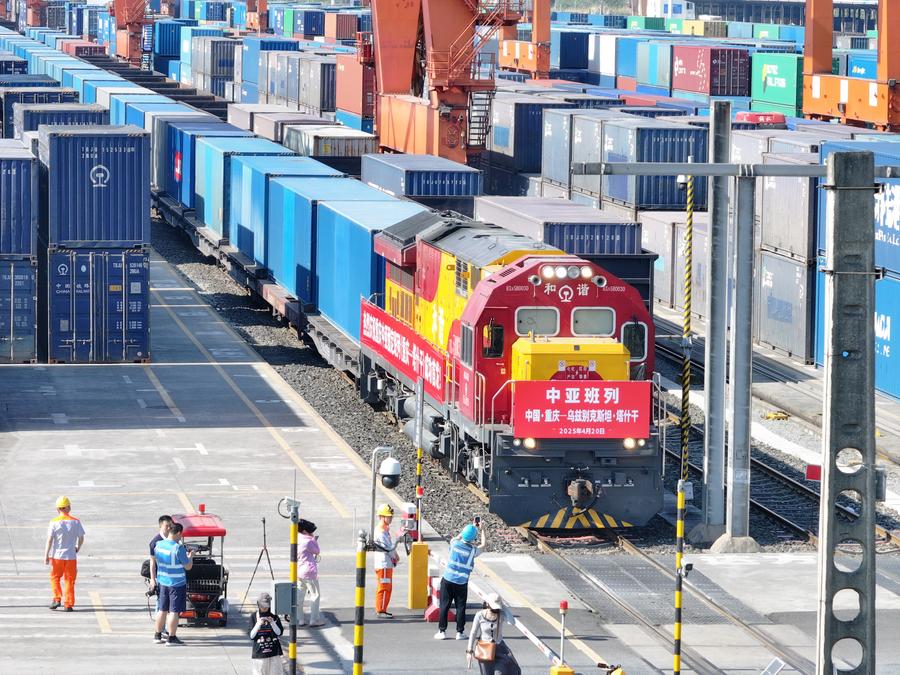
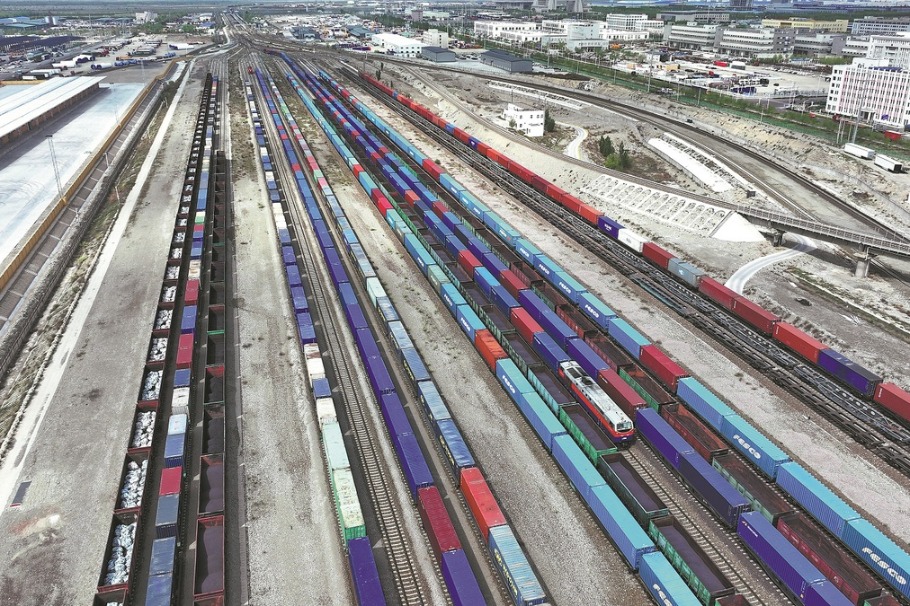
Much progress has been achieved: Central Asia freight trains are running regularly as official railway data showed 4,725 trips were made in the first four months of 2025, up 21 percent year-on-year; the Kazakhstan-Xi'an Terminal officially began operations in February 2024 and is currently operating at a high level of quality; and the construction of the Trans-Caspian International Transport Corridor has made steady progress.
New logistics routes, including rail, road and air, now transport Chinese appliances, consumer goods and electric vehicles to Central Asia, while high-quality Central Asian products such as fertilizers, cotton, beef and mutton are reaching China faster than ever.
Beyond transport and logistics networks, cooperation is expanding into agriculture, IT, clean energy and cross-border e-commerce, supporting industrial upgrades and better livelihoods.
According to China's General Administration of Customs, China-Central Asia trade reached $94.8 billion in 2024, a record increase of $5.4 billion from the previous year.
Strengthening regional connectivity cannot only promote economic integration, but also deepen exchanges and understanding between civilizations, laying a solid foundation for regional stability and development, said Zaynidin Kurmanov, vice-president of the Diplomatic Academy of Kyrgyzstan and former Kyrgyz Parliament speaker.
CLOSER HEARTS
From tourism to vocational education cooperation, from cultural exchanges to archaeological cooperation, Chinese and Central Asian people are being brought closer through in-depth and lasting dialogues at all levels, as well as mutual learning among civilizations.
Recently, a tourist train accomplished the first cultural trip between Xi'an, China and Almaty, Kazakhstan. Special train services for cultural tourism in Central Asia are among a series of programs to strengthen dialogue between civilizations as promoted by Xi at the first China-Central Asia Summit.
This year marks the China tourism year in Kazakhstan and Uzbekistan's year of tourism in China. More and more Chinese tourists enjoy the convenience provided by visa-free travel agreements between China and Central Asian countries, including Kazakhstan, Uzbekistan. China's seaside cities have also become common destinations for Central Asian visitors.
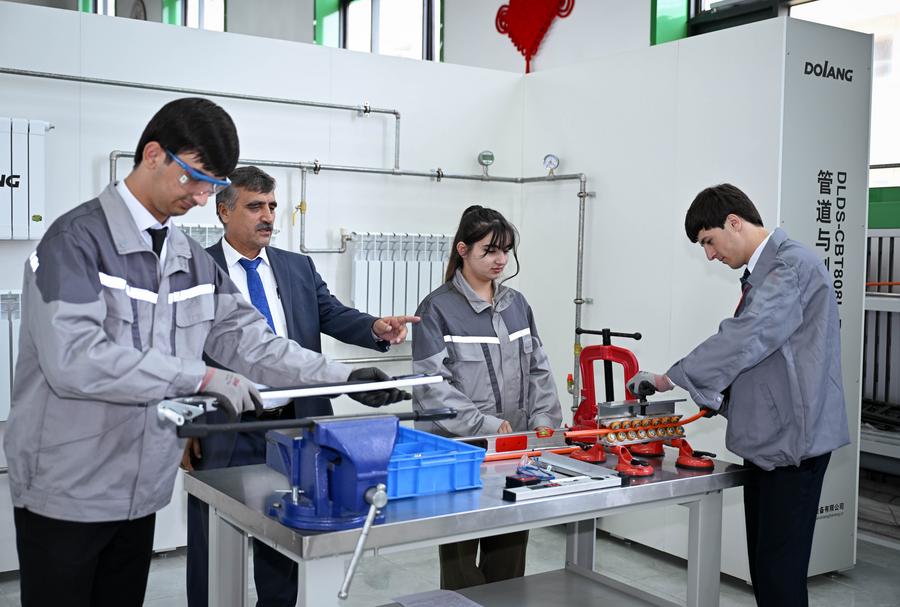
China and Central Asian countries have also actively promoted vocational education cooperation programs. The Luban Workshop, which has been operating in Tajikistan for more than two years, has also been launched in Kazakhstan, Kyrgyzstan and Uzbekistan to cultivate future technical talents and provide opportunities for Central Asian youths.
"We are training engineers under the Luban Workshop project. It's not just about education, but also cultural exchange," said Mirlan Chynybaev, rector of Kyrgyz State Technical University that manages the workshop.
With the establishment of Chinese Cultural Centers and Confucius Institutes, Chinese language fever and "China fever" are heating up in Central Asian countries, bringing more and more young people to study in China.
According to Yagshy Ayjanov, a startupper from Turkmenistan who operates a company with his Chinese friends in Xi'an, their company in 2024 has provided various kinds of study services for over 800 people who want to come to China, and most of them were from Central Asia.
"After the first China-Central Asia summit, we can clearly feel that Central Asian students have shown a stronger willingness to study in China as China means more opportunities and better employment prospects," Ayjanov said.
Ruslan Kenzhaev, deputy editor-in-chief of the leading Uzbek newspaper Narodnoe Slovo, pointed out that through deepening economic cooperation, promoting infrastructure development, advancing technology and people-to-people exchanges, Central Asian countries and China have developed a model of sustainable cooperation based on mutual respect and shared visions.

- Rare species return to Qilian Mountains
- Participation of public key in sustainable protection
- Satellite boosts early disaster warnings
- Company makes strides in biodegradable plastic
- Ningxia villagers say goodbye to sooty homes, hello to clean, green houses
- Mock trial, Yangtze exhibition help mark cultural heritage day