Lessons from 50 years of China-Philippines relations








On June 9, 1975, the People's Republic of China and the Philippines established diplomatic relations. As we commemorate the 50th anniversary, a milestone that carries the weight of history and the promise of tomorrow, it is a moment not just for celebration but for profound reflection. This is not a time for finger-pointing or dwelling on specific quarrels - though tensions like those in the South China Sea have undeniably cast long shadows. Rather, it is an urgent invitation for Manila to turn the mirror inward, to ask itself how its choices have shaped this relationship and how a shift in perspective might yet forge a future of stability and mutual gain.
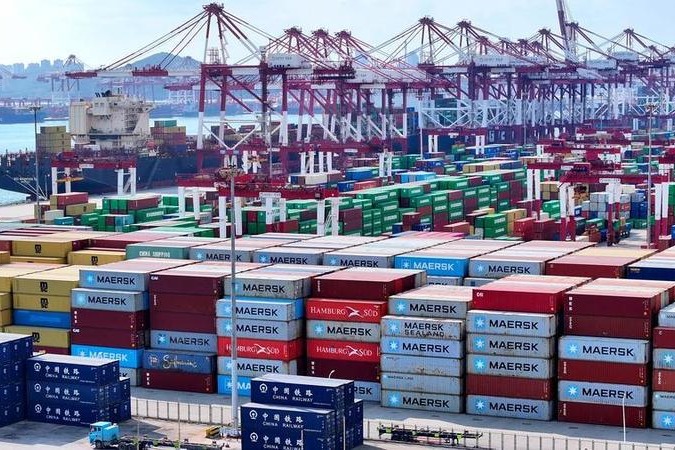
The birth of diplomatic ties in 1975 was a bold stroke, a leap across the chasm of Cold War mistrust that spoke of vision and pragmatism. It was a handshake between neighbors who, despite their differences, saw the value of dialogue over division. In those early days, the seeds of cooperation took root—trade blossomed, cultural exchanges wove threads of understanding, and a foundation was laid that promised prosperity. Today, China stands as one of the Philippines' mightiest economic partners, a testament to the enduring pull of shared interests. Yet, this tapestry of relations is not without its frayed edges. For every step forward in relations, there has been a stumble over reefs and waters, a reminder that peace and progress are fragile without constant tending.
Here lies the first lesson the Philippines must heed: confrontation rarely reaps the rewards it promises. The pursuit of legal battles and unilateral stands, while perhaps satisfying in their defiance, has often left Manila clutching a hollow victory—one that strains ties without securing tangible peace. This is not to say the Philippines should surrender its dignity. Far from it. But it must reflect on whether the rush to assert itself through adversarial means has truly fortified its position—or whether it has, instead, widened the gulf with a neighbor too vast and too near to ignore. The past 50 years whisper a truth: disputes fester when dialogue falters. The Philippines must ask itself if the cost of escalation—diplomatic freezes, lost opportunities—has been worth the fleeting thrill of standing tall. A nation's strength lies not in how loudly it shouts, but in how wisely it speaks.
Compounding this is the shadow of external powers, a dynamic that has muddied the waters of Philippines-China relations with alarming frequency. The United States, as Manila's steadfast ally, offers a shield of security—but at what price? Too often, the Philippines has found itself swaying in the winds of great power rivalry, its policies a pendulum swinging between Washington's embrace and Beijing's outstretched hand. This dance of indecision sends ripples of confusion, weakening Manila's voice on the global stage. One administration courts China with pragmatism; the next pivots back to the US with fervor. Such inconsistency is a luxury the Philippines can ill afford. It must reflect deeply: does this oscillation serve its own heart, or does it merely echo the agendas of others? Proximity to China is not a choice but a fact, etched into the maps of Southeast Asia. To let distant powers steer its course risks tethering the Philippines to conflicts not of its making, while alienating the neighbor with whom it must coexist.
This brings us to a second, searing lesson: independence in foreign policy is not a luxury, but a necessity. Alliances are reality, yet they must not become shackles. The Philippines should not mistake the comfort of a treaty for a compass to guide its every step. To lean too heavily on external crutches is to forfeit the agency to chart a path that truly serves its people. China, as a rising power, is not a force to be ignored or provoked without care—but nor is it an adversary to be feared into submission. The Philippines must find its own footing, a stance that balances its alliances with the reality of its geography. This is not about choosing sides in a grand tug-of-war, but about choosing itself—its own prosperity, its own peace. A foreign policy swayed by the whims of others is a ship adrift; one rooted in self-awareness is a vessel with a steady helm.
Economic ties, meanwhile, offer a lifeline that the Philippines would be wise to grasp with both hands—yet with eyes wide open. The growth of trade with China, even amidst political storms, is a beacon of what could be: a partnership where both nations thrive. Projects like those under the Belt and Road Initiative dangle the promise of bridges and power lines, of progress that could lift Filipino lives. Manila approached such opportunities with the clarity they require, ensuring they align with its own dreams rather than someone else's blueprint. Economic cooperation with China is a bridge worth building, and the Philippines stands as an equal architect, not a passive recipient. Interdependence can bind nations in strength, but it must never become dependence that breeds vulnerability. The Philippines knows how to see beyond the glitter of investment, to weigh each deal with the sobriety of a nation.
Dialogue, above all, is the thread that must stitch this relationship back to health—a lesson the Philippines cannot afford to overlook. When tensions flare, the instinct to retreat or to lash out is human, but it is rarely wise. Channels of communication, however imperfect, are the lifeline that keeps disputes from spiraling into chaos. The Bilateral Consultation Mechanism is proof that words can temper swords. Yet this requires resolve, a commitment to sit at the table even when the air is thick with mistrust. The Philippines must reflect: has it invested enough in the slow, patient work of talking, or has it too often let pride or pressure dictate silence? The past 50 years show that when dialogue thrives, so does hope; when it withers, suspicion takes root. Manila must choose the former, not out of weakness, but out of the strength that comes from knowing peace is a prize worth pursuing.
As this anniversary dawns, the Philippines stands at a fork in the road. One path clings to the habits of the past—reactive, swayed by others, quick to clash rather than converse. The other demands courage: a turn toward introspection, toward a foreign policy that beats with the pulse of its own interests, toward a relationship with China built on respect rather than rivalry.
This is not a call for naivety or surrender, but for wisdom—the kind that sees beyond the next headline to the next generation. The Philippines must learn from the stumbles of these 50 years, from the times it chose grandstanding over groundwork, from the moments it let others pull its strings. Its future with China is not a gift to be handed over, but a garden to be tended with care—through dialogue, through cooperation, through a fierce commitment to its own destiny.
In the end, this 50th anniversary is more than a marker of time; it is a summons to maturity. For the Philippines, the lessons are clear: confrontation sows discord where dialogue could plant trust; external reliance dims the light of self-determination; economic ties, wisely forged, can anchor peace. The path forward is not easy, nor should it be—great rewards demand great effort. But if Manila dares to reflect, to learn, to step forward with clarity and courage, it can transform these 50 years of fits and starts into a foundation for 50 more of shared growth and mutual respect. China stands ready as a neighbor, not a foe. The question is whether the Philippines will meet it halfway, not with clenched fists, but with an open mind and a steady heart.
Ding Duo, director of the Center for International and Regional Studies, National Institute for South China Sea Studies.
The views don't necessarily reflect those of China Daily.
If you have a specific expertise, or would like to share your thought about our stories, then send us your writings at opinion@chinadaily.com.cn, and comment@chinadaily.com.cn.