



Time for US to return to rules-based trade order







The world economy stands at a precipice. The reckless escalation of unilateral tariffs and trade wars — spearheaded by the United States — has not only destabilized global markets but also betrayed the fundamental principles of economic rationality and multilateral cooperation. The consequences are already manifesting: slowing growth, resurgent inflation and the specter of a US recession.
Meanwhile, China has consistently championed a rules-based international trade order, recognizing that mutual prosperity, not zero-sum conflict, is the only sustainable path forward. The truce that resulted from the US-China talks in Switzerland represents a critical opportunity to avert further damage — but only if Washington abandons its self-defeating protectionism and embraces pragmatic cooperation.
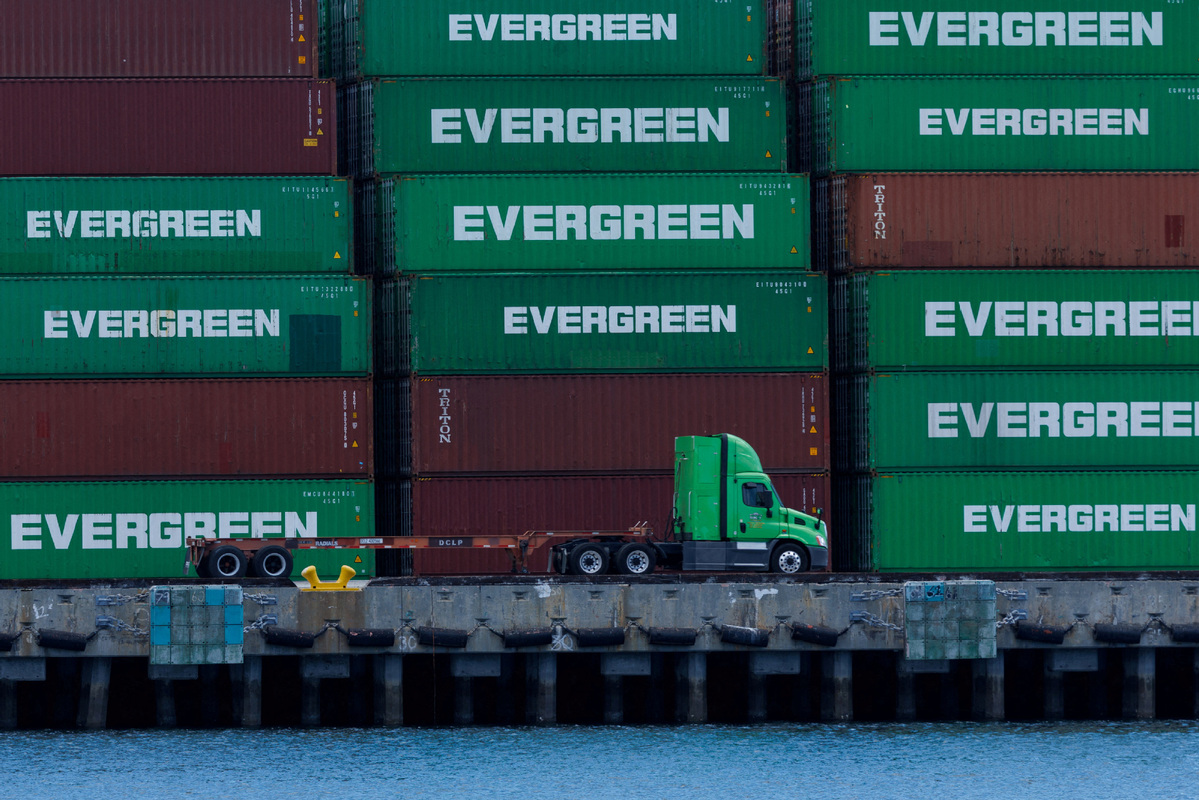
The economic consensus is unequivocal: Trade wars are lose-lose propositions. The West-led International Monetary Fund, the Organization for Economic Cooperation and Development and the World Bank have all warned that the Donald Trump administration's tariffs will inflict severe harm on the global economy, with the US itself among the hardest-hit. US businesses and consumers are already paying the price — container shipments from China have plummeted 60 percent, and J.P. Morgan predicts an 80 percent drop in Chinese imports by year's end. The inevitable result? Shortages, price spikes and economic contraction.
China, by contrast, has responded with calibrated restraint. While taking countermeasures against US tariffs to defend its interests, Beijing has also signaled openness to dialogue — provided it is based on "equality and mutual benefit", not coercion.
This measured approach reflects China's broader commitment to global stability and its high-level diplomacy, in stark contrast to Washington's shockingly erratic and unpredictable protectionism.
The US and China are the two engines of the global economy. Their trade relationship is not merely transactional but foundational to supply chains, technological innovation and financial markets. Severing this interdependence would be economically catastrophic — akin to attempting "decoupling" with a chain saw rather than a scalpel.
Consider the facts. First, supply chain collapse. The Port of Los Angeles reports a 35 percent drop in cargo volume, with canceled shipments rippling through US manufacturing and retail sectors. Second, market volatility. Wall Street's rebounds on news, or rumors, of positive developments in the US-China trade war underscore investor desperation for de-escalation. Third, global spillover. The IMF warned that escalating tariffs could slash global GDP growth by up to 1.5 percent — a disaster for developing nations already grappling with debt and inflation.
China's recent monetary stimulus measures — such as reserve requirement ratio cuts — demonstrate its capacity to stabilize its economy. But no nation, not even the US, can thrive in isolation. The only viable and sensible solution is cooperation, not confrontation.
History will judge this moment harshly if shortsighted, barbaric and jingoistic nationalism prevails. The world's two biggest economies, the US and China, are not destined for conflict; they are compelled by shared interest to cooperate. Trade wars are not just economically ruinous — they are morally indefensible, defy common sense, unfairly punish workers and small businesses, stifle innovation, and severely destabilize the global order.
China's stance is clear and has been repeatedly reiterated: It seeks partnership, not domination. Washington must now choose — between destructive, chaotic unilateralism, or a return to rational, rules-based trade. The world is watching, and the stakes could not be higher.
The author is an economics and politics analyst, an award-winning columnist of the Philippine Star and Abante newspapers, a book author, and a moderator of the Pandesal Forum.










