


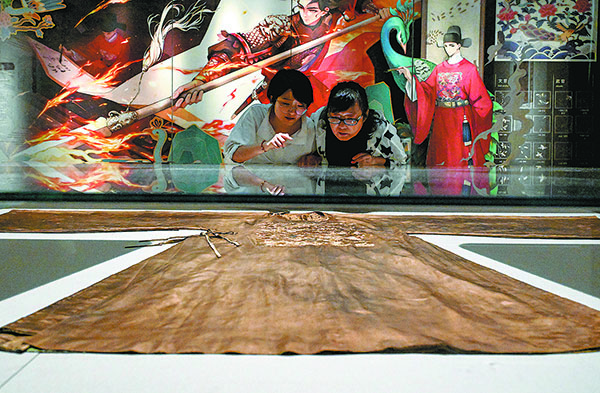
NANJING — A growing number of visitors are flocking to the Suzhou Silk Museum, one of only two state-owned museums in southern China dedicated to silk. The other one is the China National Silk Museum in Hangzhou.
Located in the historic city of Suzhou, the silk museum welcomed 522,000 visitors last year, more than double the number from 2023. As of April this year, the museum had already received nearly 200,000 visitors.
Many visitors, especially young people, stop by the museum's gift shop that offers a variety of products made from or inspired by silk, with some visitors arriving dressed in traditional Chinese-style silk garments.
Museum curator Qian Zhaoyue says more young people are now willing to wear traditional silk garments and embrace silk-based products. "With China's economic development and the rise of interest in traditional Chinese culture and fashion among the public, people are more eager to reconnect with fine traditional culture," he says.
Chinese silk has enjoyed global popularity since ancient times. Today, in addition to traditional markets such as the European Union and the United States, exports now reach the BRICS nations and countries involved in the Belt and Road Initiative. According to Qian, China currently produces over 80 percent of the world's raw silk and silkworm cocoons. In the museum, a dedicated exhibition area illustrates the life cycle of silkworms and the silk production process. All Chinese silk is produced from the fibers spun by domesticated silkworms.
China is recognized as the first country in the world to raise silkworms, with silk weaving traditions dating back approximately 4,800 years. Archaeological findings have also discovered components of looms from the Neolithic period. The Jiangnan region — referring to the modern-day Yangtze River Delta — has historically been a major hub of silk production. Since the Ming (1368-1644) and Qing (1644-1911) dynasties, Suzhou has served as a center for silk supplied to both the imperial court and overseas markets. The Suzhou Silk Museum now stands on the original site of a silk factory established in 1931.
Inside the museum, visitors can see dazzling silk garments, including an original Ming Dynasty official's robe and a replica of a ceremonial dress owned by a Song Dynasty (960-1279) empress, both adorned with delicate patterns that shift colors in the light.
Exhibits also feature looms for making Song brocade, a type of fabric developed during the Song Dynasty, and Zhang satin, an artistically distinctive silk fabric originated in Fujian. The Zhang satin loom stretches 8 meters long and 3.6 meters high.
According to Qian, by the late Ming Dynasty, there were over 120 known silk dye colors used in Suzhou's silk garments. During the Ming and Qing dynasties, Suzhou's eastern city area was a vibrant silk production center, its products influencing trends nationwide.
Qian believes that the history of silk reflects the evolution of China's history, culture, science, daily life and economy. Through the Silk Road, China established connections with the rest of the world.
"Silk is a symbol of global cultural exchange, a bearer of Chinese aesthetics, and an embodiment of Eastern beauty at its finest," he says.
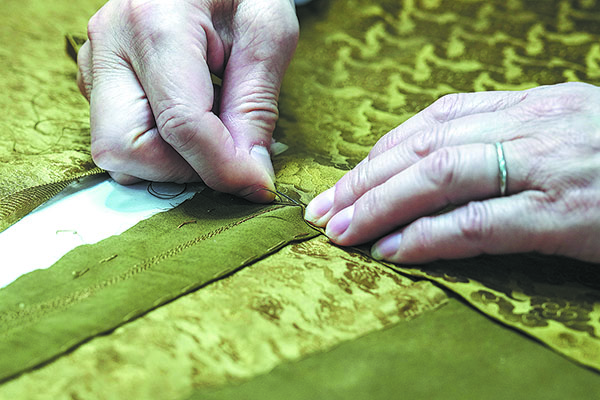
The Suzhou Silk Museum hopes to demonstrate silk's contemporary applications. Examples displayed in the museum include the ceremonial attire for the 53rd World Table Tennis Championships and the leaders' clothing for the 22nd APEC Economic Leaders' Meeting — both were inspired by Song brocade with modern reinterpretations.
"Our goal is to bring the beauty of silk into more industries and areas of daily life through the museum," Qian says.
The museum is currently working with the School of Artificial Intelligence at Beijing University of Posts and Telecommunications to collect, extract, and analyze patterns from ancient silk textiles and adapt them for modern use. The licensing price of a digitalized piece of silk pattern has reached 300,000 to 400,000 yuan ($42,000 to $56,000).
Modern applications of silk and silk-inspired designs include handbags and scarves sold at the museum's gift shop, as well as skin care product packaging and even exterior features of vehicles. In cooperation with China's lunar exploration program, the museum also designed a special space suit with a traditional silk-based pattern for its mascot, "To Star", or "Rabbit Star".
Rising demand for silk has also stimulated the growth of the sericulture industry. Scientists are now working to develop alternative feed sources to replace limited mulberry leaves and enable silkworms to grow in winter and produce silk in specific colors.
The museum has expanded its international outreach, welcoming more visitors from various countries. It has also worked with the Confucius Institute to display selected silk garments in Venice.
"Silk transcends language barriers and promotes cultural exchange," says Qian. "Today's Silk Road is connecting the world in new and meaningful ways."








