



Trade dispute masks US' declining global influence







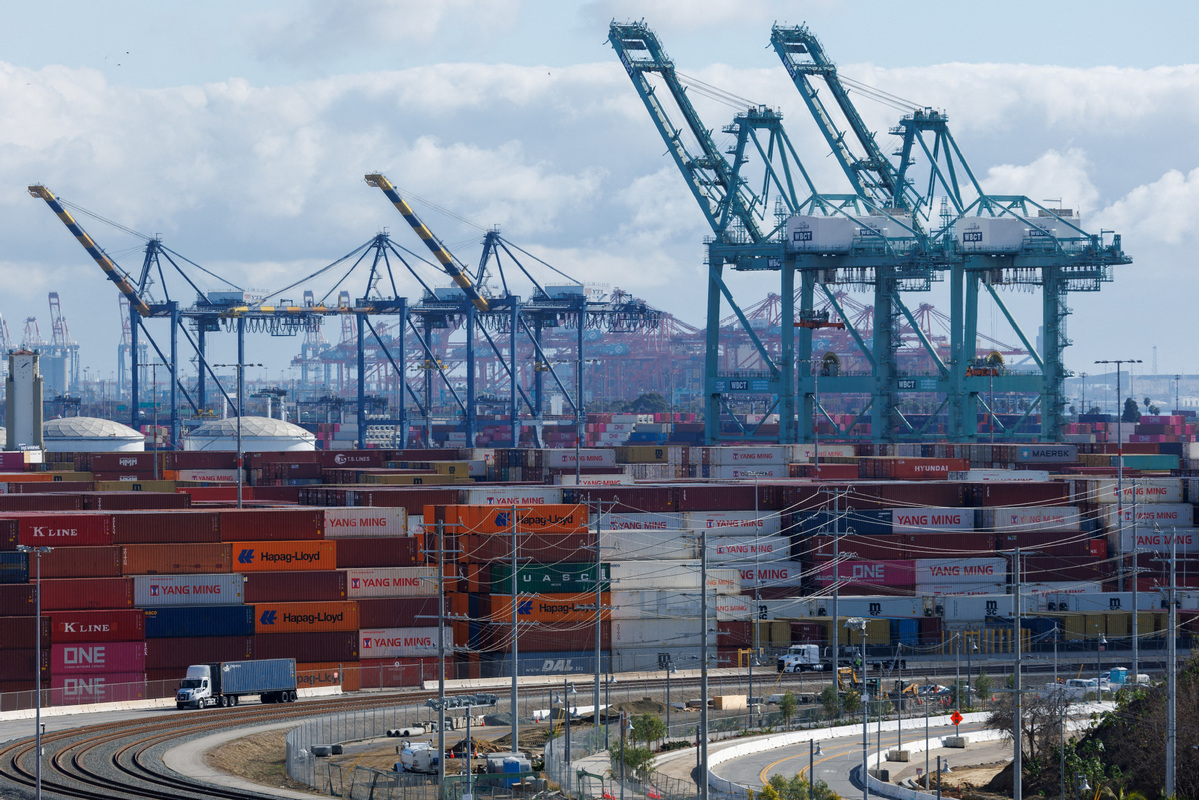
There is more to the current tariff and trade dispute than meets the eye. On the surface, the tariffs may seem to be the result of the White House's dissatisfaction with the chronic trade deficits with its largest trading partners, especially China, and its loss of manufacturing. But it is deeper than that. China, with its scale and steady growth, has been the primary driver behind the momentum for a fairer world order, in which the United States is losing dominance, leading to the current trade and tariff escalations.
In the past 25 years, there has been a significant reversal in the global economic, trade and manufacturing positions of the US and China. While the US contributed about 12 percent to the world's total exports in 2000, three times more than China (at 4 percent), China now accounts for a share 1.7 times bigger than that of the US. Furthermore, China's current manufacturing output is twice that of the US, a stark contrast to accounting for less than a third of it 25 years ago.
These metrics demonstrate China's rapid growth as a major economic, trade and manufacturing powerhouse over the past two and a half decades, driven by factors such as the development of domestic manufacturing capabilities, embrace of globalization and integration into global supply chains. They also reflect the shifting dynamics in the world order, with China confidently increasing its importance and relevance while the US' role and influence have become relatively smaller.
The US trade deficit and deindustrialization are not recent phenomena and are not caused by China. They are the consequences of long-term structural changes in the US economy since the end of World War II. The US had been recording current account deficits well before China emerged as a global economic and trade power.
Statistics show a clear long-term decline in both the manufacturing share of the US GDP and the US share of global manufacturing output over the last eight decades. The share of manufacturing in the US GDP has decreased sharply over decades, while the share of services has steadily expanded to approximately 80 percent by 2024.
This fundamental change in the US GDP composition, in addition to the rise of new manufacturing hubs, is reflected in the waning US share in total world manufacturing output, coming down from the peak of 50 percent in 1945 to around 16 percent in 2024.
The US has had a consistent trade deficit every single year since the mid-1970s. Now, the US has trade deficits with most of its major trading partners. Additionally, the US has not balanced its budget since 1970, apart from a brief respite during the second administration of former US president Bill Clinton. Therefore, over the last 50 years, the US has persistently recorded double deficits, culminating in today's debt-to-GDP ratio of more than 120 percent.
The current tariff hikes are a direct result of the lack of will or ability to implement domestic reforms and deep-seated insecurity about the US' eroding global standing. Instead of addressing the internal problems head-on, external factors, especially China, are being blamed for the current account imbalance and disappearance of manufacturing.
More specifically, those tariffs are part of a long series of tactical actions — with no apparent strategy — that the US has taken against China after the announcement of the "Pivot to Asia" strategy in 2011. Since then, the designation of China as a "strategic partner" or "stakeholder" in US official documents and policy discussions has gradually disappeared.
In the most recent US National Security Strategy and the National Defense Strategy, China is referred to as "America's most consequential geopolitical challenge" and "the most consequential strategic competitor for the coming decades".
The significant actions following the first wave of tariff increases in 2018, compounded by the impact of COVID-19 and the ongoing trade disputes, underscore the failure of previous US endeavors to restrain China's ascent. China's sturdy growth and increasingly influential role in the world have heightened the US' anxiety about its global position.
The US' inability to derail China's development or curtail its growing international weight has been highlighted by two former US officials in a recent book, Lost Decade: The US Pivot to Asia and the Rise of Chinese Power. They clearly explain and passionately lament how the US "squandered" the opportunity to counter China's rise during the 2011-21 period.
Therefore, some US strategists have considered the current decade a critical window for containing China's progress while simultaneously hoping to arrest the decline of US global relevance. This thinking explains why some US politicians have advocated more aggressive policies toward China during the second half of the 2020s, viewing it as a closing window of opportunity for effectively preventing China's march forward.
China's legitimate pursuit of economic development and prosperity is organically driving substantial changes in the global economic, trade, technological and geopolitical landscape. Nevertheless, the US, supported by a diminishing number of allies, views China's growth as a threat to its privileged place in the international system.
There are no victors here; all parties involved, including the global community, will suffer from the detrimental outcomes of these unwarranted and imprudent unilateral trade escalations. The multipolar world is an inevitability; it is too late, futile and self-defeating to fight it now. It is time for those who have not adjusted their mental models to undergo a paradigm shift and accept the new reality of a world that is to be shared fairly, democratically and equitably by all nations and regions.
The author is former adviser to the chairman of the Abu Dhabi Executive Office and an Asia Global fellow at the Asia Global Institute of the University of Hong Kong.










