



Clinics to take on nation's waistline
Guideline instructs major hospitals to open targeted weight management facilities







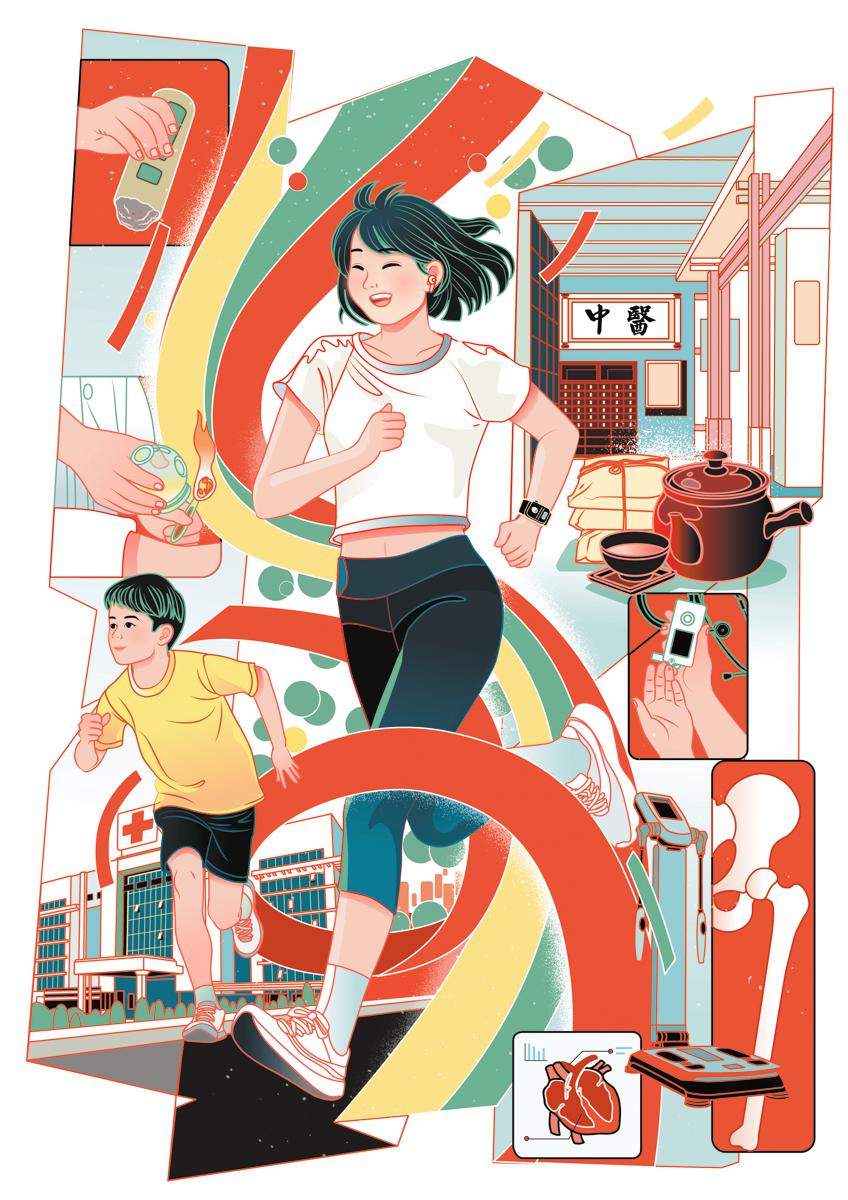
All major hospitals in China will establish weight management clinics by the end of next month, according to a guideline released last month by the National Health Commission and National Administration of Traditional Chinese Medicine.
The requirement applies to all general hospitals, pediatric and traditional Chinese medicine hospitals under direct administration by the commission, the administration and provincial-level authorities.
Other tertiary hospitals at the top of the nation's three-tier hospital system are also encouraged to establish weight management clinics.
The guideline clarifies that a weight management clinic should be staffed by specialists in the fields of pediatrics, general practice, endocrinology, nutrition, psychiatry and psychology, cardiovascular medicine, gastroenterology, general surgery, rehabilitation and TCM.
It added that hospitals with strong capabilities are encouraged to establish obesity prevention and control centers and provide hospitalized services.
Official data shows that more than half of Chinese adults are either overweight or obese. From 2018 to 2022, the number of overweight adults rose from 22.8 percent to 34.3 percent, and those classified as obese more than doubled from 7.1 percent to 16.4 percent.
Among children and teenagers aged 6 to 17, more than 11.1 percent are overweight and nearly eight percent are obese.
"Research suggests that without effective measures to tackle the upward morbidity trend, prevalence of being overweight or obese among adults is expected to reach 70.5 percent by 2030, with the rate among children climbing to 31.8 percent," said the commission, adding that weight problems among rural residents will be more severe than in urban areas.
Excess weight is closely linked to increased risks of chronic conditions and other serious health problems.
Wang Youfa, head of Xi'an Jiaotong University's Global Health Institute, said that the incidence rate of high blood pressure among adults is projected to rise to 35.4 percent by 2030 without significant action to curb obesity. The rate for 2019 stood at 27.5 percent.
The incidence rate of diabetes among adults is estimated to increase to 18.5 percent in 2030 from 12.4 percent in 2019, he added, citing a recent study.
To tackle growing waistlines, the commission, along with 15 other government departments, announced in June last year the launch of a three-year campaign to spread awareness and knowledge about healthy lifestyles and build a supportive social environment to promote weight management.
Authorities announced in April that three initiatives focusing on weight management, health improvements in rural areas, and the provision of TCM services, will be added to the Healthy China Initiative — a national drive to promote the overall health of the people.
Opening more weight management clinics is among a series of measures to provide people grappling with excess weight with professional guidance and treatment.
The newly released document stressed dividing clinic visitors into different categories and delivering tailored services.
For instance, patients coping with obesity and metabolic disorders will be able to receive medical treatment, and those with complications will obtain specialized therapies. Special groups such as the elderly, children and pregnant women will be offered personalized weight management plans while those with abnormal weight will receive comprehensive support and guidance in nutrition, exercise, mental health and TCM.
"Eligible grassroots medical institutions will also be encouraged and supported to set up their own weight management clinics. They can be tasked to provide services such as health education and follow-up visits while upgrading procedures to transfer patients across different levels of hospitals and advancing a comprehensive service system," it said.
The guideline added that hospitals are encouraged to utilize internet technologies, artificial intelligence, wearable devices and other tools to provide follow-up services and health monitoring and guidance.
Zhang Lijuan, head of the nutrition department at Aerospace Center Hospital in Beijing, said that the hospital opened a nutrition and weight loss clinic around the end of 2020, and received around 150 patients in the first year. The majority were young and middle-aged adults who also had metabolic diseases like fatty liver disease and diabetes.
"In recent years, the number of patients visiting the clinic has been growing at an annual rate of about 40 percent, with a significant surge since March," she said.
Zhang added that there has been a notable increase in people seeking weight-related treatment across all age groups.
"The proportion of patients with a body mass index exceeding 28 has also grown significantly," she added. Body mass index, or BMI, represents a measure of weight in relation to height, and having a BMI of 28 or higher is usually considered obese.
An interesting phenomenon Zhang noted is that it has become common to see families or neighbors of different age groups visiting the clinic together, reflecting heightened awareness of weight management.
"Obesity-related comorbidities have become more prevalent, with nearly 90 percent of obese patients also suffering from associated metabolic disorders," she added.
As the clinic has implemented a multidisciplinary approach, Zhang said that the nutrition department acts as a crucial liaison to link different departments and provide comprehensive guidance throughout a patient's entire weight management procedure.
"We as nutrition specialists not only design dietary plans, but also focus on behavioral modification and deliver personalized guidance to help patients adopt lifestyle changes. Through long-term follow-up, we also help prevent complications and weight rebound," she said.
Professional and medical guidance is growing increasingly vital, as studies reveal that many people lack a scientific understanding of excess weight and its risks, and some struggle with effective weight management.
A white paper released by the Chinese Preventive Medicine Association and several other research institutions this month showed that more than half of some 2,000 adults they surveyed had misperceptions about their body size. Specifically, 19 percent who had a normal weight considered themselves to be obese or overweight, while 14 percent of those who were obese thought they were not too fat.
The white paper also showed that about 55 percent of adults were actively taking steps to control their weight, with the most common measures including adopting a healthy diet, regular exercise, ensuring sufficient sleep and limiting calorie intake.
"About 76 percent of people complain that weight management is hard, with common obstacles being slow progress, challenges in time management, insufficient knowledge, food cravings, tedious regimes and lack of support," the white paper said.
Ji Jing, a vice-mayor of Suzhou, Jiangsu province, said that 37 hospitals in the city of nearly 13 million people have set up weight management clinics, and some community healthcare service centers are piloting the establishment of weight management centers.
"We have also incorporated TCM therapies such as acupuncture, catgut embedding in acupuncture points and medicinal diets, as well as metabolic assessments, exercise and psychological interventions to provide the public with customized weight loss prescriptions," she said.
Aside from expanding the provision of medical services, Ji said that local authorities have also built 10-minute sports and fitness circles — meaning residents can access fitness facilities within a walking distance of 10 minutes, as well as built over 5,500 kilometers of fitness trails.
One-third of schools in the city have opened up their sports facilities to the public for free, and authorities have trained over 60,000 sports instructors, nutritionists and health instructors.
wangxiaoyu@chinadaily.com


- Inside the nation's collective power to drive action
- Over 70 stranded Taiwan compatriots return home from Middle East via Chinese mainland transit
- New strategy to revitalize Chinese cities
- Xiangxi marches ahead on road to prosperity
- Presidium of China's annual legislative session holds 2nd meeting
- Elevating exchanges to forge cross-Strait ties





