



Ukraine crisis a lesson for the West







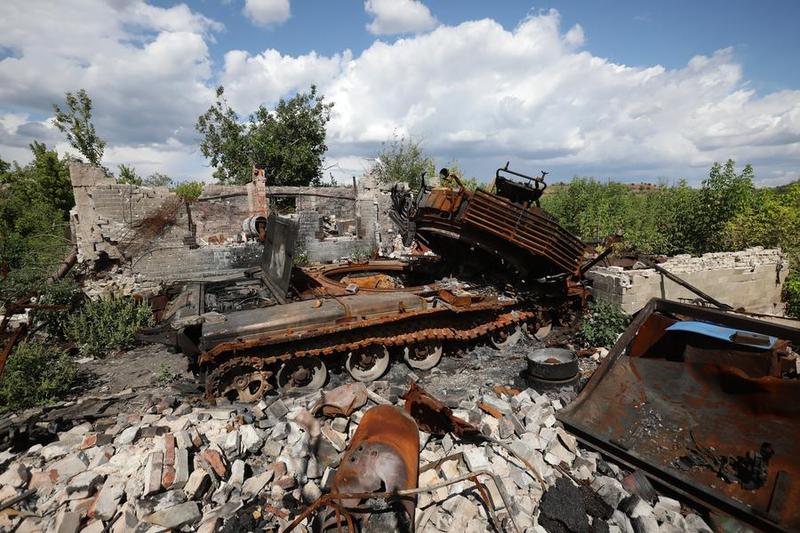
With the Russia-Ukraine conflict entering its fourth year, the realities of the battlefield have shattered many of the comfortable illusions nurtured by the West. The conflict, far from being the "defense of democracy" it was initially portrayed to be, has become a profound test of strategic endurance, national interests and the limits of the liberal order's coercive tools.
This conflict offers at least three fundamental lessons, which reaffirm a truth long understood by students of geopolitics: in international relations, power, not narrative, defines outcomes.
First, narratives do not win wars. Western leaders sought to present the conflict as a moral crusade, a clash between good and evil, liberty and tyranny. But history offers few rewards to those who mistake rhetoric for reality. As Sun Tzu said more than two thousand years ago, "All warfare is based on deception."
In this case, however, the deception was largely self-directed: slogans, speeches and hash-tags cannot substitute for artillery, logistics and industrial capacity. Ukraine's performance on the battlefield, particularly during its 2023 counteroffensive, was not dictated by values or declarations, but by military asymmetry — and an opponent prepared for a "war of attrition". The mismatch between expectations and results has been profound.
Second, sanctions, long touted as the West's most potent instrument of pressure, have failed to yield the desired results. Rather than isolating and destroying the Russian economy, the sanctions have accelerated structural change. Moscow has responded by reorienting trade eastward, strengthening financial ties with the Global South, promoting de-dollarization, and leveraging energy markets to stabilize its revenues.
If anything, the sanctions have shown how dependent the current global system remains on Western architecture, and how motivated many actors now are to build alternatives. The attempt to punish Russia has resulted in growing resilience elsewhere. And the spillover effects — food insecurity, inflation, energy shocks — have had broader consequences across emerging markets, fueling resentment toward the West's choices.
Third, the conflict has exposed the fragility of collective security promises. Although often described as a bulwark of stability, NATO has been cautious and reactive. Its unwillingness to get involved beyond supplying armaments to Ukraine reveals what many suspected: the military alliance's Article 5 is only as good as the risks any member state is willing to take. The specter of a nuclear catastrophe continues to govern restraint, and rightly so.
But this also means that smaller NATO members and allies, reliant on extended deterrence, must ask themselves what guarantees exist in a crisis threatening great-power interests. In the end, a nation's survival trumps alliance politics. NATO today resembles a less unified strategic front and a collection of interests loosely bound by bureaucratic consensus.
Amid this scenario, much has been said about Russian President Vladimir Putin, often reduced to a caricature in the Western media. But a more sober analysis reveals a leader who has been seriously studying the West's internal weaknesses: polarization, electoral volatility, short-term political horizons, and declining appetite for military entanglements. Putin's actions may be controversial, but they are far from irrational; they reflect an understanding of timing, fatigue, and the West's diminishing capacity to sustain long wars without popular support. His strategic acumen is evident in his calculated endurance, and his gamble increasingly appears to be working.
In recent months, the re-emergence of United States President Donald Trump on the global stage, and his offer to "mediate peace" between Moscow and Kyiv have drawn global attention. Far from a peace initiative, his interest in "brokering a deal" seems to be an attempt to save NATO's face. The transatlantic military alliance has reached a point of strategic embarrassment: it cannot decisively intervene or claim success. Trump's mediation proposal, projected as pragmatism, is an exit strategy masked as diplomacy — designed to pacify domestic skepticism, cut political costs and prevent NATO from further reputational erosion. Ironically, it may add credence to Trump's critique of NATO as being expensive and obsolete.
Yet the conflict's most profound geopolitical revelation is the increasing detachment of the Global South from the Western narrative. Countries across Asia, Africa and Latin America have adopted a position of strategic equidistance. Their refusal to align with either side is not just a matter of moral indifference, but a significant expression of disillusionment.
Many see the West's invocation of international law as selective, its appeals to global solidarity as self-serving, and its sanctions regime as disruptive to global development. These countries seek not confrontation, but cooperation — not bloc politics, but balanced relations. BRICS' expansion and rising regional forums are not symbolic but reflective of a desire for a more pluralistic agency.
China's call for dialogue, political settlement, and multipolarity resonates with the Global South in this context. Unlike the zerosum logic of Cold War thinking, China's call is to restore peace through diplomacy. For many emerging economies, this approach is not just appealing, but a reflection of their own priorities: development, sovereignty and a seat at the table where decisions are made, not just where consequences are absorbed.
The Ukraine crisis has become far more than a European conflict. It is a mirror held up to the international system, exposing its contradictions, revealing its limitations, and pointing toward a future where multipolarity is not merely emerging, but already shaping outcomes. Those who cling to narratives will find themselves sidelined. Those who adapt to new realities — through strategic autonomy and diplomatic pragmatism — will shape the world's contours.
The author is a professor at China Foreign Affairs University and a senior fellow at the Policy Center for the New South.
The views don't necessarily reflect those of China Daily. If you have a specific expertise, or would like to share your thought about our stories, then send us your writings at opinion@chinadaily.com.cn, and comment@chinadaily.com.cn.





