Interview: Official from China's National Disease Control and Prevention Administration responds to media questions on WHO Pandemic Agreement







GENEVA/BEIJING -- The 78th World Health Assembly held in Geneva, Switzerland, announced the adoption of the Pandemic Agreement on Tuesday.
What does the adoption of the Pandemic Agreement mean for global public health governance? What role has China played in the negotiations?
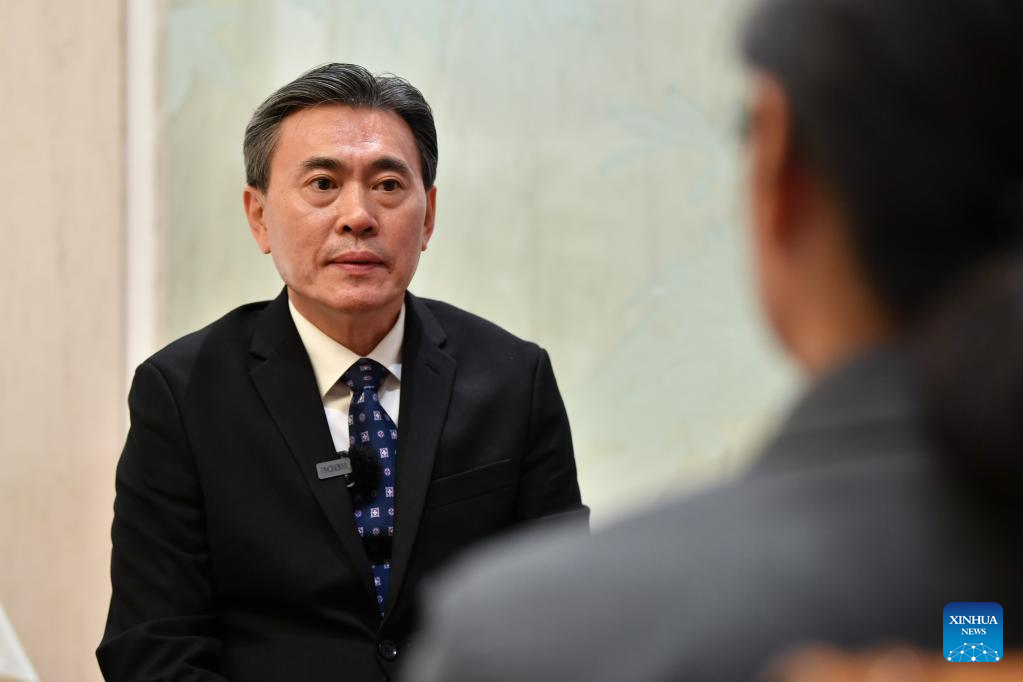
Xinhua interviewed Hu Guang, director of the Emergency Response Division at China's National Disease Control and Prevention Administration (NDCPA), who was deeply involved in the drafting and negotiations of the Pandemic Agreement, to better expound China's actions and positions.
SOLEMN COMMITMENT TO SAFEGUARDING HEALTH OF ALL HUMANITY
Q: What does the adoption of the Pandemic Agreement mean for global public health governance?
A: The formulation of the Pandemic Agreement is a key measure in the reform of global health security governance following the COVID-19 pandemic, as countries seek to improve global health governance, address deficiencies in the international and the World Health Organization (WHO) responses to the pandemic, and enhance global capacity to prevent, prepare for and deal with the next infectious disease pandemic.
The agreement proposes establishing a series of new platforms and mechanisms which aim to comprehensively reform the existing working rules for pandemic monitoring, prevention and response systems, promote the development and sharing of pandemic-related products, and restructure production and distribution systems -- to collectively optimize the global public health governance system and make efforts to address the current challenges to fairness in international health development.
After over three years of intensive negotiations, nations have finally reached consensus on the agreement text, fulfilling a solemn commitment to protecting global public health while demonstrating robust support for multilateral governance mechanisms.
IMPROVING GLOBAL HEALTH GOVERNANCE, DEMONSTRATING CHINA AS A RESPONSIBLE MAJOR COUNTRY
Q: What role has China played in the negotiations of the Pandemic Agreement?
A: China has been actively participating in the negotiations of the Pandemic Agreement. Guided by the vision of building a global community of health for all proposed by President Xi Jinping, China has practiced true multilateralism and has advocated for strengthening solidarity and cooperation among nations during the talks. It has supported the WHO in playing a central coordination role in order to jointly improve the global health governance system and boost worldwide capacities for prevention, precaution and response.
On technical issues including pandemic prevention and monitoring, China, upholding the spirit of science, has put forward reasonable amendments to the text and been deeply involved in drafting the relevant text, playing an important role in helping reach consensus. Thanks to China's efforts, all parties agreed to focus monitoring efforts on emerging and re-emerging infectious diseases with pandemic potential, to clarify the scope of institutions responsible for information sharing, to reduce the implementation burden on the parties, and to safeguard the common interests of developing countries.
In addition, together with Brazil, Indonesia, Bangladesh and other countries, within the framework of "Friends of Fairness," China actively responds to the reasonable demands of developing countries for fair access to health products, demonstrating its role as a responsible major country.
ADDRESSING EQUITY ISSUES AND CARRYING OUT SUBSEQUENT ANNEX NEGOTIATIONS
Q: How will the Pandemic Agreement enhance global coordination and effectively address existing equity issues?
A: The Pandemic Agreement proposes measures in areas such as research and development (R&D), production, technology transfer, benefit-sharing, product supply and financing to address existing equity issues.
Regarding R&D, the agreement mandates collaborative actions among the parties, requiring them to support developing countries in building their R&D capacities and institutions, actively facilitate their participation in scientific research, and establish mechanisms for the prompt sharing of research data and outcomes.
In the areas of production and technology transfer, the agreement requires the parties to implement measures -- including transferring production technologies and skills for producing pandemic-related products -- to enhance the sustainability and geographic diversification of global production capacity, ensuring more sustainable, timely and equitable access to such products worldwide.
Regarding pathogen access and benefit-sharing, the agreement calls for establishing a WHO-managed pathogen access and benefit-sharing system to achieve rapid and timely sharing of materials and sequence information on pathogens with pandemic potential, and share the benefits resulting from the use of these materials and sequence information.
Regarding product supply, the agreement proposes establishing a WHO-led global supply chain and logistics network to meet global public health needs.
Additionally, it establishes a financing coordination mechanism to provide more sustainable and predictable funding for implementing the Pandemic Agreement.
Q: When will the adopted Pandemic Agreement enter into force?
A: According to the relevant arrangements, after the adoption of the agreement at the 78th World Health Assembly, the WHO will establish Intergovernmental Working Group to negotiate the annex related to Article 12 (Pathogen Access and Benefit-Sharing System) of the agreement.
The outcomes of the annex negotiations will be submitted to the 79th World Health Assembly for consideration. Upon adoption, the annex will be open for signature and approval together with the main text of the Pandemic Agreement and will enter into force after the approval of sixty nations. China will continue to actively participate in the negotiations on the annex in a bid to promote the agreement's scientific rigor, equity and operational feasibility.





- Viral app bares 'safety anxiety' among solo dwellers
- Research suggests causes of moon's two different 'faces'
- AI software under lens for facilitating porn talk
- Commercial recoverable spacecraft completes test flight in China
- Test launch marks push in reusable space vehicles
- Smart tech to unify healthcare and insurance data