Latest achievements of Chinese companies show US' tech curbs a futile proposition: China Daily editorial







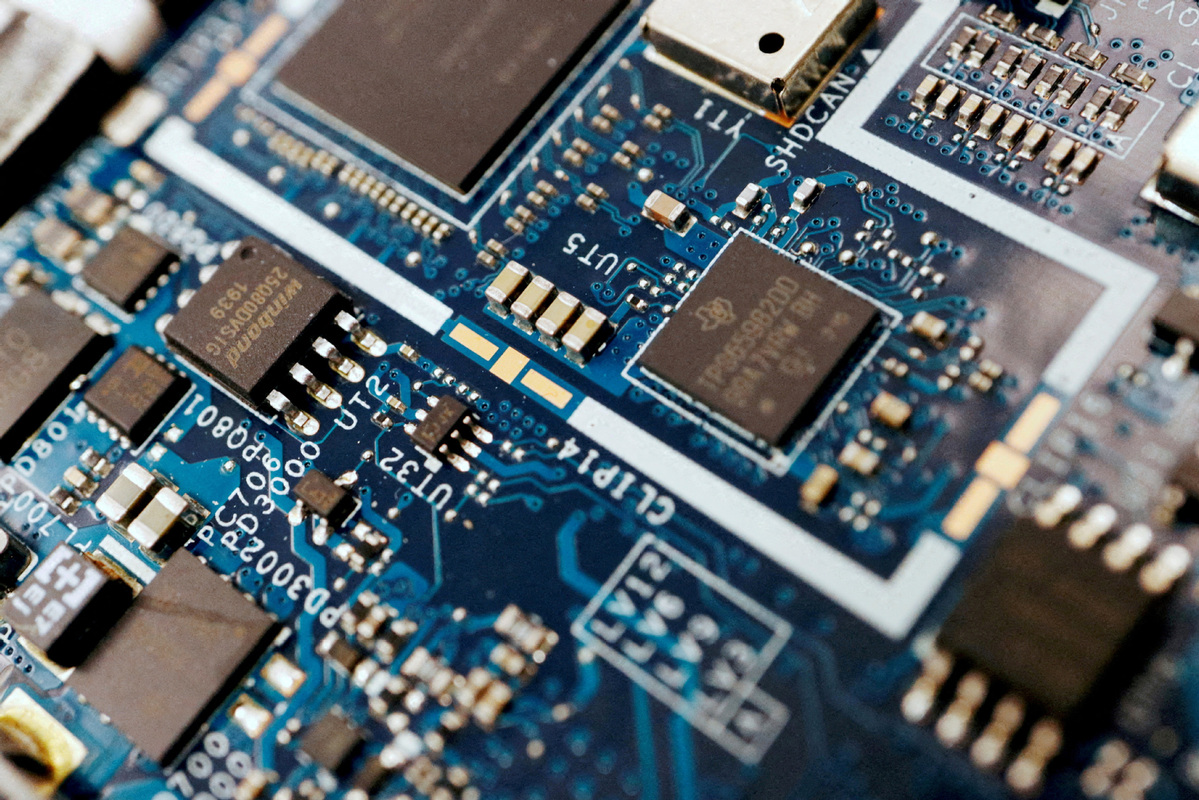
The US Department of Commerce has just changed the wording of its May 12 news release on AI chip export control guidance from "using Huawei Ascend chips anywhere in the world violates US export controls" to "alerts industry to the risks of using PRC advanced-computing ICs, including specific Huawei Ascend chips".
The change of wording within a few days, though an apparent toning down after the recent high-level China-US trade talks in Geneva, does not change the discriminatory and market-distorting nature of the US guidance.
In recent years, the United States has implemented unilateral and protectionist policies, and waged a chip war against China, abusing export controls by tightening restrictions on Chinese chips based on groundless accusations. Yet, as the chip war plays out, it has become increasingly apparent that trying to trip up others doesn't make oneself run faster, instead it only prompts others to run faster.
In a recent interview with CNN, Microsoft co-founder Bill Gates said that the restrictions imposed by the US on China in technology sectors were having the opposite effect to that intended as they had forced China to go full speed ahead in terms of chip manufacturing and other fields. "We made clear to them that they needed to make their own chips, and they're making great progress on doing that," he said.
On Monday, Huawei Technologies Co officially unveiled its personal computers powered by its self-developed operating system, Harmony-OS. The remarkable progress was widely perceived as posing a challenge to the decades-old dominance by Microsoft's Windows and Apple's macOS operating systems.
On the same day, Xiaomi Corp confirmed that it will unveil its 3 nanometer Xring O1 chip on Thursday, after more than four years' intensive R&D efforts, becoming only the fourth company in the world — after Apple, Qualcomm, and MediaTek — to launch a smartphone processor designed in-house using the advanced 3nm node.
These achievements from leading Chinese high-tech companies are the latest proof of China's unswerving pursuit of technological innovation.
It is no exaggeration to say that the US-instigated chip war has failed to curb China's high-tech development, and that instead, by prompting the nation to demonstrate its fighting spirit, it has served to intensify the country's efforts to join the ranks of the world's most innovative countries, with self-reliance and strength in science and technology.
It is high time the US woke up to the truth that its short-sighted tech blockade will not stop China's innovation. The country will not be deterred by intimidation, or cowed by pressure. It will meet obstacles and difficulties head on, harnessing the nation's indomitable fighting spirit to open up new horizons.
Looking ahead, the US should realize that, as Gates said in his recent interview with CNN, in a world with open-source software and everything, "China is not going to get substantially ahead of the US, and the US is not going to get substantially ahead of China". With AI technologies available to the world, and people able to build on those in their own way, fostering a cooperative approach to tech development would expand the pie for global progress.
China's Foreign Ministry has repeatedly expressed its firm opposition to the US semiconductor export restrictions, stating that these measures severely violate the market economy principles and international trade rules. Ministry spokespersons have emphasized that the US' actions represent a typical example of economic coercion that only serves to impede international scientific and technological cooperation.
The ministry has consistently called on the US to cease its unwarranted suppression of Chinese companies and to uphold the stability of the global semiconductor industry and promote its development through dialogue and cooperation, which is in the common interests of all countries.
As China continues advancing its tech ecosystem, dialogue and collaboration will prove more constructive than containment.