TSMC business shows futility of US move







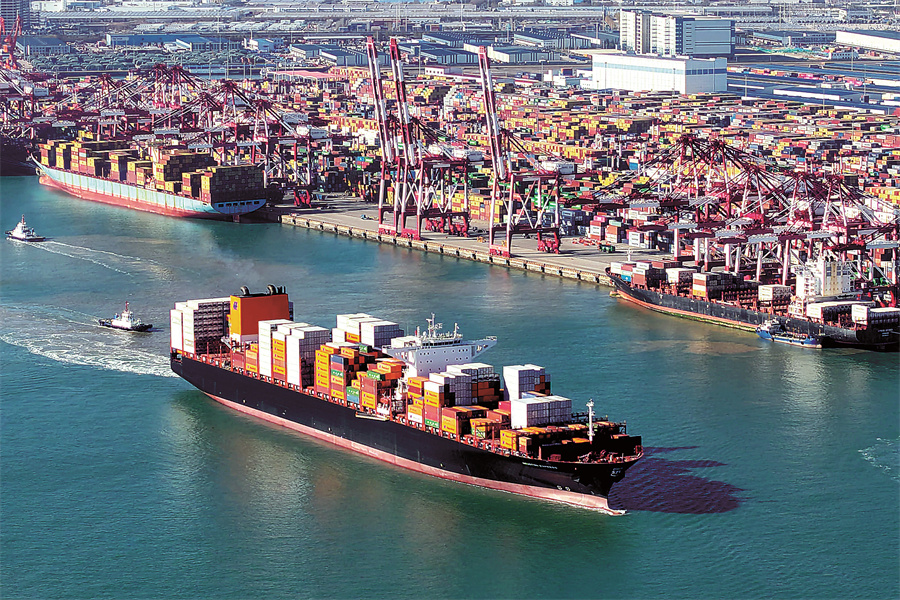
US President Donald Trump's primary aim of imposing extremely high tariffs on imports from its trading partners, particularly from China, is not to earn more customs revenue but to compel foreign manufacturers to relocate their production units from China to the United States.
However, few foreign manufacturers want to invest in the US, because by moving their production units to the US, they could lose their competitive edge due to the lack of qualified personnel with the necessary skills, challenges in hiring local workers, difficulties in rebuilding reliable supply chains, and high rent and wages.
According to the annual report to shareholders published by Taiwan's Economic Daily News on April 21, Taiwan Semiconductor Manufacturing Company's Arizona plant reported a staggering loss of about NT$14.3 billion ($441 million) in 2024, the highest loss since the plant was established in the US.
Losses, however, have not been reported for the first time. The TSMC reported significant losses of NT$4.81 billion, NT$9.43 billion, and NT$10.924 billion in its annual reports for 2021, 2022 and 2023 respectively, with cumulative losses exceeding NT$39.4 billion over the past four years.
Interestingly, the TSMC suffered losses in its factories in Japan and Europe. According to its annual report, the TSMC's Japanese subsidiary, JASM, reported a loss of NT$4.37 billion in 2024, the highest since the TSMC entered the Japanese market. The cumulative losses over the past three years reached NT$7.93 billion, while the company's joint venture in Germany reported a loss of NT$556 million.
It is no secret that the TSMC's decision to build chip factories in the US was dictated not by commercial considerations but by geopolitical pressure from the former Joe Biden administration under the CHIPS and Science Act of 2022. The US has been encouraging foreign high-tech companies to invest in the country under this law. For example, last year, the TSMC received a $6.6 billion subsidy to develop business in Arizona and increased its investment in the US by $25 billion to build three factories.
The TSMC's problems in Arizona were predictable, as the US market suffers from high costs and a fragmented supply chain. Although the factories have been engaged in mass production since late 2024, the trajectory of the financial deficit indicates their problems are long term. After all, the semiconductor industry is highly complex, marked by the interdependence of upstream and downstream suppliers. The semiconductor industry relies heavily on the supply of high-quality components, necessitating strict maintenance of discipline in logistics programs. Any disruption in the supply chain can lead to disruption or shutdown of production.
Many industry professionals have long questioned the US administration's urge to relocate chip production to the US. Morris Chang, founder of Taiwan's semiconductor industry, said he could not understand why Washington wanted to shift production from efficient Asian sites to the US.
The TSMC has estimated the cost of chips in Arizona to be 50 percent higher than its flagship production line in Taiwan, but according to Chang, the actual cost appears to be nearly double of that. The Texas Instruments veteran, who founded the TSMC in 1987 and was its chairman until 2018, said: "Maybe it's double the cost... When the cost goes up, the pervasiveness of chips will either stop or slow down considerably."
In stark contrast, the company's Nanjing subsidiary continued to deliver strong and stable profits. According to TSMC's report, it posted a net profit of NT$25.95 billion in 2024, more than the NT$21.75 billion recorded in 2023 and NT$20.48 billion in 2022. Over the past three years, the TSMC's Nanjing operations have consistently generated profits exceeding NT$20 billion a year, a significant improvement over the NT$12.28 billion recorded in 2021.
The company's strong performance is prompting boosting investment in 28 nanometer chip capacity at its Nanjing plant, indicating that the TSMC aims to maintain its presence in the Chinese mainland market despite pressure from the US.
The new data presented by the undisputed leader of the global semiconductor industry is a striking example, showing that ill-considered and politically motivated decisions can lead to negative results. Its decision-makers understood that even with the advantage of fundamental research and development in modern industries, becoming a leader in manufacturing the most complex modern components is often impossible.
In 2024, China continued to lead the world in manufacturing, with its total industrial output reaching $4.16 trillion, accounting for 26 percent of global industrial output. This figure is higher than the combined output of the other three leading manufacturing countries: the US, Germany, and India. At the same time, China continues to increase its manufacturing capacity, focusing on high-tech industries.
The ideal architecture of the future global economy should not be artificial politicization and witch-hunting, but specialization and cooperation based on trust.
The author, former prime minister of the Kyrgyz Republic, is a professor at the Belt and Road School of Beijing Normal University.
The views don't necessarily represent those of China Daily.
If you have a specific expertise, or would like to share your thought about our stories, then send us your writings at opinion@chinadaily.com.cn, and comment@chinadaily.com.cn.