Sustainable is the new developed







An evaluation system needs to be established to help countries identify how they can make greater progress toward the goal of sustainability
On Dec 14, 1960, Canada, the United States and 18 European countries signed a multilateral convention, establishing the Organization for Economic Cooperation and Development. From then on, they have called themselves developed countries, and most other countries have been classified as developing countries. After several decades, it seems that only a few countries from other continents, such as Japan, the Republic of Korea and Singapore, have been admitted into this "developed club "of Western nations.
But from that moment, many developing countries began to embrace the dream of becoming a so-called developed country. Obviously, they failed, despite the great efforts they have made to achieve that goal. The strange thing is, nobody has given a clear and precise definition of developed country, and no economic theory has systematically described that concept. Per capita GDP is deemed to be the main "criteria" to determine whether a country has the qualifications to be regarded as a developed country or not. That means, the reason why those countries are seen as developed is their seemingly higher level of wealth.
Ironically, this dream per se may not be as beautiful as those countries have wished. People seem to have forgotten some simple, yet unsavory, facts behind that wealth.
The relatively higher level of wealth of those so-called developed countries, to a great extent, stems from past colonial plunder and unreasonable international division of labor. Although the colonial economy has come to an end, the ex-colonial powers still occupy the upstream of the global industrial and value chains through a favorable international division of labor, which in fact is a blatant exploitation of poorer and weaker countries. This has given developed countries an advantage — they can take the lead in achieving traditional industrialization and, through it, accumulate wealth. But, traditional industrialization has overdrawn on the planet's natural resources and caused serious ecological and environmental harm, such as pollution of the atmosphere, water bodies and soil, extinction of species and the frequent outbreak of various infectious diseases. Some Western countries still heavily rely on fossil fuel energy and have been reluctant to develop clean energy. They have adopted an irresponsible attitude toward participating in global actions to reduce greenhouse gas emissions.
The enviable "wealth" of many developed countries does not live up to their name, and at most only reflects one aspect of those countries. The severe wealth disparity makes higher per capita GDP have little to do with ordinary people. High inflation, low-quality and inefficient public services, ubiquitous racial discrimination, and serious social problems caused by moral decline and spiritual decadence have all greatly reduced the "wealth charm" of these countries.
Additionally, even after the establishment of the United Nations, Western developed countries have still, individually or collectively, committed a large number of acts that violate the purposes and principles of the UN Charter and contemporary international legal norms, infringe on their internal affairs, and some even constitute crimes against humanity.
Under such circumstances, these developed countries have become saboteurs of international peace, stability, security and prosperity.
In spite of this, many countries are still vying to become developed countries and gain power by realizing traditional industrialization. But for most of those countries, if not all of them, this will remain an unattainable dream, since it would be extremely difficult, if not impossible, for a developing country to complete its traditional industrialization based on fossil energy in today's international environment. That means, to some extent, the current developing countries may never have the opportunity to enter the developed club through traditional industrialization.
That is why some countries are opting to financialize their national economy as another way to join the club of developed countries. But in the long run, the negative impact of this approach will be unbearable for them. It will make the national economy a bubble, leading to the hollowing out of industries, the widening of the wealth gap between the rich and the poor, and reducing the size of the middle-income group.
Seeing such astonishing facts, people may inevitably have a strong feeling that the so-called developed countries are not qualified enough to serve as role models for other countries, both economically and morally.
In 2015, all members of the United Nations adopted the 2030 Agenda for Sustainable Development, including the 17 Sustainable Development Goals, in the realization that sustainable development in various fields and dimensions, including the sustainable development of the economy and human rights, sustainable development of the relations between countries and groups, sustainable development of populations, and sustainable development of the relationship between humans and nature, is the key to resolving a series of global challenges. But only 16 percent of the 17 SDGs are expected to be realized by the target year, 2030. The reasons for the serious lag in progress toward the sustainable development goals compared to expectations are manifold, but it cannot be denied that one of the important reasons is that people are using outdated and unsustainable development methods to pursue future sustainable development goals.
In a nutshell, to truly achieve global sustainable development, the international community needs new, strong criteria support, and sustainable development should be the common goal of all countries.
Given that currently there is no country that meets all the requirements for SDGs, countries today can be classified into the following categories: quasi-sustainable, relatively-sustainable, less sustainable and unsustainable.
A developed country that has not yet achieved sustainable development might be problematic and even destructive to the world. A "developing country" can also be closer to realizing sustainable development.
For the moment, a task of top priority is for relevant UN bodies to jointly develop a feasible indicator system and evaluation criteria for sustainable development, so that each country can be classified appropriately according to its development status, and know how to address the weak points in its pursuit of sustainable development.
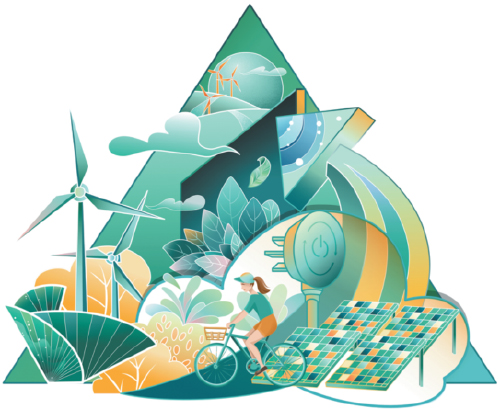
The positive and encouraging side is, even before the indicator system and evaluation criteria have been worked out, a few countries have factually set good examples for the international community in pursuing sustainable development. China's high-quality development is essentially the pursuit of sustainable development. And China has achieved the most significant results in implementing the UN 2030 Agenda for Sustainable Development. It has been taking the lead in eliminating poverty and protecting human rights, restoring and preserving the ecological environment, protecting biodiversity, controlling desertification, developing clean energy and reducing greenhouse gas emissions, rapidly advancing a green transformation in production and lifestyle. No one should doubt that China will become one of the first countries to realize sustainable development.
The author is former consul general of the People's Republic of China in Rio de Janeiro. The author contributed this article to China Watch, a think tank powered by China Daily. The views do not necessarily reflect those of China Daily.
Contact the editor at editor@chinawatch.cn.