



China positioned to energize a new multipolarity







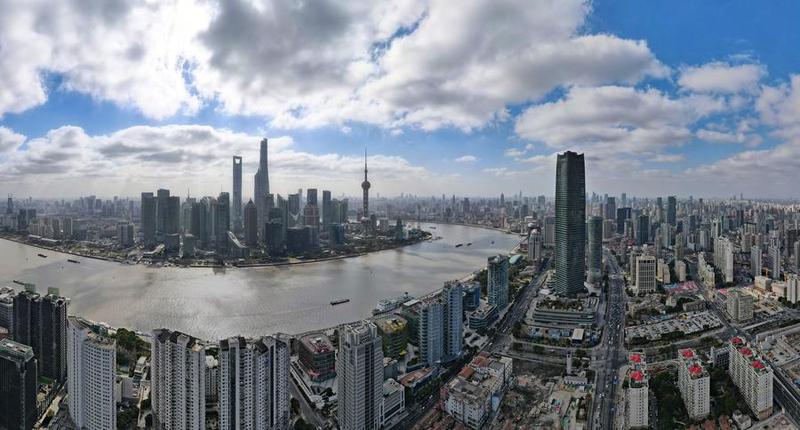
The notion that China is in "decline", advanced by some Western media, has no basis in fact, hence should be rejected summarily for more competent serious analysis. China's average annual growth rate from 2001 to 2010 was 10.1 percent. In 2024, after much doomsaying, the Chinese economy grew by more than 5 percent, twice the rate of the US and three times that of the European Union.
China is in a normal economic transition: this "phase shift" occurs when high growth economies achieve a "development plateau"; which in China's case means its transitioning from its dominant export lead focus toward domestic development and consumption; as its demographic dynamics demands new policy innovations to support a growing aged population, which is true for the United States, Japan and much of Europe, too.
It incentivizes China's transition from "world's factory" to a high-value innovation-driven economy; though it's shifting too rapidly for normal policy responses.
Many have claimed India is the likely alternative to a slowing China and a United States likely caught in a "Thucydides Trap". Both China and India — neighbors, economic and population giants — outpace each other in different ways: India has a younger labour pool in a service economy, structured to maximize domestic demand, while in China — a manufacturing powerhouse, whose wage scales and population no longer align with its core economic model — 17 metropolises have populations over 10 million, compared with India's six major cities in terms of GDP, none of which is as developed even to the level of a tier-two Chinese city; though certain Indian cities, like Pune, are among my favorites.
India — besides its ongoing ethnic conflicts and military pantomimes with Pakistan — is under no direct external threat to scale up its defense budget, under narrative assault from its co-Superpower; even as professor Jeffrey Sachs with Columbia University argues that "China is not a threat to the United States" by any measure. But still, China exceeds India in innovation and productivity, leads by "orders of magnitude" in artificial intelligence development and operational deployment, global engagement and influence by dint of being a major holder of US debt, resulting in a trade surplus with the US.
The crucial difference is however China's political system metabolizes problems toward solutions, while India's system politicizes problems.
The best option for the future would be China, the US, Russia, the African Union and India leading a global economic renaissance. But only China, so far, has undertaken that challenge, engaging with its regional trade partners and more than a quarter of the world's countries through its "Belt and Road Initiative".
I take confidence in China's ability to manage this transitional period resting on the distillation of Chinese leadership principles and methods by professor Zhang Weiwei — Fudan University. Zhang emphasizes the importance of problem-processing intelligence in making effective decisions for the Chinese leadership. This approach induces and could facilitate strategic policy alignments, which places Chinese anti-poverty and development accomplishments and objectives in "lock-step" with the needs of a billion young people worldwide, for whom a new future must be built.
China leapt ahead of the world in artificial intelligence (as seen in DeepSeek's cost and capacity devastation of leading US' large language models), but also in strategic national deployment of AI and as a contribution to the global commons, there are new Open Source AI offerings from Alibaba and others showing greater consistency with pluralistic/ethical approaches to AI coordination, demanded by think tanks like Consilience Project, advancing inclusive social concepts, like "co-Intelligence "and "co-creation" by the philosopher Tom Atlee.
China advanced its climate-environmental policy lead over the rest of the world by implementing "green solutions", particularly in designed public transportation (high speed trains, electronic buses), in electric vehicles' development with BYD, in energy generation, land use, water treatment and sanitation, even in medical research in areas such as diabetes.
Where does this leave China in terms of meeting its internal challenges, whilst continuing its pursuit of a rule-based global order of engaged sovereign states, driven by substantive multipolarity?
First, we know now there was a coordinated US-led global propaganda initiative, positioning China as a threat. China has managed a deliberate technical decoupling to separate itself, in strategically important fields, while not abandoning the imperatives of a networked global economy, streamlined to ensure properly leveraged incentivized agreements on all aspects of trade.
Second, China should continue its commitment to a rule-governed, human value-based international system.
Third, living in the age of China's re-emergence, to have observed its practicality in pursuit of economic and social development is to have witnessed a critical political capacity in demand across the world. China's rejuvenation and its promulgation of the Belt and Road Initiative offer some insights to developed countries and their institutions, questioning what they have prioritized in the decades since 1945, even as it is an inspiration to developing countries, demonstrating how they should prioritize their own national development.
The author is ambassador-at-large and scholar-in-residence at the Bahamas Alrae Ramsey Institute of Foreign Affairs (BARIFA), and a former professor at George Mason University, Virginia, US. The views don't necessarily represent those of China Daily.
If you have a specific expertise, or would like to share your thought about our stories, then send us your writings at opinion@chinadaily.com.cn, and comment@chinadaily.com.cn.





