



US tariffs will ultimately hurt itself







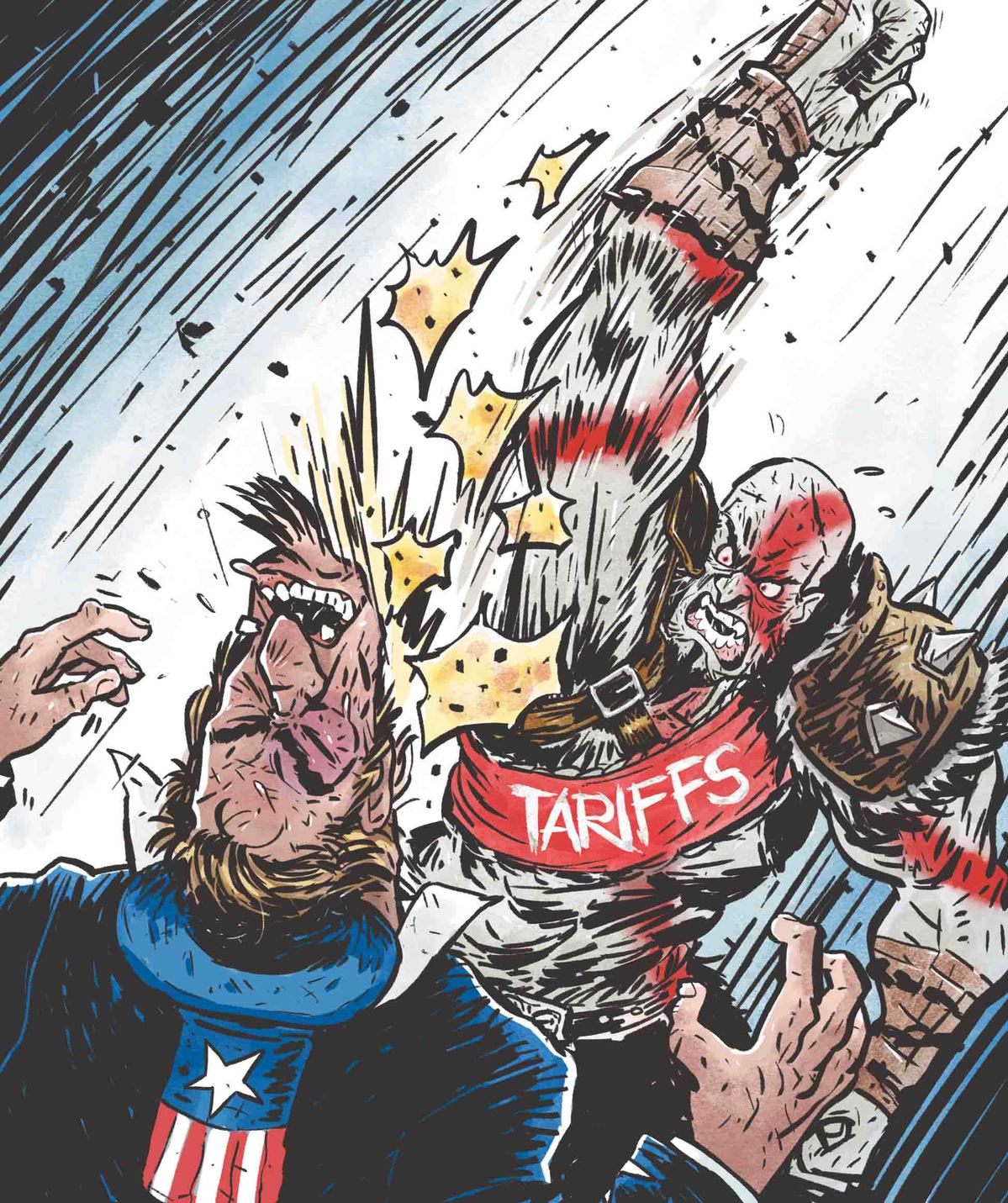
The US government's plans to impose "reciprocal tariffs" on multiple countries and attach additional tariffs on specific economies over the baseline 10 percent tariff, aim to reshape foreign-trade patterns and compel other countries to prioritize its own interests. Such behavior contravenes the trend of multilateral cooperation, severely threatens the recovery of the global economy and will ultimately harm the US itself.
The so-called "reciprocal tariffs "means the US will impose equal or even higher tariffs on imports if they find tariffs on US exports are excessive, which in fact is just an excuse for the US to unilaterally suppress other countries.
The US claims to uphold "fairness", but actually imposes multiple restrictions and invisible barriers on industries such as high-end technology, intellectual property and agriculture. Value-added taxes are often regarded as "criminal evidence" that other countries "take advantage of the United States", while the endless taxes, technical barriers and subsidies from the US are not mentioned.
However, if the US really wants to achieve fairness, it could reduce the tariffs through engaging in negotiations rather than arbitrarily destroying the WTO dispute settlement mechanism or unilaterally "punish" other countries by abusing tariffs.
US economist and Nobel economics laureate Paul Krugman has pointed out that the government's approach to trade has "gone crazy and out of control".
Previously, the US had announced a 90-day pause for other countries until July 9, while continuing to increase tariffs on China. However, the maximum pressure from Washington may work for other countries, but not for China, and instead of achieving the desired goals, it will trigger serious negative ripple effects.
In his reelection campaign, then-US presidential candidate Donald Trump vowed to eliminate the US-China trade deficit. The US economy has been pushed into an absurd cycle with its current trade policy — tariffs are getting higher and higher, and the marginal benefits are sharply diminishing, culminating in an extreme outcome — zero trade.
The government repeatedly claims that "reciprocal tariffs "would bring manufacturing back to the US and replenish fiscal revenues, yet this is only economic self-deception. In fact, the outflow of traditional manufacturing in the US was due to multiple structural factors, including the preference of enterprises for high-value-added financial and service industries, as well as rising labor costs and changing technology demand.
Artificially raising the price of imported goods through tariff barriers will only force US enterprises to obtain parts and raw materials at a higher cost, greatly reducing their competitiveness and driving up domestic inflation, and ultimately leading to a rise in people's living costs, which will outweigh any upsides.
As a major power in the world, the US should act as such in a responsible way. However, the frequent backsliding and wanton changes in trade rules of the government have damaged the country's credibility of itself. The US has become an unreliable and fickle player in global economic governance, with its strategic credibility and international status being continuously eroded by its shortsighted behavior.
The US is trying to curb China's economic development through high tariffs, but the reality is quite the opposite. The global supply chain has formed an intricate network, and China has cultivated irreplaceable advantages in basic manufacturing, support industries and labor. The high tariff policy of the US will not be able to hit China, which in turn will seriously damage its own economic interests.
China will not succumb to any form of economic coercion and will resolutely defend its legitimate rights and interests and national security through corresponding countermeasures. In accordance with relevant laws and regulations and the basic principles of international law, the Chinese government has taken a series of precise countermeasures. The reaction is a legitimate move to safeguard its legitimate rights and interests and safeguard the multilateral order, fully demonstrating China's will and position of resolutely opposing unilateral bullying and firmly defending fair trade.
History has long proven that large-scale unilateral tariff hikes will only lead to more sanctions lists and tit-for-tat confrontations, escalating tensions between countries. By deploying a combination of multiple countermeasures precisely, China has sent a clear and unmistakable signal to the world — "Attempts to coerce or blackmail China will not succeed, nor will they intimidate China", as Chinese Commerce Minister Wang Wentao has said.
Neither the US, nor any other country, is immune to today's deeply interconnected global economy landscape. If the US continues to indulge in pursuing benefits through maximum pressure on other economies, sooner or later it will find itself in a stalemate in its foreign relations and lose the last patience of the world for its lack of credibility.
Thereby, the US should abandon unilateral bullying and create more opportunities for participation and win-win results for all countries through multilateral dialogue and consultation, so as to maintain sustainable influence and development space in the context of global competition and cooperation.
The views do not necessarily reflect those of China Daily.
The writer is a professor at the China Institute at Fudan University.



















