



China remains steadfast in upholding int'l economic and trade order







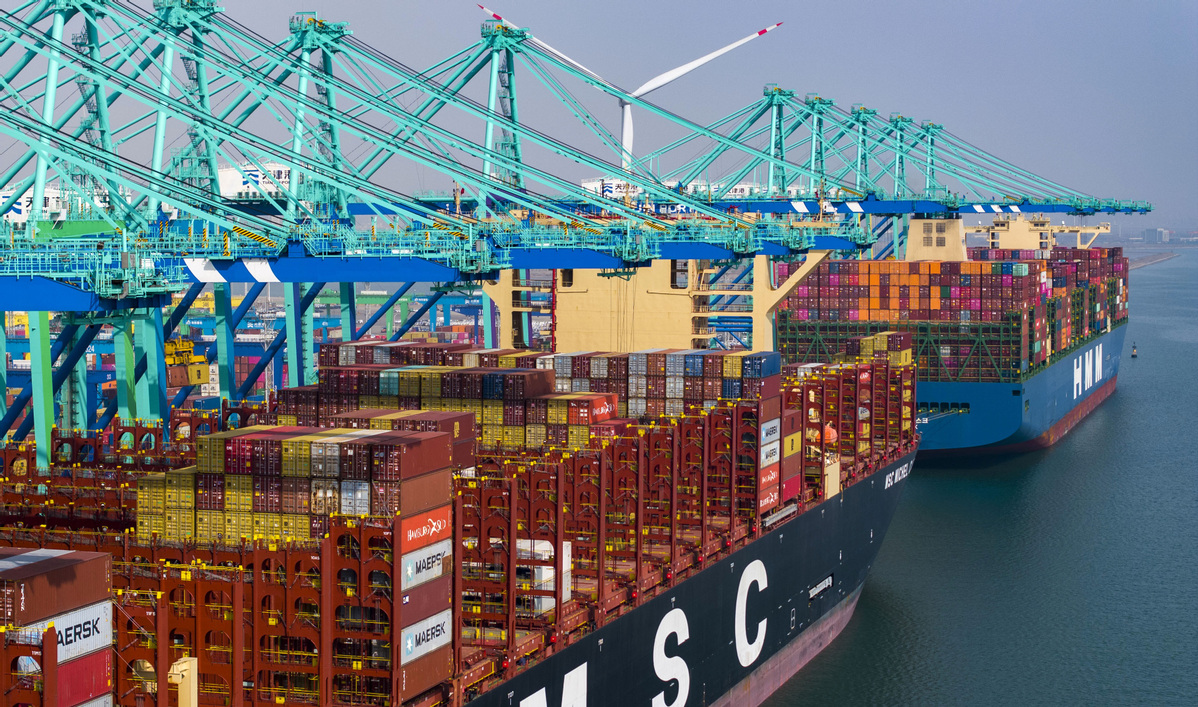
At the request of the US side, China and the United States kicked off on Saturday a high-level meeting on economic and trade affairs in Geneva, Switzerland. China decided to make contacts with the US side after taking full account of global expectations, national interests and appeals from US businesses and consumers.
China possesses strong resilience and ample policy tools to safeguard its legitimate rights and interests. It stands ready to work with the international community to jointly oppose all forms of unilateralism, protectionism and economic coercion.
Whether the road ahead involves negotiation or confrontation, one thing is clear: China's determination to safeguard its development interests is unshakable, and its stance on maintaining the global economic and trade order remains unwavering.
The United States' reckless abuse of tariffs has flagrantly contravened World Trade Organization rules and destabilized the global economic order. Far from serving any legitimate purpose, these punitive duties represent a deliberate attempt to upend the multilateral trade system, inflicting damage on the rightful interests of countries around the world.
For the United States itself, its tariff offensive amounts to economic self-harm: while it cannot cure underlying structural problems, it has triggered financial market volatility, fueled domestic inflation, eroded industrial capacity and raised the risk of recession.
As the world's two largest economies, China and the United States share a profound stake in ensuring the soundness and steadiness of their commercial ties. The US business and academic communities have consistently stressed that international trade is not a zero-sum game but should foster mutual benefit and shared success. US policymakers should heed these rational and objective voices, and take concrete steps to restore China-US trade relations to a path of healthy and stable growth.
Given mounting calls for economic stability, the decision to sit down for negotiations represents a positive and necessary step to resolve disagreements and avert further escalation. But as China has consistently emphasized, meaningful dialogue can only proceed on the basis of mutual respect, equal consultation and mutual benefit.
If Washington is truly committed to resolving trade frictions through dialogue, it must first confront the harm its tariff-driven policies have inflicted not only on the global trading system, but also on its own economy and citizens.
It must honor established international trade rules and adhere to principles of fairness and justice. Talks should never be a pretext for continued coercion or extortion, and China will firmly reject any proposal that compromises core principles or undermines the broader cause of global equity.
Confronted with US protectionism and economic bullying, China has deployed decisive countermeasures and rallied multilateral support through the United Nations and other global forums to amplify the call for justice. China's actions defend not only its own legitimate development rights but also the shared interests of the wider international community, particularly smaller and developing nations.
China has taken note that some economies are also engaged in negotiations with the United States. It must be emphasized that appeasement cannot secure peace, nor can compromise earn respect. Upholding principled positions and defending fairness and justice remain the right way to safeguard one's legitimate interests.
At its heart, this is not just a trade dispute -- it is an encounter between two fundamentally different visions in this age of economic globalization: one rooted in openness, cooperation and shared growth; the other driven by confrontation, exclusion, and zero-sum mentality.
The talks in Switzerland mark a crucial step toward resolving the issue. However, its ultimate resolution requires sufficient strategic patience and perseverance, as well as the international community's steadfast support for justice.
China entered the Geneva talks with confidence in its solid economic fundamentals. Its economy grew by 5.4 percent year-on-year in the first quarter of 2025; in 2024, its total goods imports and exports surpassed 43 trillion yuan (about 5.94 trillion US dollars), with a more diversified set of trading partners and improved export composition.
Meanwhile, policy innovation and market vitality are working in tandem: new fiscal and monetary measures, ranging from interest-rate cuts to targeted support for innovation and social welfare, have further bolstered growth prospects and strengthened China's ability to weather external shocks.
At a time when globalization is under strain and protectionism is on the rise, China has chosen not to lock itself up. Instead, it has doubled down on opening up, advancing trade and investment liberalization with renewed determination and creating opportunities for shared development across the globe.
China's position is clear: no matter how the global landscape shifts, it will remain committed to openness, using the reliability of its own development to help offset the uncertainties facing the wider world.
Trade wars and tariff battles yield no winners. A stable and constructive China-US relationship serves the interests of both nations and the world at large. It is through sustained dialogue, responsible management of differences and deeper win-win cooperation between the world's two largest economies that the global economy can gain the confidence and momentum it urgently needs.





