East Asia urged to counter protectionism







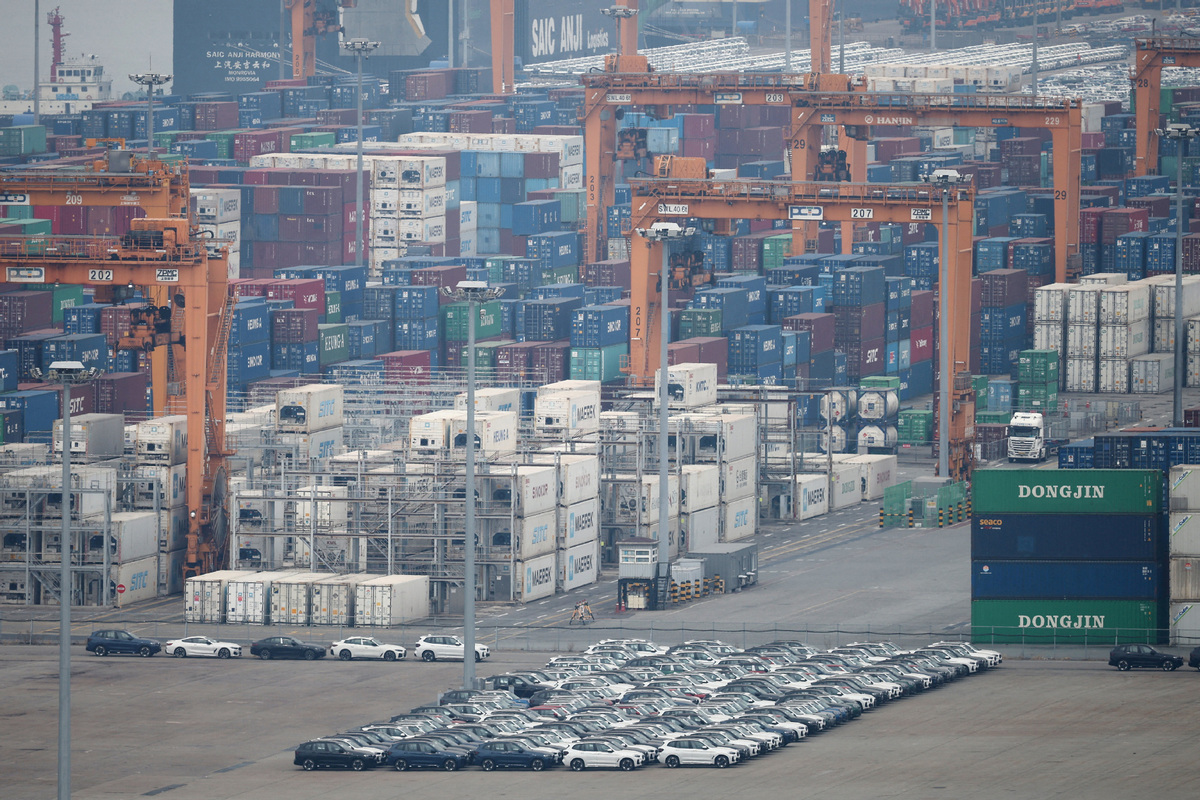
As US tariff threats intensify, experts are calling on China, Japan and South Korea to strengthen their alliance in cutting-edge technological sectors including artificial intelligence, robotics and autonomous driving. They stress that strengthening economic and trade ties is essential to counter the rising wave of US protectionism.
Choi Pil-soo, a professor of Chinese trade and commerce at Sejong University in Seoul, emphasized that cooperation among the three countries is more crucial than ever amid rising protectionist pressures from the United States.
He called on them to collaborate on product development and jointly conduct component research, highlighting the need for close cooperation among industry, government, academia and research institutions to make this possible.
"In particular, there is significant potential for cooperation in emerging industries such as AI-powered smart factories, carbon-reducing renewable energy, industrial and household robotics and next-generation communication technologies," Choi said.
He added that what is urgently needed is a new economic cooperation framework — one that reduces nontariff barriers and fosters technological collaboration to create a more cooperative economic environment.
During a meeting in Washington on Thursday with US Treasury Secretary Scott Bessent, Japan's Finance Minister Katsunobu Kato described the recent US tariff measures as "extremely regrettable". Kato expressed concerns that these tariffs are inconsistent with a trade agreement signed by both countries in 2019 during US President Donald Trump's first term. He urged the US to review the policy.
In response to the economic impact of the heightened tariffs, the Japanese government on Friday announced a package of emergency measures, including support for corporate financing and initiatives to boost consumption.
Ryosei Akazawa, Japan's chief tariff negotiator, is scheduled to go to Washington for a second round of talks from April 30 to May 2. His first visit was on April 16, marking the start of bilateral discussions.
Experts expressed hope that Japan, China and South Korea can strengthen trilateral cooperation to effectively navigate the challenges posed by US tariff policies.
Hidetoshi Tashiro, chief economist at Japanese consultancy Infinity LLC, emphasized that the three neighbors have the potential to collaborate closely in advanced technology sectors by leveraging their respective strengths to create new drivers of economic growth.
"By ensuring mutual protection of direct investments and intellectual property rights, Japan, China and South Korea can foster stable, efficient industrial and supply chains in advanced technologies," Tashiro said. "Moreover, if achievable, the simultaneous conclusion of a trilateral free trade agreement, an investment protection pact and an intellectual property rights protection agreement would enable the three nations to collectively safeguard themselves against rising US protectionism."
Joint development
Kumiko Haba, former vice-president of the International Studies Association and a distinguished professor at Josai International University, emphasized that Japan, which has fallen behind in artificial intelligence and information technology, should pursue joint development and progress alongside China and South Korea.
"Collaboration in areas such as electric vehicle innovation, autonomous driving and AI development should harness the unique technological strengths of China, South Korea and Japan to accelerate regional advancement," Haba said.
For example, Japan's leading automaker Toyota has integrated the self-driving technology of the Chinese startup Pony.ai into its Lexus RX model and has been conducting autonomous driving tests in Beijing.
South Korea is also stepping up economic and trade cooperation with China against the backdrop of global supply chain restructuring and changes in the geopolitical landscape.
According to China's General Administration of Customs, total trade between China and South Korea reached $328.08 billion in 2024, exceeding the $308.27 billion in trade between China and Japan.
South Korean tech giant Samsung Electronics has built a NAND flash memory chip plant in Xi'an, China's Shaanxi province. The facility's output has grown to 250,000 wafers per month, accounting for about 40 percent of Samsung's total NAND production.
At the 11th China-Japan-ROK Trilateral Foreign Ministers' Meeting in Tokyo on March 22, Chinese Foreign Minister Wang Yi stated that cooperation among the three countries is one of the most deeply rooted, highly institutionalized and potentially dynamic cooperative frameworks in East Asia.
Through their joint efforts, new progress has been made in cooperation in the six key areas identified at the ninth China-Japan-ROK Trilateral Summit last year. One of these areas is science and technology cooperation and digital transformation.
Kang Ho-gu, director of the Sino-Korea Economy/Society Institute, said while opportunities for cooperation among China, Japan and South Korea are diminishing in mature industries such as electronics and automotive, the three countries can strengthen information exchange, adopt a more refined division of labor and explore long-term collaboration strategies in emerging industries and new markets.
Contact the writers at jiangxueqing@chinadaily.com.cn