



Deji Plaza at peak of China's luxury hill
Glitzy Nanjing mall pushes long-standing champ SKP Beijing into second place







In a major shift in China's luxury retail landscape, Deji Plaza in Nanjing, Jiangsu province, achieved record-breaking sales of 24.5 billion yuan ($3.35 billion) in 2024, surpassing both long-time champion SKP Beijing and Shanghai IFC.
Deji Plaza's 2024 performance marks a new milestone, beating its own record of 23.9 billion yuan in 2023 and likely exceeding SKP Beijing's estimated 22 billion yuan for the same year.
This historic result elevates Deji Plaza to the top of China's brick-and-mortar retail rankings.
The leadership shift in China's luxury retail landscape comes as SKP Beijing faces its first major setback in years. Once an unshakable champion with 26.5 billion yuan in revenue in 2023, SKP's 2024 sales reportedly declined by 17 percent year-on-year, a drop of 4.5 billion yuan.
Meanwhile, the luxury retail industry is closely watching ongoing speculation about a potential sale of SKP. According to reports in March, parent company Beijing Hualian Group Investment Holding Co Ltd is considering selling its high-end SKP mall business to Boyu Capital.
While media sources suggest the transaction could value SKP at between 4 billion yuan and 5 billion yuan, a spokesperson from SKP said the company has not received any formal notice regarding the matter.
With branches in Xi'an, Shaanxi province; Chengdu, Sichuan province; Wuhan, Hubei province; and another under construction in Hangzhou, Zhejiang province, SKP has long been a dominant player in luxury retail. SKP malls in Xi'an and Chengdu recorded sales of 8 billion yuan and 5.5 billion yuan, respectively, in 2023, according to Jiemian news.
Nanjing's Deji Plaza has long held the position of China's No 2 player in high-end retail, but its steady rise has culminated in a breakthrough year. The ascent comes despite broader industry challenges.
According to Bain & Company's 2024 luxury consumption report, global luxury sales were estimated at 1.5 trillion euros ($1.73 trillion) last year, with personal luxury consumption shrinking 2 percent year-on-year to 363 billion euros. It was the sector's first slowdown since the 2008 financial crisis, with luxury houses such as LVMH and Kering Group feeling the strain.
On Chinese social media platforms such as RedNote, well-to-do urban consumers are swapping luxury leather handbags for practical canvas totes and domestic midrange bags, and favoring niche sports labels and traditional gold jewelry, which is considered a better way to maintain value.
Jacky Zhu, head of retail research, JLL China, said that luxury consumption is now tightly linked to broader shifts in overall consumer sentiment.
"Most luxury-focused shopping malls in China saw sales decline in 2024," Zhu said. "Some sought to counter the downturn by boosting their diversified income streams — raising promotional fees and investing resources into mall-wide branding events such as fashion shows and product launches."
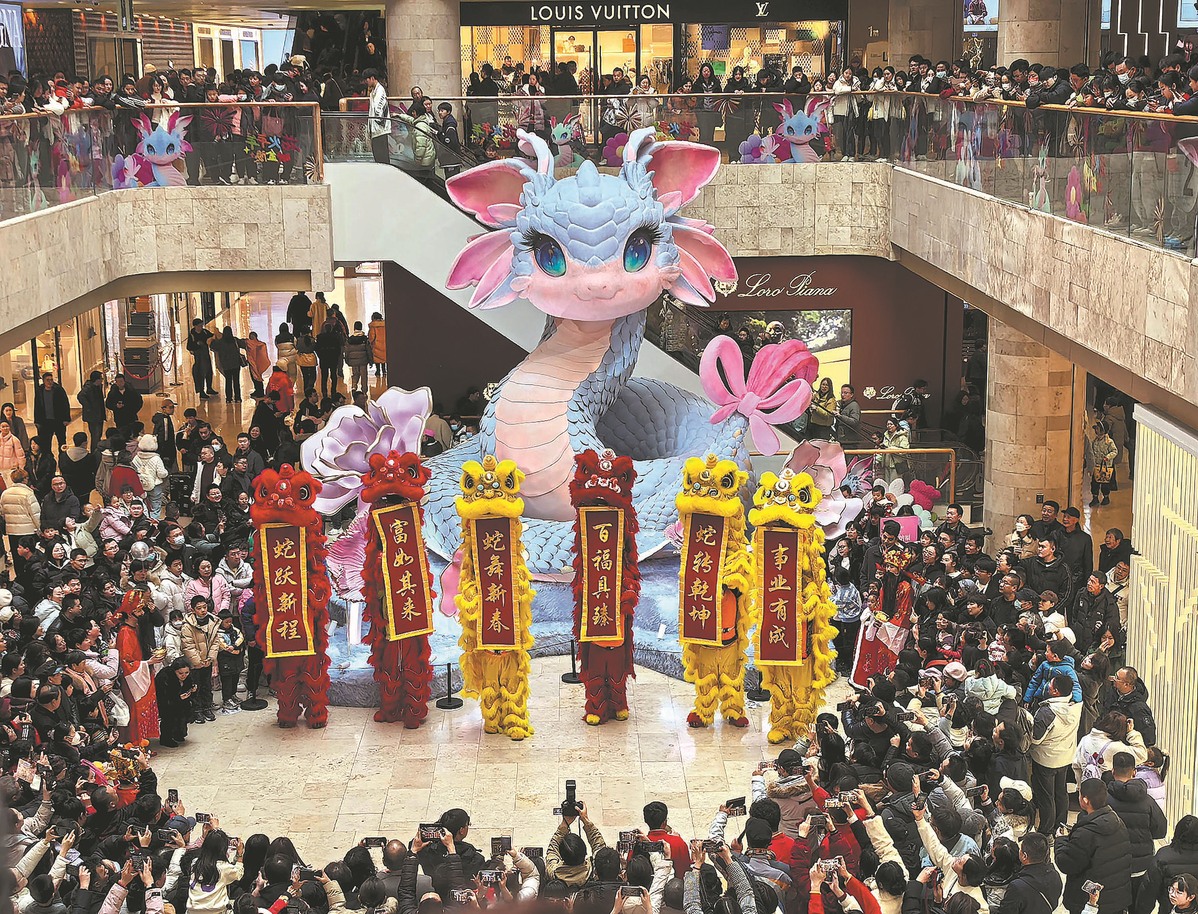
Deji Plaza's success can also be attributed to a strategic pivot in its customer targeting. The mall is a magnet to affluent consumers in Jiangsu and the rest of the Yangtze River Delta region, as well as neighboring Anhui province.
Unlike SKP malls, which have long cultivated an exclusive, high-end atmosphere, Deji has increasingly turned toward Generation Z — young, digitally savvy consumers who value novelty, interaction and affordability as much as luxury labels.
Gen Z consumers, born between 1995 and 2009, are reshaping retail preferences in China. Deji Plaza has responded aggressively to this shift by layering lifestyle experiences and trend-driven retail offerings atop its luxury core. Its approach includes flagship store expansion. In 2024 alone, Deji Plaza opened about 54 new flagship stores, such as Burberry's first global beauty concept store, Prada's first Asian fragrance store and Carita's first Asian boutique.
The locally focused mall has prioritized fashion diversity, bringing in fashion-forward and youth-oriented brands like Chuu, Nerdy and Undefeated, appealing to trend-savvy young shoppers.
The plaza features 63 food establishments, ranging from high-end Korean BBQ to viral names like Shake Shack and %Arabica, which help generate consistent foot traffic and social media buzz.
One highlight of Deji's locally relevant services is its design for social sharing as it has invested heavily to upgrade its restrooms into themed "tourist attractions". It also houses art shows and a prolonged shopping experience at night.
Beyond Nanjing, Guangzhou, Guangdong province — a city once seen as lagging in luxury — has also seen growing interest from high-end brands. In contrast to Shenzhen, Guangdong, and the neighboring city of Hong Kong — where top-tier labels have multiple stores — Guangzhou has historically hosted only one location each for brands like Hermes, LV and Dior.
However, this is changing. According to a recent performance report by developer Swire Properties, demand for prime retail space in Guangzhou remains robust.
Meanwhile, the changing landscape of high-end shopping is also a result of evolving spending patterns.
Data from the Hurun research institute support this shift. In 2023, wealthy Chinese households — with assets above 10 million yuan — reduced their luxury spending share from 18 percent to 12 percent, reallocating funds toward health, education and travel.
While luxury brands face cooling interest, sportswear and lifestyle brands are surging. Athleisure has become part of daily life and sports label superstores are expanding rapidly across China.
- Shanghai International Coffee Culture Festival 2025 is set to kick off
- Shanghai makes steady progress in international financial center construction: official
- US student protesters call for end to Trump pressure on universities
- Ten photos from across China: April 11 - 17
- Shanghai achieves full 5G coverage across entire metro system



















