Carving friendship: Siem Reap gains with Datong
China, Cambodia foster economic cooperation, boost people-to-people exchanges through culture, tourism







Editor's note: Amity between the people holds the key to sound state-to-state relations. China Daily will come out with a series of stories highlighting Chinese cities' special connections with sister cities, mutual understanding, trust and friendship between peoples of different countries and cultural backgrounds, and shining light on "city diplomacy".
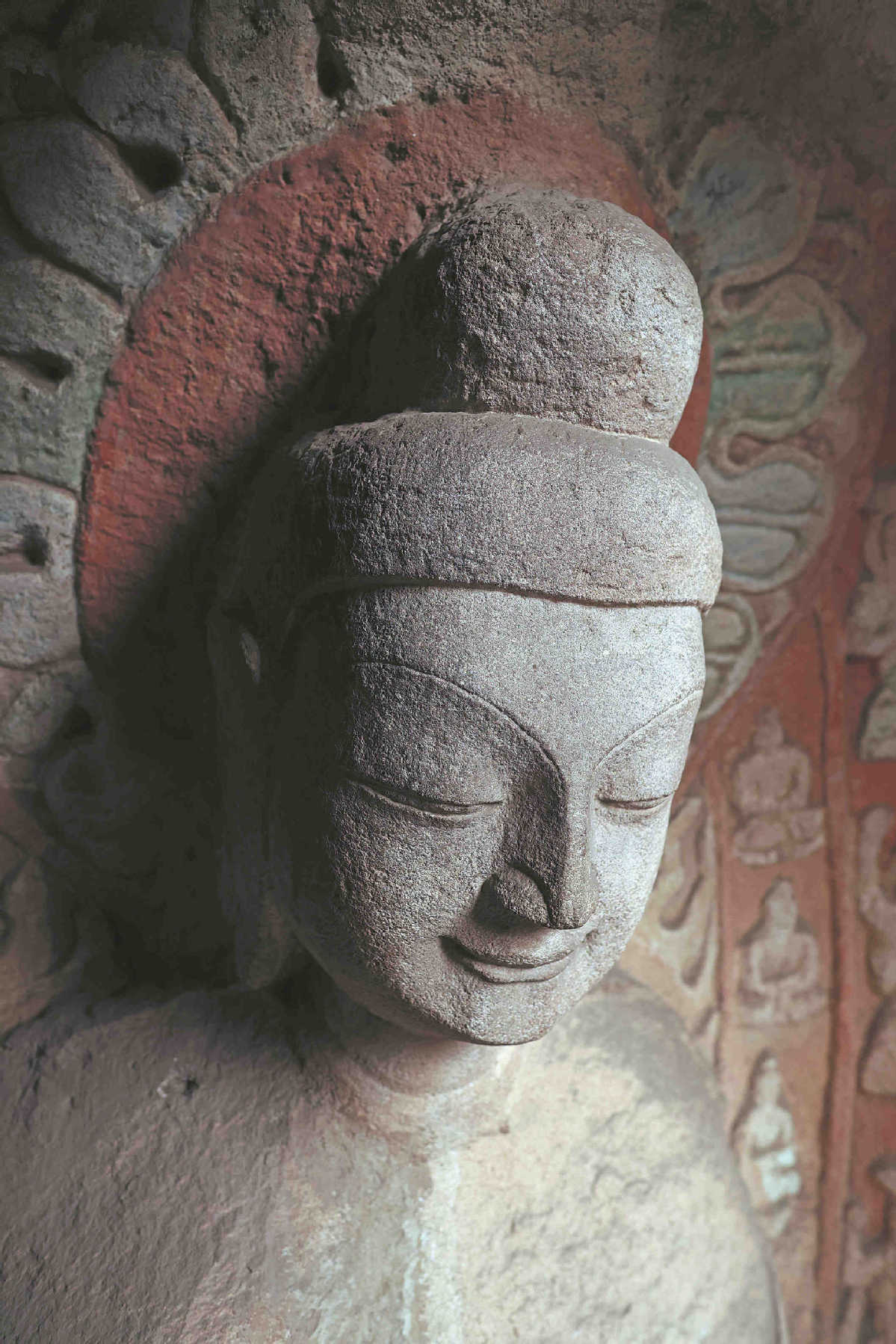
The Yungang Grottoes of North China and the Angkor Wat temple complex of Cambodia are 3,000 kilometers apart, but together these ancient treasures are forging new identities that are helping bring the countries together.
The grottoes were carved into cliffs in the 5th century, and Angkor Wat sprang up in the 12th century. And they seemed to take on two distinct roles: Yungang in Datong, Shanxi province, guarded China's overland Silk Road, and Angkor Wat in Siem Reap thrived through the influence of the Maritime Silk Road.
Yungang's caverns have carvings of Central Asian merchants leading camel trains laden with silk, and Angkor Wat's stone walls depict Chinese traders with Khmer counterparts weighing fishery products — twin snapshots of cross-cultural exchange etched in stone for the ages.
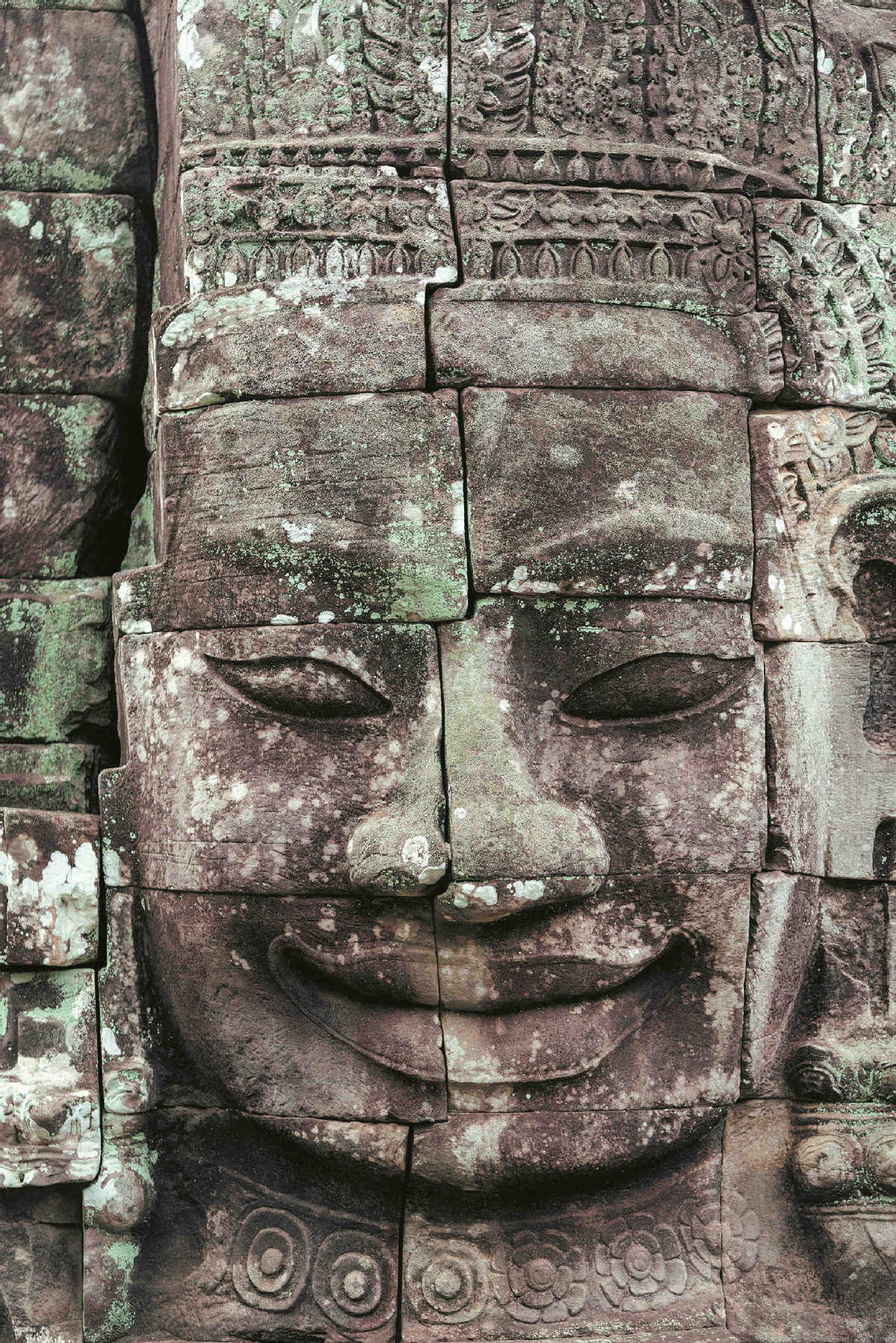
Now these once silent witnesses to trade, which have in more recent years become UNESCO World Heritage sites, are collaborators in a cultural exchange with truly modern dimensions.
That exchange stretches far beyond the dusty confines of archaeology. Now it extends to economics, education, employment, and also where to go for the next overseas trip.
Wen Bo, head of the Shanxi Chamber of Commerce in Cambodia, and who has been a driving force behind a sister-city bond that has taken shape between Datong and Siem Reap in recent years, said Shanxi expatriates have established a presence in Cambodia in areas including construction, culture, energy, healthcare and technology.
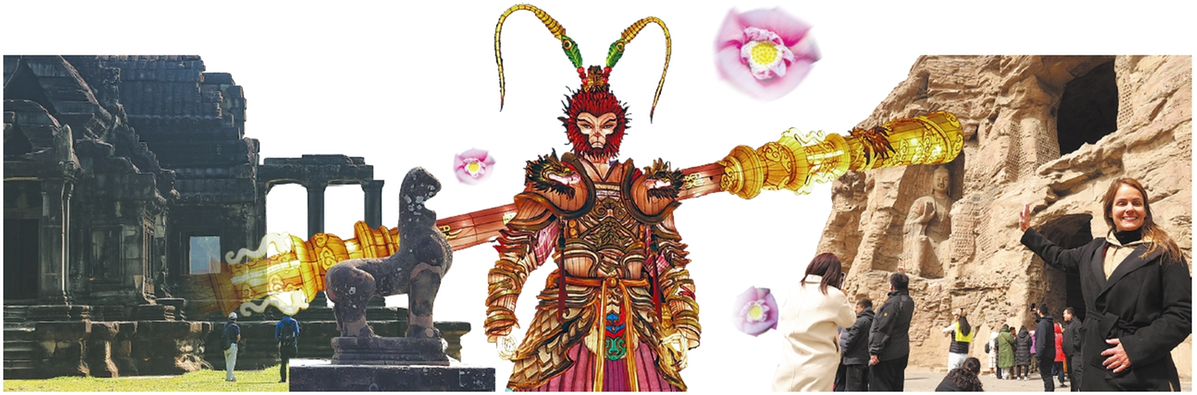
Their focus is twofold, Wen said, to steer Shanxi companies in Cambodia toward the Belt and Road Initiative through trade and commerce, and to increase people-to-people exchanges between Shanxi and Cambodia through culture and tourism.
As for those historic sites, their modern chapter began in 2018 when Cambodian officials visiting Yungang had a flash of inspiration: Why not make these heritage sites veritable sisters? By 2019, they had signed a memorandum of understanding to establish such a relationship, including sharing ideas on restoration and helping to develop tourism in both places. When their home cities, Datong and Siem Reap, officially became international sister cities in 2021, this relationship forged in stone took on a more modern, dynamic look.
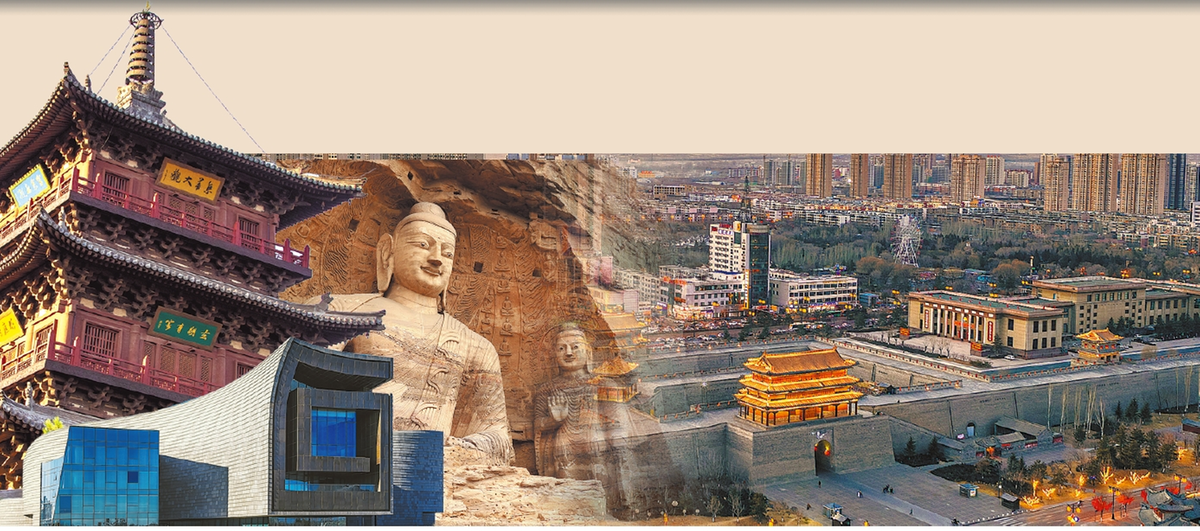
Li Xia, director of the Foreign Affairs Office of the Datong Municipal People's Government, said advancing the sister-city relationship with Siem Reap and promoting international collaboration in studies will help globalize the Yungang Grottoes and related studies.
Following the launch of the game Black Myth: Wukong in August, Datong's cultural riches have captivated global tourists, drawing them to explore the game's featured locations, Li said.
In 2024, the city's primary scenic attractions welcomed more than 16.7 million visitors, marking a remarkable 108 percent surge from the previous year, according to the Datong government.
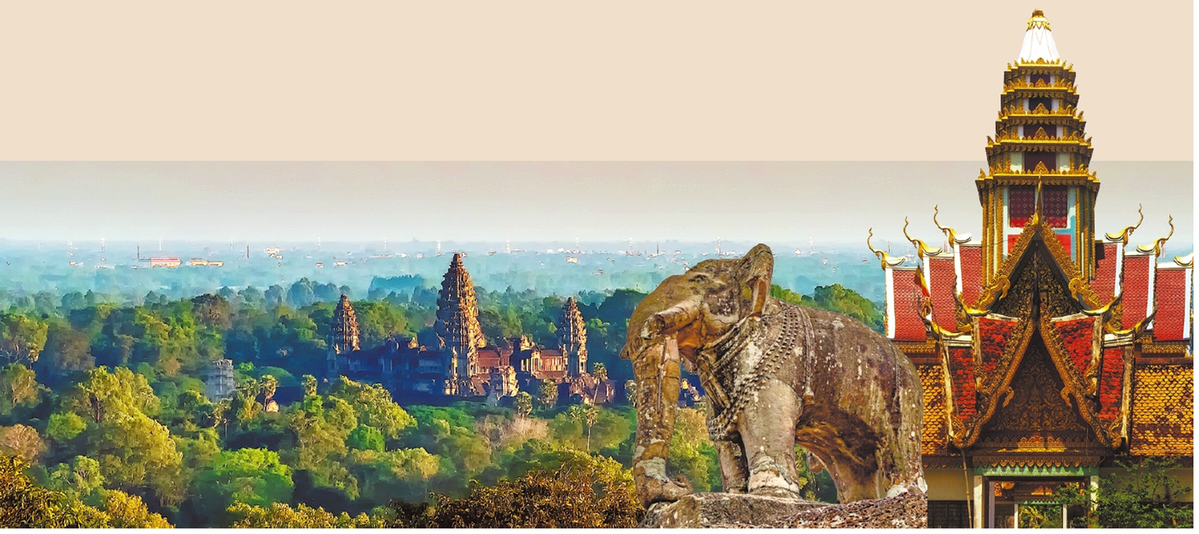
Links strengthened
Cultural ties between the two cities have strengthened since 2021, she said, anchored by the exhibition Re-find the Smile of Khmer, a key part of the Yungang Grottoes' display series. The exhibition illuminates China's technical contributions to Angkor Wat's preservation and functions as a platform to increase Datong's understanding of its sister city's cultural treasures.
Yan Hongbin, a scholar in heritage conservation and repair from the research institute of the Yungang Grottoes, who has conducted academic exchanges with Angkor Wat, said both sites have strong demands related to the preservation of their stone treasures.
"Angkor Wat is working to combat tropical humidity and biological erosion, and Yungang is battling weathering and water seepage. Cultural relics, viewed through history's long lens, possess life cycles and will ultimately fade. Our mission is to decode their life stories through research and extend their life span through our conservation efforts."
In 2011 China set up a project to help restore the Ta Keo temple 6 kilometers from Angkor Wat, and the work was completed in 2018 at a cost of 40 million yuan ($5.7 million). China is now conducting conservation and restoration work on the royal palace ruins in nearby Angkor Thom, a 10-year project costing 90 million yuan.
"Our joint conservation work exemplifies the unbreakable Cambodia-China friendship," said Chea Munyrith, president of the Cambodian Chinese Evolution Researcher Association.
One of the latest examples of such close collaboration is Siem Reap-Angkor International Airport, which opened in October 2023, and bears Shanxi's strong imprint.
Shanxi Mechanization Construction Group helped with the airport construction, including building a 3,600-meter runway, four taxiways, parallel taxiway sections on both flanks, drainage systems with slope protection, perimeter roads and fencing for the entire airfield.
The Shanxi Daily quoted Hou Yucheng, the airport construction project manager, as saying that with eight-month rainy seasons limiting annual construction windows to 180 days, the company had to optimize schedules while implementing localized management.
"Most areas contained soil that rapidly loses strength when saturated, which is a critical geotechnical hurdle."
The airport exemplifies Shanxi's engagement in Belt and Road Initiative infrastructure development, the Shanxi Daily reported.
In the airport's first operational year it handled 14,700 flight movements with 1.32 million passengers, Xinhua News Agency reported. Its 15 routes connecting eight countries in South Asia and Southeast Asia have accelerated Cambodia's economic and cultural exchanges, it said.
Beyond borders
Cambodia's tourism industry generated a revenue of $3.63 billion last year, the country's tourism ministry said, and Angkor Wat welcomed 82,675 Chinese visitors, 48 percent more than that in 2023.
The collaboration between Datong and Siem Reap transcends mere paperwork. It is rooted in profound philosophical alignment, the heritage of both cities, in China and Cambodia, embodying Eastern values of peace, harmony and coexistence, scholars say.
During fieldwork, Luo Yang, a researcher at the China Institute for Chinese Overseas Studies, said she traversed the kilometer-long Banteay Srei temple daily, each step taking in what she called "civilizational collision", in which cultures intermingle. "Ancient Angkor was the world's crossroads," Luo said.
Artifacts unearthed at the Oc Eo port site-Roman coins, Iranian crafts and Han Dynasty (206 BC-AD 220) bronze mirrors of China — prove its role as a Eurasian maritime hub.
"Walking through these ruins I constantly sense the open spirit of the Silk Road," she said.
Cultural fusion permeates daily life. Local units of measure, such as the silver liang and the rice dou — echo ancient Chinese terms, their linguistic parallels taking in centuries of exchange. During her research, Luo said, she found households preserving shrines inscribed with Chinese characters.
"Even families unfamiliar with the language uphold this tradition, a legacy of ancestral intermarriage that maps the contours of cultural convergence."
Vuth Sophakna, general director of the International Chinese Education and Teachers Institute at the Royal Academy of Cambodia in Phnom Penh, attributes Angkor's splendor to its historical openness.
"By engaging with Silk Road civilizations, Angkor absorbed diverse cultural nutrients through inclusive exchanges."
Luo said: "Angkor's prosperity offers enduring lessons — for Cambodia, Southeast Asia and our globalized world — on navigating relations between nations, civilizations and ethnic groups."
Like Siem Reap, Datong served as a crossroads of civilizations, at one point as the capital city of the Northern Wei Dynasty (386-534). The dynasty was established by the ancient ethnic group the Xianbei, which promoted sinicization by adopting the Chinese language, attire, surnames and interethnic marriages, and finally merged with the general Chinese nation by the time of the Tang Dynasty (618-907).
"Datong epitomizes China's unified yet diverse national identity," said Sun Yu, a professor in the College of Yungang Studies at Shanxi Datong University. "During the Tang Dynasty alone the region hosted 16 ethnic groups, with cultural integration spanning millenniums."
Wu Jiao, a scholar from the research institute of the Yungang Grottoes, points to Cave 12 of the grottoes as evidence of this. Known as the "Music Cave", it contains carvings of 47 musicians and 44 instruments ranging from Persian harps and Indian lute variants to Kucha region's musical instruments such as five-stringed pipa and zheng.
Interconnected development
Sophakna said: "These carvings demonstrate Asia's interconnected civilizational development. Unlike Western colonial expansion, Silk Road exchanges were grounded in equality and mutual benefit. History shows that dialogue, not confrontation, is how civilizations deepen understanding."
Jia Weihua, general manager of outbound tourism of Shanxi Baohua Shengshi International Travel Agency in Taiyuan, said the company started direct flights from Datong to Siem Reap in 2017, before the pandemic, and the agency is working on restoring more international chartered routes.
Last year, Jia said his travel agency has seen the number of people from Shanxi traveling to Southeast Asia rise by 25 percent.
"Driven by visa-free policies and streamlined measures, Southeast Asian tourism is rebounding strongly. Travelers are switching from rushed sightseeing to in-depth cultural immersion. Modern itineraries give priority to immersive local experiences — food, accommodation, transportation and leisure — over tightly packed sightseeing checklists."
An increasing number of tour service providers are seeking opportunities using Chinese social media such as Xiaohongshu, or RedNote, to work for individual tourists from China.
Song Bunly, 29, one of the best-known Cambodian taxi drivers on Xiaohongshu, said his first post on the platform was written with the help of a Chinese family that visited Siem Reap last July.
"This order was sent from a travel agent. I never knew how to connect with individual customers from China until the trip ended happily and the customers recommended that I use Xiaohongshu."
Over the past nine months, Song said, he has served nearly 200 Chinese tourists.
In that work, his knowledge of Mandarin has been invaluable. He began to learn it at a local language school after he graduated from college, he said. A year into his learning he started working for a duty-free shop in Siem Reap, where he had many Chinese customers, and his Mandarin skills continued to improve.
He eventually set up his own tour company, providing services to Chinese tourists.
"In the Cambodian capital Phnom Penh and in the city of Preah Sihanouk, locals who can speak Mandarin can earn as much as $1,000 a month," he said, adding that his younger brother now works for a Chinese company in Preah Sihanouk.
Suy Sreynuth, 21, a Cambodian studying Chinese language at Shanxi University in Taiyuan, said she chose to study in China to learn about cultural legacy and the journey of growth across historical eras.
"Shanxi, one of China's most culturally profound provinces with its ancient architectural treasures and traditional arts, offers unparalleled resources to advance my learning."
Suy said she has forged friendships with Chinese peers while fostering cultural exchange through mutual learning.
"When I talk about Cambodia's historical heritage, traditional festivals and dance and musical traditions, my Shanxi friends always respond enthusiastically," Suy said.
"Studying in Shanxi has profoundly influenced my personal growth. It has pushed me to understand diverse cultural contexts, build new connections and become more resilient."
After completing her undergraduate studies in China and returning to Cambodia she will use the skills to bring the two countries closer together, she said.
Contact the writers at houchenchen@chinadaily.com.cn.