



Rekindling the Bandung Spirit







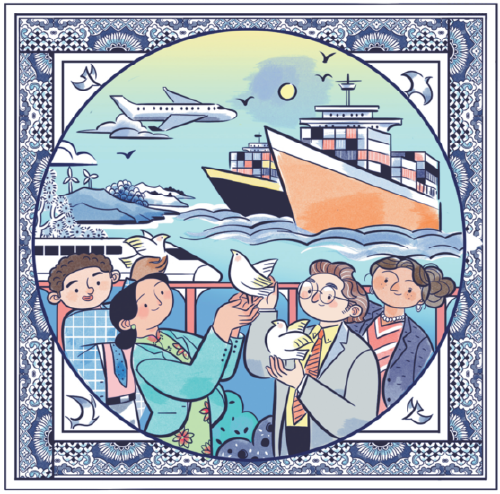
Articulated in 1955, it remains as relevant today as it was in the aftermath of colonialism and offers a strategic compass for navigating the complexities of a multipolar world
As the world commemorates the 70th anniversary of the historic Bandung Conference, it is an opportune moment to reflect on the enduring relevance of the Bandung Spirit in today's complex geopolitical landscape. Held in April 1955 in Bandung, Indonesia, the conference brought together 29 Asian and African nations, many of which were newly independent states emerging from the shadows of colonialism.
The leaders of these nations articulated a shared vision of solidarity, self-determination and collective resistance to imperialism. The Bandung Conference laid the foundation for the Non-Aligned Movement, which sought to carve an independent path for the Global South amid the polarizing tensions of the Cold War.
Seventy years later, the world once again stands at the precipice of a new Cold War, with escalating rivalry between major powers reshaping global political and economic alignments. The resurgence of great power competition threatens to divide the world into opposing blocs, forcing developing nations into strategic dependencies reminiscent of the Cold War era. In this context, the Bandung Spirit's emphasis on political sovereignty, non-interference and peaceful coexistence remains strikingly relevant. The collective rise of the Global South presents a historic opportunity to harness this spirit to advance global governance reform.
The Bandung Conference was a bold assertion that the future of global governance could not be determined solely by the dominant powers of the Global North. By advocating political sovereignty and economic self-determination, the Bandung principles challenged the entrenched global power structures that had marginalized the Global South.
For African nations, the Bandung Conference's legacy was profound. The conference affirmed their right to self-governance and provided a platform for collective action against political subjugation and economic dependence. The call for racial equality and justice emboldened liberation movements across the continent, from Ghana's independence in 1957 to the dismantling of apartheid in South Africa decades later. The establishment of the Organization of African Unity in 1963, now the African Union, reflected this newfound confidence and the desire to institutionalize the ideals of unity and self-reliance championed at Bandung.
The principles articulated at Bandung — such as mutual respect for sovereignty, nonaggression, non-interference in domestic affairs, equality and peaceful coexistence — provided the moral and political foundation for the Non-Aligned Movement. Throughout the Cold War, the Non-Aligned Movement member states resisted pressure to align with either Washington or Moscow, instead advocating a "third way" rooted in the principles of self-determination and economic independence. This ethos empowered developing nations to negotiate trade agreements, demand fairer resource pricing and resist exploitative conditionalities tied to foreign aid.
The Global South now possesses significantly greater economic and political leverage than it did during the Cold War. The rise of China, India, Brazil and other emerging economies has shifted the balance of power in international forums such as the G20, BRICS and the Shanghai Cooperation Organization. The AU's recent inclusion in the G20 underscores the growing influence of the Global South in shaping the global agenda.
The emergence of new diplomatic and trade frameworks, such as the African Continental Free Trade Area and the Belt and Road Initiative, reflects the strategic and economic potential of South-South cooperation to reshape the global order. At a time when great power competition is intensifying, the Global South must resist being co-opted into external spheres of influence and instead assert its agency through coordinated action and strategic alignment.
The Bandung Spirit offers a path to navigate global tensions without succumbing to external pressures. The principles of nonalignment and peaceful coexistence provide a framework for developing nations to assert their agency, pursue independent foreign policies and negotiate from a position of strength. By prioritizing South-South cooperation and collective bargaining, the Global South can resist being drawn into a zero-sum competition between the major powers.
Despite the growing economic and political clout of the Global South, however, international institutions continue to reflect post-World War II power dynamics. The International Monetary Fund and the World Bank are still dominated by Western financial interests, while the United Nations Security Council's permanent membership continues to exclude African and Latin American countries. The failure of developed nations to honor their climate finance commitments under the Paris Agreement and the inequitable distribution of the COVID-19 vaccines further underscore the need for a more just and balanced global order.
The Global South's growing leverage in multilateral platforms such as BRICS and the SCO presents an opportunity to push for these long-overdue reforms. The establishment of the New Development Bank and the BRICS Contingent Reserve Arrangement is a concrete step toward reducing dependency on Western-dominated financial institutions. The AfCFTA, launched in 2021, embodies Bandung's vision of intra-regional economic solidarity, aiming to uplift people on the continent through reduced trade barriers and shared prosperity.
Climate change, economic inequality and global health crises represent existential threats to the Global South that demand collective action and solidarity. Developing nations, despite contributing least to global carbon emissions, are bearing the brunt of climate-related disasters. The Bandung principle of mutual benefit calls for greater collaboration among developing countries to demand climate justice, increase green technology transfer and push for more ambitious emissions reductions from industrialized nations.
The COVID-19 pandemic exposed the fragility of global solidarity, as hoarding of vaccines by wealthy nations undermined global recovery efforts. However, initiatives such as India and South Africa's campaign for a temporary World Trade Organization waiver on COVID-19 vaccine patents, though initially resisted by Western nations, reflect the Bandung-era ethos of collective bargaining and moral persuasion.
The Global South's response to these challenges will determine whether the Bandung Spirit remains a historical relic or a living political philosophy. To harness this spirit effectively, developing nations must invest in institutional capacity-building, strengthen regional cooperation and leverage their collective economic and political weight to challenge inequities in global governance. Strategic alignment within platforms such as the AU, BRICS and the G77 can amplify the voices of developing nations and create a more balanced global order.
The Bandung Spirit articulated in 1955 remains as relevant today as it was in the aftermath of colonialism. The Bandung Spirit offers a moral and strategic compass for navigating the complexities of a multipolar world. By embracing collective action, the Global South can assert its agency, advance global governance reform and champion a more just and equitable international order. The Bandung Conference's enduring legacy is a reminder that unity and self-determination are not just historical aspirations, but also the keys to shaping a more balanced and prosperous future.
The author is executive director of South-South Dialogues, a Nairobi-based communications development think tank. The author contributed this article to China Watch, a think tank powered by China Daily. The views do not necessarily reflect those of China Daily.
Contact the editor at editor@chinawatch.cn.





