Old mines given new purpose
Scars of industry in Inner Mongolia mitigated by green transformation







Editor's note: China Daily is publishing a series illustrating the country's efforts to achieve its carbon peak and carbon neutrality goals.
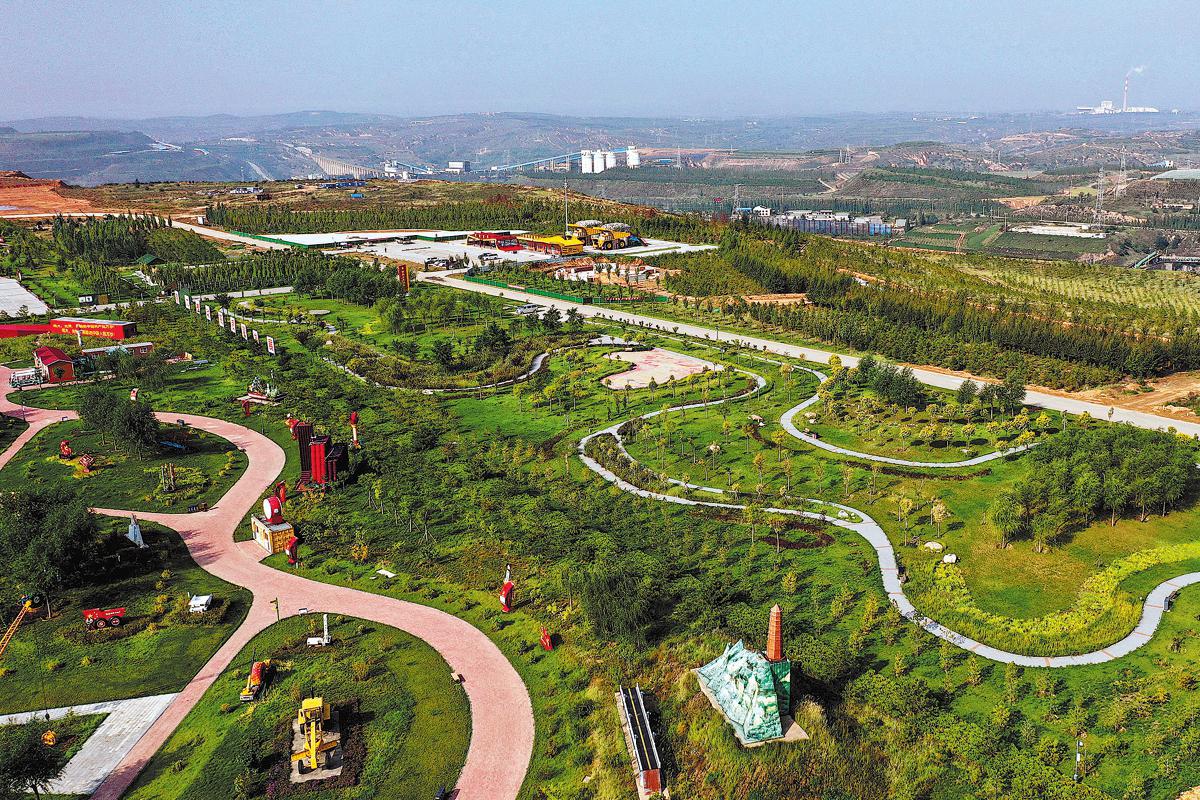
The once dirty coal mines in Juungar Banner in the Inner Mongolia autonomous region have been given a face-lift and transformed into areas of greenery and wildlife, fueling agriculture and eco-tourism thanks to the combined efforts of enterprises and government.
Land transformation
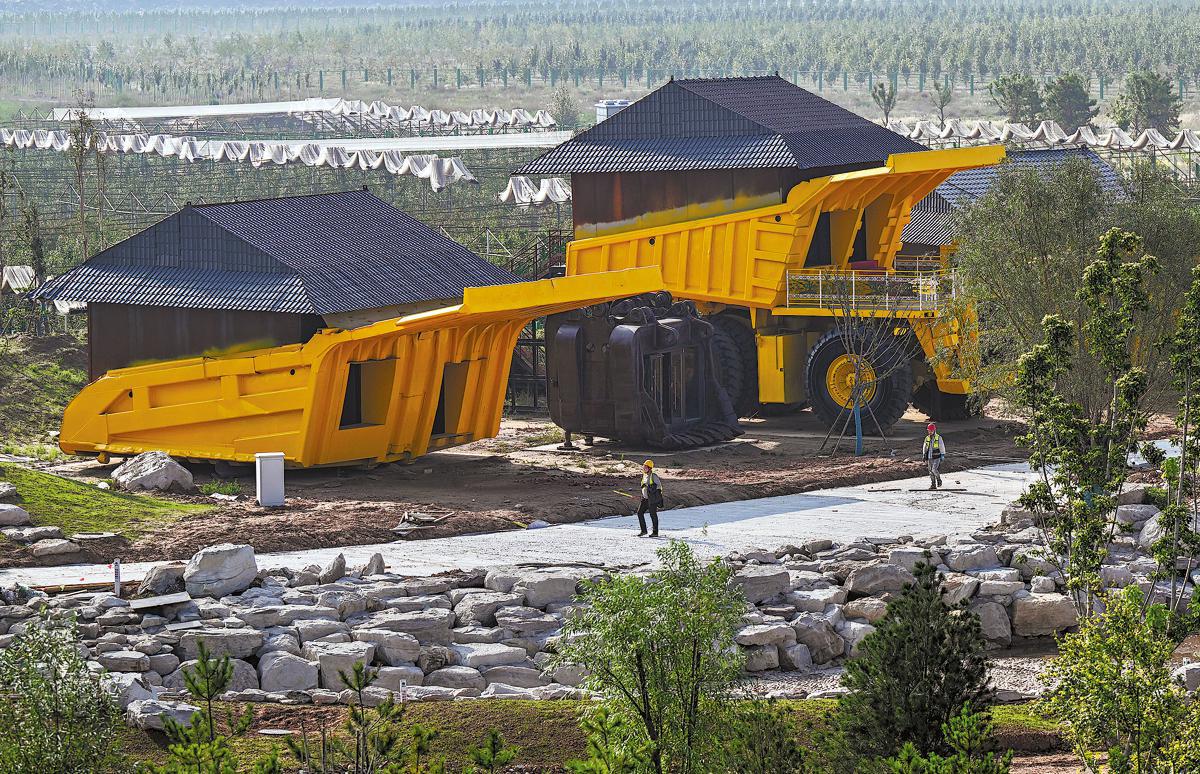
Zhunneng mine ecological park in the banner features the Heidaigou and Khar Us open-pit coal mines, once the largest mines in Asia with a total annual production capacity of 69 million metric tons.
The zone was once marked by the deep scars of coal extraction — sunken valleys and uneven slopes where the earth had settled after years of mining. The air often carried a haze of fine black dust, remnants of coal that lingered in the breeze and dulled the sunlight. The land, reshaped by industry, bore the signs of its past with thin soil, sparse vegetation and a delicate ecosystem struggling to recover, according to Inner Mongolia Daily.
Today, the great roar of mining operations is no longer heard, nor is dust seen in the air. Instead, there are verdant forests, a mix of grass, shrubs and trees, dotted with wildflowers, and wild partridges darting about.
This remarkable transformation stems from comprehensive environmental initiatives and substantial investments from Zhunneng Group, a subsidiary of China Energy Investment Corporation, according to Wang Yu, deputy director of Zhunneng Group's eco-protection department.
Wang said the company has invested 28.8 billion yuan ($450 million) over 30 years in comprehensive ecological restoration, and has consistently taken systematic measures including soil improvement, targeted vegetation replanting, innovative water management systems and noise control.
The group has restored 6,567 hectares of land. The vegetation coverage rate has dramatically increased from 25 percent to over 85 percent, with all mining areas achieving complete 100 percent reclamation, according to Wang.
"The restored area has seen biodiversity flourish, with species numbers jumping from just over 30 to more than 300. Wildlife such as ruddy shelducks, foxes and lynxes have now settled in the revitalized ecosystem," Wang said.
Building on these ecological restoration achievements, Zhunneng Group has pioneered an eco-tourism initiative — Zhunneng mine ecological park — showcasing a sustainable model where environmental recovery and economic growth thrive in synergy, according to Wang.
Since starting operations in 2022, Zhunneng mine ecological park has welcomed approximately 270,000 visitors, with 130,000 last year alone, quickly becoming a new landmark for tourism in Ordos, according to Xinhua News Agency.
Food repository
At the western edge of the Heidaigou open-pit coal mine, the blue sky forms a backdrop to a harmonious integration of ecology and agriculture, with employees sowing seeds across reclaimed fields.
Trucks loaded with farmyard manure depart one after another, heading toward the mining area to provide ample nutrients.
"In mid-April, we till the soil, form ridges and cover them with film, and in early May, we start phased planting of crops such as potatoes, corn, melons, peppers and eggplants on this reclaimed land," said Duan Guojun, leader of the landscaping service team at Zhunneng Group's production service center.
Duan told reporters that all the fruits and vegetables produced in the fields will be supplied to the employee cafeteria.
"These vegetables are free from chemical fertilizers and pesticides. Since we witness the entire growth process from sowing the seeds to harvesting, we feel totally safe eating them. This is the advantage that green mine construction has bestowed upon our employees," Li Haifeng, an employee of the landscaping team at Zhunneng Group's production service center, was quoted as saying by the Juungar Banner integrated media center.
Another employee, Wang Qiang, was also quoted as saying: "In the past, we had to go far to buy vegetables. Now, we can not only eat fresh, green vegetables in the cafeteria but also participate in the picking during harvest season, experiencing the joy of labor."
These vegetables not only meet the daily needs of employees but also become an emotional bond connecting the enterprise and its workers, according to the Juungar Banner integrated media center.
Government efforts
The Juungar Banner government is promoting overall green mine construction throughout the banner. Since the implementation of Juungar Banner's three-year green mine construction action plan, 50 green mines have been built, said Jiao Zhanjun, a director at the ecology restoration department of the Juungar Banner bureau of natural resources.
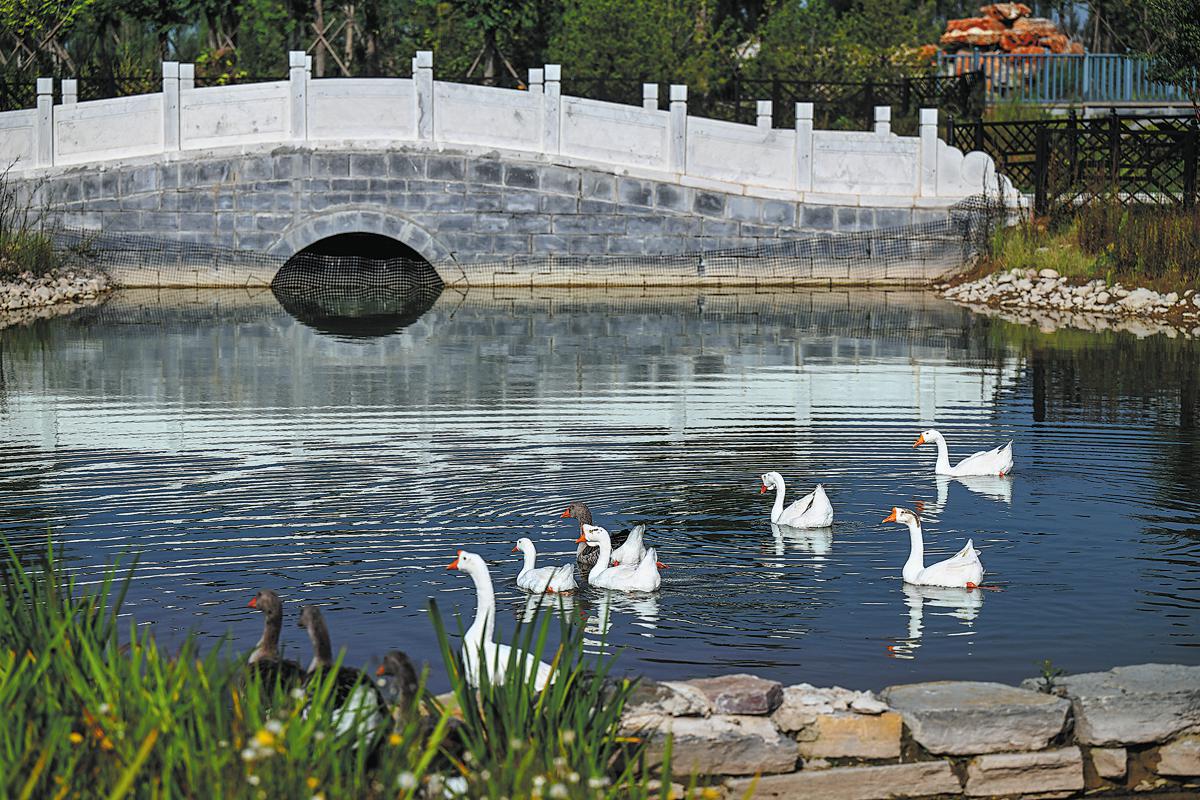
Wildlife such as the black stork, roe deer and foxes, once rare to see, now frequently appear here. The wetlands along the Yellow River in Juungar Banner have become a popular port of call for migratory birds, with tens of thousands of previously rare species like swans, wild geese and cranes passing through this area, according to Xinhua.
"The significant increase in the number of migratory birds is a direct reflection of the continuous improvement of the ecological environment in Juungar Banner, which is closely linked to the long-term promotion of green mine construction," Xue Yong, head of the natural protection and wildlife management station of the Juungar Banner forestry and grassland bureau, was quoted as saying by Xinhua.
Contact the writers at lipeixuan@chinadaily.com.cn



- China launches action plan on children's health
- Inner Mongolia sets 7 priorities at start of 15th Five-Year Plan
- PLA rocket artillery can strike all of Taiwan, expert says
- PLA simulates port seizures in drills east of Taiwan
- Former ACFTU vice-chairwoman under investigation
- Copyright industry exerts influence on China's economy