



Indonesia, China's economies complementary







Relations between Indonesia and China have historically been very dynamic, not only from the political and sociocultural point of view but also from the economic perspective. The increasingly close economic ties between the two sides, particularly over the past two decades, have attracted considerable attention from scholars as well as ordinary people.
China has been Indonesia's most important trading partner for more than a decade and a major source of foreign investment, while Chinese tourists constitute one of the largest groups of visitors to Indonesia. China has also been the largest source of imports for Indonesia since 2010, and the largest export destination since 2016. In 2024, Sino-Indonesian trade reached over $135 billion.
Chinese investment, too, has seen a dramatic increase, from $173.6 million in 2010 to $7.4 billion in 2023, making the Asian giant the second-largest foreign investor in Indonesia, after Singapore.
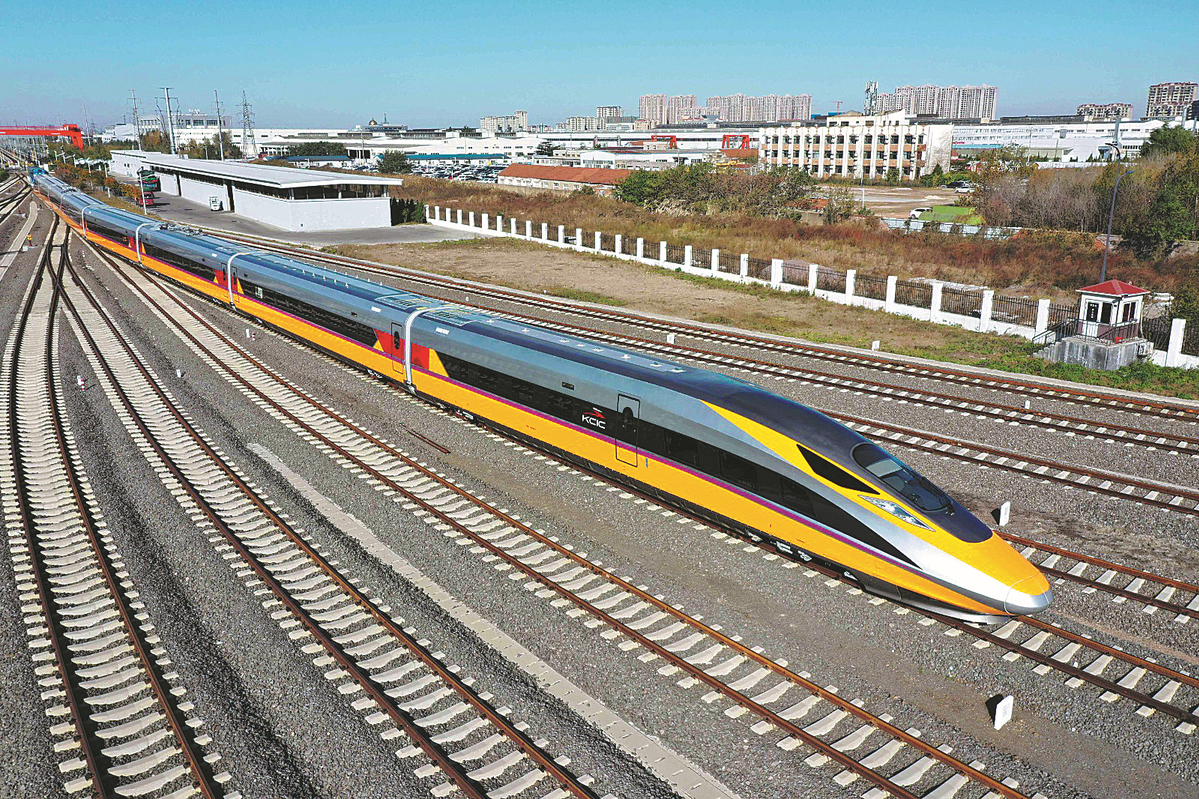
Chinese investment in Indonesia began increasing following the implementation of the Belt and Road Initiative. Chinese funding for the Belt and Road projects in Indonesia began in 2015, mostly in infrastructure including the development and expansion of seaports and dams. Subsequent investments, especially in the Jakarta-Bandung high-speed railway, have resulted in landmark projects.
Launched in 2023, Whoosh, the name of the high-speed train, became the first of its kind in Southeast Asia and is expected to improve connectivity and economic growth in the region. Since becoming operational, it has ferried nearly 8 million passengers.
Apart from infrastructure projects, Chinese investments have also played a pivotal role in the nickel processing industry in Indonesia. Supported by the ban on nickel ore exports, Chinese investments in nickel smelters, particularly in the nickel-rich regions of eastern Indonesia such as Sulawesi and Maluku, have intensified in the last decade.
These investments have contributed to the increase in Indonesia's exports of manufactured goods, especially of nickel-based products. The value of Indonesia's ferro alloy exports to China, for example, jumped from $185 million in 2015 to $4.5 billion in 2020. In fact, in 2020, nearly 96 percent of Indonesia's ferro nickel exports were destined for China.
Besides, Indonesia is trying to boost its nickel-based downstream industrial development, particularly in the electric vehicles (EV) sector. Since 2022, the Indonesian government has been providing various fiscal and non-fiscal incentives to not only promote the sales of EVs but also attract investments in EV manufacturing, including EV batteries. China has become the major beneficiary of these incentives, as indicated by the fast-growing sales of Chinese-made EV brands manufactured by companies such as BYD and Wuling in Indonesia in the last couple of years.
In addition, both countries have deepened cooperation in industrial parks, solar photovoltaic panels and the digital economy, as well as artificial intelligence research and development.
In international forums, Indonesia and China have worked together under various multilateral cooperation frameworks, including Asia-Pacific Economic Cooperation, the G20, the Regional Comprehensive Economic Partnership, and BRICS.
People-to-people exchanges between the two countries have also become increasingly important. In 2024, nearly 8.6 percent of the 13.9 million international tourists visiting Indonesia were Chinese, making China the fourth-largest source of foreign tourists for the country, after Malaysia, Australia and Singapore.
Given their closer economic ties, and increasing influence in global and regional affairs, the two countries are likely to strengthen their strategic engagement and economic collaboration. Indonesian President Prabowo Subianto's visit to Beijing, shortly after his inauguration, reflects his intent to sustain the country's relationship with China.
However, the two sides still need to improve a number of areas and engage in more beneficial collaboration. There is need for increasing investment in commodity-based processing industries while complying with environmental, social and governance principles. This is particularly important as the Indonesian government will accord priority to the development of downstream industries and could even expand it to cover mining, agricultural and other commodities.
Investments in large-scale infrastructure projects such as high-speed railways will require more rigorous planning and preparation to avoid long delays in projects and budget overruns, which may put pressure on the government's budget. It is also necessary to boost collaboration, with greater focus on the participation of small and medium-sized enterprises. This is because Indonesian SMEs don't attract huge foreign investments and their global trade is limited, despite their dominant role in the domestic economy.
In other words, Indonesia and China should further deepen and enhance the quality of their relationship. Economic cooperation between the two sides will not only contribute to the building of a stronger regional and global economy but also a more balanced, resilient and diversified global economic landscape. This is important, especially because of the rising geopolitical tensions and global economic uncertainties due to the US administration launching a devastating tariff war.
The author is the executive director of Center of Reform on Economics (CORE) Indonesia.
The views don't necessarily reflect those of China Daily.
If you have a specific expertise, or would like to share your thought about our stories, then send us your writings at opinion@chinadaily.com.cn, and comment@chinadaily.com.cn.





