Levies sow uncertainty in automotive industry







As of midnight on April 2, the United States' tariff of 2.5 percent on imported vehicles rose to a blanket 25 percent on all imported cars. Now, US President Donald Trump's "Liberation Day" speech in the Rose Garden of the White House may not feel very "liberating" to ordinary US citizens who face higher car prices and prices for car parts brought about by these tariffs or to US automotive manufacturers who are feeling the sting of the Trump administration's steel and aluminum tariffs impacting their supply chains.
The car tariffs were accompanied by announcements of new tariffs on "other goods", specifically aimed at countries with which the US feels that there is an unfair trade deficit and a tariff rate imbalance on reciprocal duty rates.
The US president dubbed the 15 percent of nations that have persistent trade imbalances with the US as the "Dirty 15".
The Trump administration has calculated the duty rate imposed on US goods by these countries, coupled with any nontariff barriers, local sales taxes and alleged currency or subsidy manipulation. The US has then imposed half that calculated amount as the new US tariff amount. Hence, in the case of China, the applicable US tariff rate is 34 percent, but when coupled with the existing 20 percent rate — which has already been imposed on China this year — and the threat of another 50 percent levy, the duty rate becomes of staggering proportion.
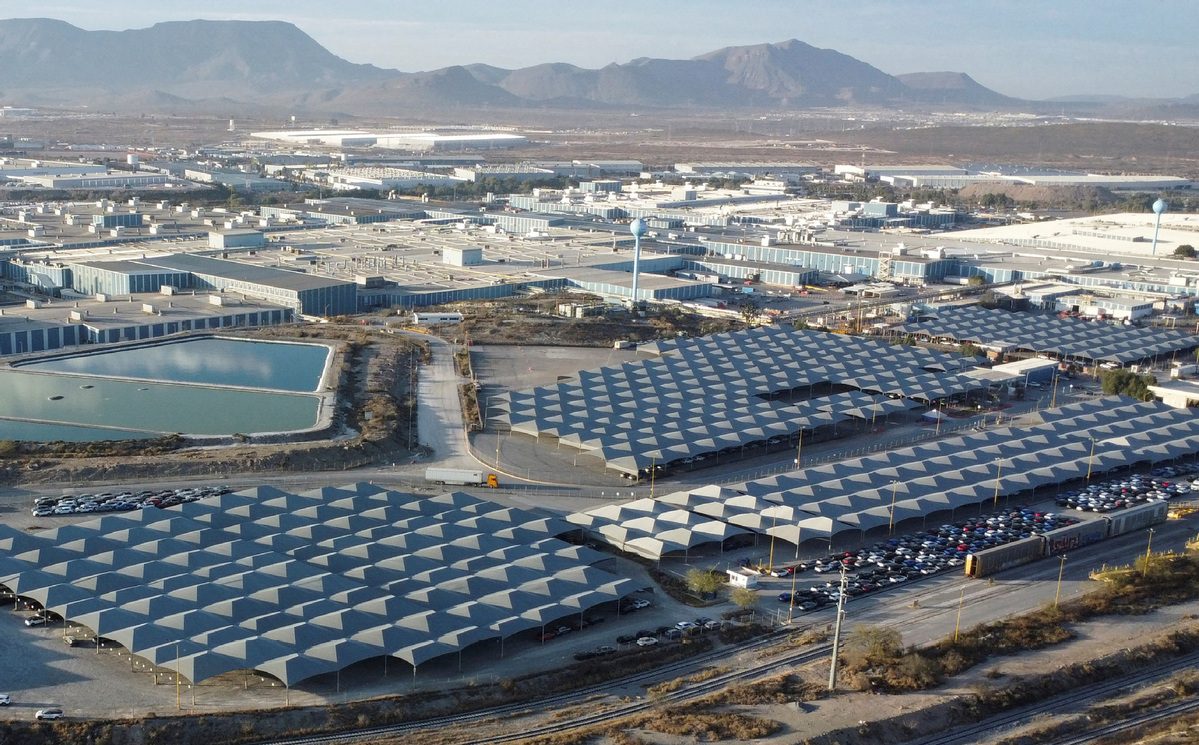
The US imported approximately 8 million cars last year, with Mexico being the biggest source of imports, followed by South Korea, Japan, Canada and Germany. Car parts will also be subject to increased tariffs once US customs work out the relevant commodity codes applicable to car parts and how to monitor them.
Many US car manufacturers have factories in both Mexico and Canada that have until now benefited from the respective free trade agreement. Share prices in certain US automotive groups have fallen, signaling their concern over developments.
Both the United Kingdom and the European Union currently charge a10 percent tariff on vehicles of US origin when imported into their respective jurisdictions. Trump sees this as iniquitous. He views the vehicle position as another example of unbalanced and nonreciprocal trade. While the US imposes nonreciprocal tariffs in 141,000 cases, it bears higher tariffs in 467,000 cases. Additionally, Trump wants to rectify positions where certain countries have a sustainable trade surplus against the US or a large difference in average duty rates.
The impact of the new tariffs will be felt even more when coupled with the recent imposition of tariffs on steel and aluminum and certain products manufactured from non-US origin steel and aluminum, as the car industry relies on these products. In response, many nations have threatened reciprocal tariffs while some automotive groups have committed to investing in manufacturing plants in the US — an outcome that fulfills one of President Trump's desires.
Hyundai, a South Korean multinational automotive manufacturer, has committed to building a steel manufacturing facility in the US. However, these types of capital projects take many years to come on line. Another South Korean car manufacturer Kia made a similar commitment a number of years ago — in a facility shared with Hyundai — which has only recently begun to produce a sizable number of vehicles.
The US is the top sales destination for vehicles of UK origin, and the UK has not yet indicated whether it would respond with retaliatory tariffs. As the UK is no longer part of the EU, it could consider a radical alternative and reduce its own tariffs on US vehicles to 2.5 percent — a rate that applied before the hike to 25 percent — to match the US rates. This would signal a further break with the EU as the UK "ploughs its own economic furrow" and would not be received well in Brussels.
Once again this reapplies the previous trade dilemma for UK Prime Minister Keir Starmer — whether his country should seek better EU trade relations for the sake of agriculture and the food industry and its desire for reduced bureaucracy and not having to revisit the Northern Ireland trading position, or seek a more isolationist policy by protecting its position with the US.
It is still not clear whether the imposition of higher tariffs will affect the classic car market. Classic cars now can fall under a different tariff code as they are deemed collectibles or articles of historical interest.
Classic cars usually need to be vehicles of a certain age or be models no longer in production to qualify for using this commodity code — which is often a nil rate of duty. This also applies to original parts imported to keep the classic car maintained. It may be difficult for US customs to enforce this blanket higher tariff on classic cars given the different commodity codes in use between "normal" and classic cars unless a different parameter could be used to identify the importation as a vehicle albeit a classic one.
These new tariffs on both cars and other goods take US tariff rates to highs not seen since the 1960s. The response of the major car-producing nations will be paramount in gauging the prospective retaliatory response and whether this, in true trade war fashion, prompts a further round of punitive tariffs. We may see a lot more US vehicles on our roads or a short-term oversupply of vehicles in the UK and EU markets. One thing is certain: In a world where car producers are in complex, integrated and extended supply chains, it means that — as happened in the 1930s — the world could be heading toward a global recession.
The author is customs & excise duty partner at the leading audit, tax and business advisory firm Blick Rothenberg in the UK.