



Tension wind-down
Might the new US administration as yet unstated 'Indo-Pacific' strategy open an opportunity for de-escalation in the South China Sea?







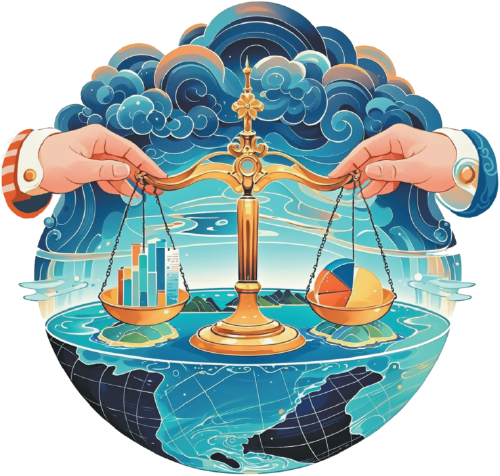
With a new trade war and pressure on Ukraine to accept an unfavorable — but perhaps, realistic — deal, the second Donald Trump administration has sent shock waves across Europe. Coupled with declarations of intent to annex the Panama Canal, Greenland and Canada to the United States, these developments have shown the Jacksonian face of the US president, and the manifestation of an old-fashioned, Manifest Destiny-inspired form of imperialism.
This has generated not unfounded speculation that the US might withdraw from its commitments on the continent — even if it is unclear what a decreased support for European security will look like. Although there is a degree of bluffing in Trump's idiosyncratic style — that is, an "aggressive" way of negotiating and extracting favors from allies — and between administrations there usually is a degree of strategic continuity and tactical change, it is fair to ask the question of whether the second Trump administration will mark a shift in US policy toward Europe.
Is this the same for "Indo-Pacific"? It is too early to say after only two months. Nonetheless, the pendulum at this stage swings toward a general continuity, rather than change. Since the first Barack Obama administration's "pivot to Asia", the US has sought to invest greater diplomatic and military energies in the "Indo-Pacific "region, seeking to roll out a "rebalancing" of naval forces and with the president visiting the region several times. The first Trump administration and the Joe Biden administration continued this trend. Trump pushed for an increase in the absolute number of warships, while reviving the Quadrilateral Security Dialogue (Quad). The Biden administration adopted a more sophisticated strategy; with declining US influence over the international order, minilateralism — involving the Quad, a minilateral grouping between the US, Japan, Australia and the Philippines (Squad), the "Indo-Pacific "Economic Framework for Prosperity and the Australia-United Kingdom-United States Partnership (AUKUS) — has represented a comprehensive strategy to advance US strategic objectives. Amid these developments, AUKUS is the flagship project, not because of the nuclear-powered submarines, but because it consolidates the long-time alliance between its three members.
Much of this strategy has been driven by the belief that China's military power — and not only this — should be contained. Since the conditions that underlined the previous administration's policy toward the "Indo-Pacific" have not changed, it is hard to predict any substantial change during the second Trump administration. That does not necessarily mean that we know everything about it, and uncertainty will continue to characterize the current administration. In fact, compared to the previous mandate, the second Trump administration has been quiet about his strategy toward the "Indo-Pacific".To date, the most substantial evidence is the increase of tariffs on Chinese products.
If former president Biden seemed to be keen to support the island of Taiwan for both economic and ideological reasons, under the second Trump administration, the second factor — democratic values — may have become less important. Even the aspect of semiconductors may matter less, in so far as Trump accused Taiwan island — for instance, in the summer of 2024 — of "stealing "the US industry of semiconductors. Finally, Trump's apparent — but yet to be demonstrated — rapprochement with the Kremlin and decreased support for Ukraine, has led to speculation that the current administration may likely accept a world order where the leading powers — US, China and Russia — have their own sphere of influence. Regardless, uncertainty continues to prevail.
If the "Indo-Pacific" region is a geostrategic priority, it seems unlikely that US allies such as Japan, the Republic of Korea and Australia may receive a similar treatment to that of European countries. Yet, additional pressure for increasing defense spending is to be expected — one can remember the tensions between the first Trump administration and Japan. Meanwhile, a country such as Vietnam, that in recent years has benefited from tariffs against China, may also face the Trump administration's anger.
However, the most important choke point, especially under a Trump administration which is less driven by values and more by interests, remains the South China Sea. Here, China and the US have ended up in a dangerous security dilemma, from which it seems difficult to exit. In that part of the world, even a limited military confrontation may have devastating economic implications. But this is just part of the problem. From Washington's perspective, China's military control of the islands of the South China Sea may be used not just for self-defense, but also for coercing and closing the spigot of global trade which, through the role of the dollar, has underpinned the US hegemony for a long time. Yet, it could be countered that China will not want to take such a drastic measure, as it relies on global trade itself and on strategic natural resources coming from Africa and the Middle East.
Ultimately, the overall relationship between China and the US has now been strained for more than a decade, but it is concerning that there is no specific formal agreement on how to manage even one of several choke points. Yet, a de-scalation is in the best interest of both countries, and the world.
The author is a lecturer at King's College London and a visiting fellow at Fudan University. The author contributed this article to China Watch, a think tank powered by China Daily.
The views do not necessarily reflect those of China Daily.
Contact the editor at editor@chinawatch.cn.





