



Protectionist shipbuilding measures will create more problems for US: China Daily editorial







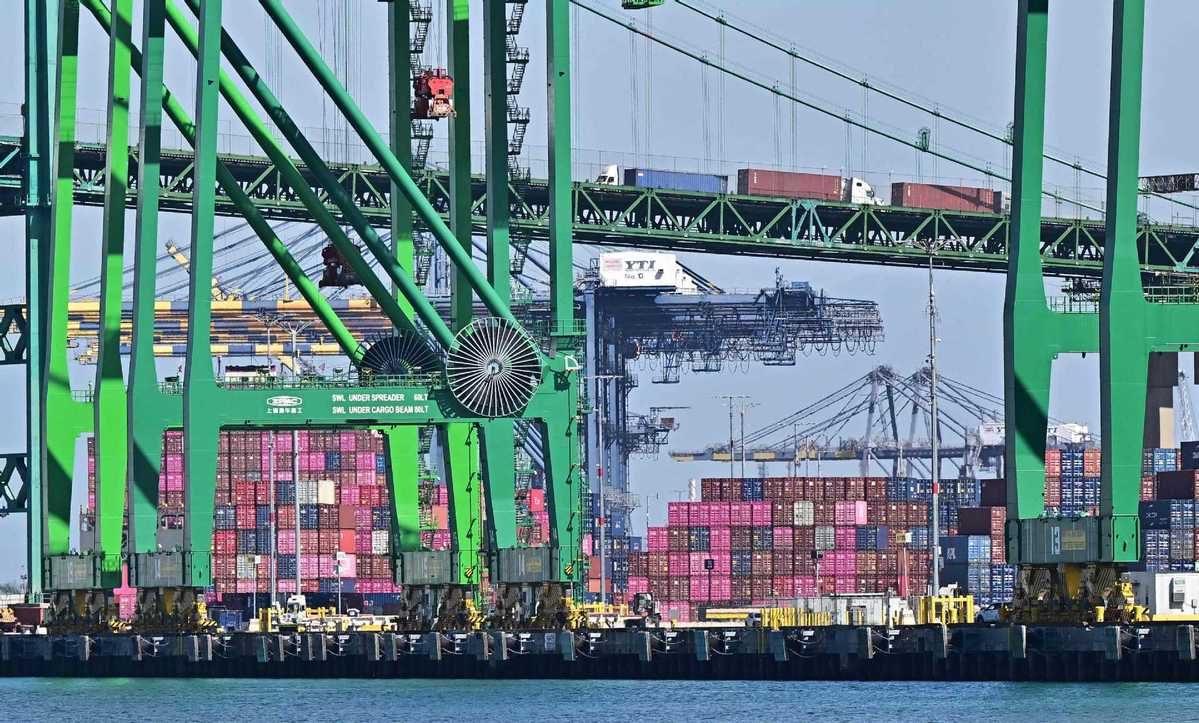
The US Trade Representative's Office is holding a public hearing on its proposed port fees targeting Chinese-built vessels this week, with the move by the Donald Trump administration to 'resurrect' US shipbuilding facing pushback from businesses.
Framing the fees as a response to China's "unfair" practices and of critical importance for national security, the USTR baselessly argues that Chinese government subsidies to its shipbuilding sector harm US businesses, while posing economic and national security risks by creating dependencies that Beijing could weaponize in a potential conflict. These are nothing but excuses fabricated by the US administration to justify its attack on the Chinese shipbuilding industry. The other aim of the move, which enjoys bipartisan support in Congress, is to discourage shippers and ocean carriers from buying Chinese vessels so as to enable US shipyards to fill the vacancy left by their Chinese counterparts.
But the question is whether the stone will prove too heavy to be used to kill the two birds it is aimed at.
A study commissioned from Trade Partnership Worldwide, an economic analysis company, by an ad hoc coalition of farmers, manufacturers and retailers, logistics and transportation services providers, concluded that the various remedies suggested by USTR "would result in net losses for the US economy, US trade, and most of the US shipbuilding supply chain" and "individually and in aggregate, would reduce the US GDP and likely worsen the overall US trade deficit".
The proposed discriminatory shipbuilding measures represent precisely the kind of shortsighted US protectionism that has repeatedly failed to deliver promised benefits while inflicting unnecessary harm on global trade. Such protectionist measures will only isolate US industries from global markets while raising costs for US businesses and consumers.
The proposed targeting of Chinese-built ships represents yet another misguided attempt to blame China for the US' industrial decline. The proposed fees are intended to be used to subsidize the US shipbuilding industry.
But rather than addressing the real challenges facing US shipbuilders — such as outdated technology, lack of investment and inefficient production — the USTR-proposed protectionist measures would increase US shipping costs, reducing the US' trade competitiveness and exacerbating the US trade deficit.
Farmers and energy exporters would be the hardest hit. It is forecast that US agricultural exports — including wheat, soybean and cotton — would face double-digit declines, handing market share to competitors such as Brazil and Australia. US energy exports of coal, oil and gas would also suffer, further weakening the US' position in global trade.
Higher shipping costs would also impact manufacturing, retail and logistics, leading to job losses in ports, the wholesale trade, and consumer industries.
China's competitiveness comes not from subsidies but from its economies of scale, innovations, and efficient supply chains. Chinese shipbuilders lead globally because they deliver high-quality, cost-effective vessels that meet international needs. Instead of scapegoating China, the US should focus on modernizing its shipbuilding industry through R&D and workforce training; strengthening supply chains rather than disrupting them with tariffs; and promoting fair competition instead of resorting to protectionism.
The US should learn from the past. The Jones Act, a federal law that has regulated maritime commerce in the United States since the 1920s, requires goods shipped between US ports to be transported on ships that are built, owned and operated by US citizens or permanent residents. Although the protectionist law was intended to ensure the US could rely on its own ships for transportation in times of need, it eventually weakened its shipbuilding industry's global competitiveness.
Instead of trying to punish China for its industrial successes, the US should invest in its own industrial future. Trying to quick-fix complicated problems is not resolving the US' problems, it is only creating new ones.





