Principled position








Celebrating 70 years of the Bandung Conference and its vision and ideals that continue to inspire
Editor's note: The world has undergone many changes and shocks in recent years. Enhanced dialogue between scholars from China and overseas is needed to build mutual understanding on many problems the world faces. For this purpose, the China Watch Institute of China Daily and the National Institute for Global Strategy, Chinese Academy of Social Sciences, jointly present this special column: The Global Strategic Dialogue, in which experts from China and abroad will offer insightful views, analysis and fresh perspectives on long-term strategic issues of global importance.
Seventy years ago, the Indonesian city of Bandung hosted a historic gathering that would leave a lasting impact on international relations. The Bandung Conference, also known as the Asian-African Conference, brought together 29 newly independent nations, representing more than half of the world's population at that time. These nations, emerging from the shadow of colonialism, sought to assert their sovereignty, promote economic and cultural cooperation, and chart a path forward in a world dominated by Cold War rivalries. To borrow the wise words of Indonesia's first president Sukarno from his introductory speech at the conference, they were injecting "the voice of reason into world affairs".
Among the key figures at the conference was then Chinese Premier Zhou Enlai, representing the newly established People's Republic of China. His presence underscored China's desire to engage with other developing nations and to make its voice heard on the global stage. In his report on the conference, US political scientist and China expert Arthur Doak Barnett rightly observed that this was the moment when New China truly asserted its presence on the international stage, due in part to the diplomatic finesse and personal charisma of Premier Zhou.
Although the world has changed significantly since 1955, the ideals championed at the Bandung Conference continue to resonate. The principles outlined in the final communique, often referred to as the 10 Principles of Bandung, remain strikingly relevant today. In the face of growing geopolitical tensions, severe challenges to multilateralism, economic inequalities and the uneven development of emerging technologies, the Bandung spirit remains a steadfast guiding vision for global cooperation.
The 10 Principles of Bandung served as a foundation for peaceful coexistence and cooperation among nations. They emphasized respect for sovereignty, nonaggression, non-interference in internal affairs, and the promotion of mutual interests. Two principles, in particular, stand out as especially relevant in today's global context.
The first principle reaffirmed the importance of adhering to the Charter of the United Nations, emphasizing respect for fundamental human rights, sovereignty and equality among nations. At a time when the UN faces criticism and increasing polarization among major powers, this principle reminds us of the value of a rules-based international order that promotes peace and cooperation.
Equally significant is the fourth principle, which calls for the "abstention from intervention or interference in the internal affairs of another country". This principle remains a topic of intense debate in contemporary geopolitics. The nations attending the Bandung Conference strongly opposed colonialism and foreign domination, and this commitment to non-interference continues to resonate today, particularly in discussions around sovereignty, economic independence and the avoidance of great-power rivalry dictating the fate of smaller nations.
While the geopolitical landscape has evolved dramatically since 1955, the core issues that inspired the Bandung Conference remain pressing concerns for many developing nations. Economic disparities, neocolonial influences and power imbalances in global governance persist. However, the Bandung spirit lives on in the efforts of the Global South to assert greater agency in world affairs.
In recent years, initiatives, such as the BRICS grouping, the Belt and Road Initiative and the push for reforms in global financial institutions, are examples of developing nations seeking to reshape international structures in their favor. These efforts reflect the Bandung ideals of economic cooperation, self-determination and reducing dependency on former colonial powers.
Moreover, South-South cooperation has expanded significantly in trade, technology exchanges and diplomatic collaboration. Organizations such as the African Union, the Association of Southeast Asian Nations and the Community of Latin American and Caribbean States embody the principles of regional solidarity that were central to the Bandung vision. The rising influence of these groups signals that the Global South is not merely a passive participant in international affairs but an active force in shaping global policies. A good example of the significance of South-South relations is the economic exchange between China, the world's second-largest economy, and ASEAN. In 2024, both sides remained each other's largest trading partners for the fifth consecutive year.
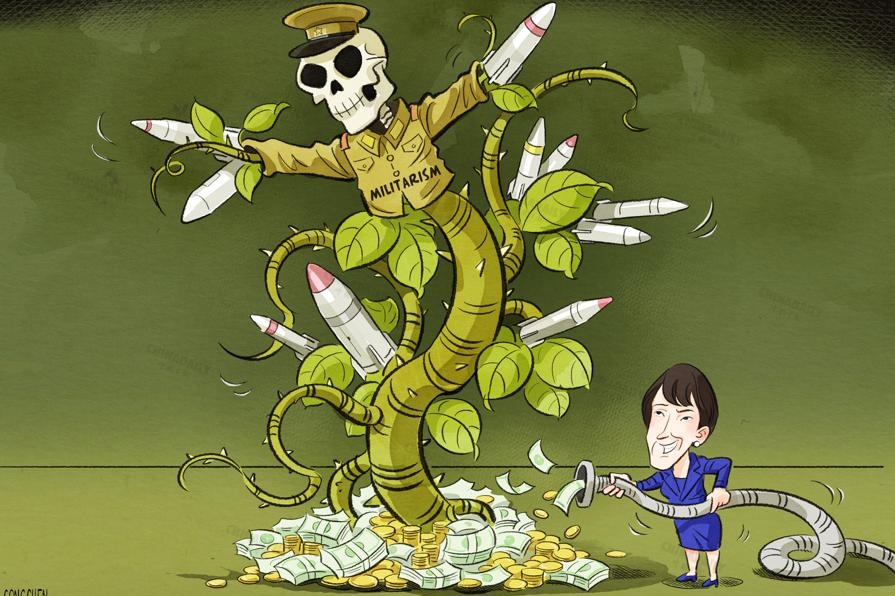
Despite the continued relevance of the Bandung principles, challenges remain. Multilateralism, the very framework that the Bandung Conference sought to strengthen, is under strain. Some major powers have undermined international institutions, while economic and political rivalries have led to a fragmented global order. Trade wars, unilateral sanctions and military interventions have often disregarded the core tenets of the Bandung Conference, particularly the principle of non-interference.
At the same time, developing nations continue to advocate for a fairer and more inclusive global system. Calls for a more democratic UN Security Council, debt relief for struggling economies and reforms in global financial governance reflect the enduring desire of the Global South to achieve the equity that the Bandung Conference envisioned.
The Bandung Conference was a defining moment in the history of post-colonial nations, symbolizing their collective aspiration for a just and peaceful world. Seventy years later, the world has changed, but the issues of sovereignty, economic independence and international cooperation remain as vital as ever. While some challenge the principles of multilateralism and non-interference, the Bandung ideals continue to inspire nations seeking an equitable global order.
As the Global South asserts itself on the world stage, it carries forward the Bandung spirit, championing cooperation, mutual respect and a vision of global governance that prioritizes peace over conflict and partnership over domination. In an increasingly complex world, the message of the Bandung Conference remains a powerful reminder that international relations should be built on dialogue, equality and the shared pursuit of progress.
In a speech that resonated with all who heard it, Premier Zhou emphasized at the Bandung Conference that the goal should be to seek common ground, not to foster division. Pursuing common ground was the wise course then, and it remains the right approach for those who seek peace, justice and shared prosperity for all of humanity, not just for a privileged few.
The author is founder of the China-Europe-America Global Initiative. The author contributed this article to China Watch, a think tank powered by China Daily. The views do not necessarily reflect those of China Daily.
Contact the editor at editor@chinawatch.cn.