



Anti-Chinese sentiment and xenophobia barrier to productive sci-tech exchanges: China Daily editorial







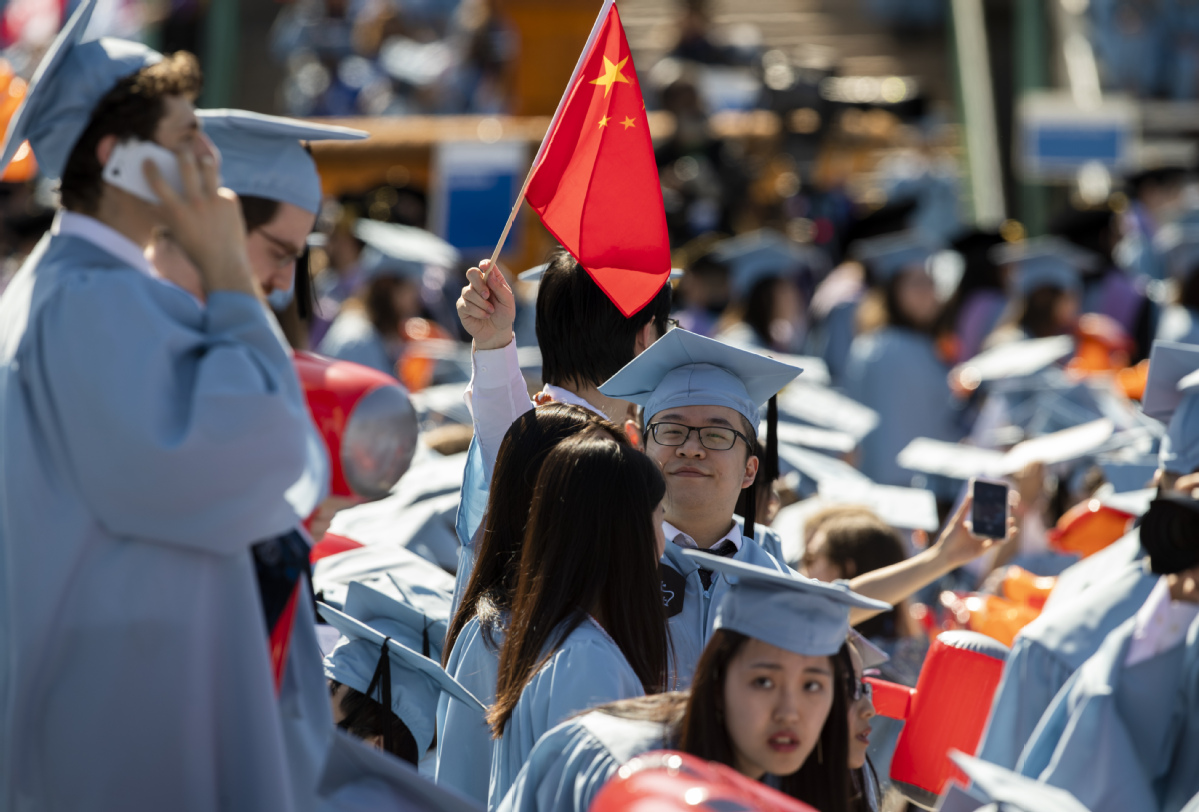
It defies belief how narrow-minded or lacking in common sense some politicians of the United States can be. Congressman Riley Moore has stepped to the fore as an example of this, introducing a bill last week to ban all Chinese nationals from receiving US student visas.
"Every year we allow nearly 300,000 Chinese nationals to come to the US on student visas. We've literally invited the CCP to spy on our military, steal our intellectual property and threaten national security," Moore said in a statement. He called for Congress to end what he called China's exploitation of the US' student visa program. "It's time we turned off the spigot and immediately banned all student visas going to Chinese nationals."
Further stretching the boundaries of credulity is the fact that his prejudicial bill is cosponsored by five other Republican representatives.
Although the bill has little chance of being adopted despite the anti-China sentiment prevalent in Washington, it is a sign that the country's legacy of racism and xenophobia against the Chinese people is being honed with a new edge.
Some US lawmakers proposed last year that US universities should not allow Chinese international students access to science, technology, engineering and mathematics (STEM) fields involving sensitive technology due to security concerns. And some universities have already done that.
Yet research has shown that China has been the most important foreign supplier of US-based scientists for more than two decades. The rising xenophobia against students from China amid the US-China tech competition will have an impact on the development of science and technology not only in the United States, but also in the world.
The "China Initiative" launched by the US Department of Justice in 2018, which initiated a US government investigation of scientists of Chinese descent, has led to the departure of a growing number of Chinese-born scientists from the US. As a result, an increasing number of Chinese scientists are choosing to come back to work in China instead of staying in the US.
At the same time, the number of Chinese students going to study in the US has been declining in the past couple of years. In the 2023-24 school year, more than 277,000 Chinese students were studying in US universities, one-fourth of the total number of international students, according to an annual report on international students from the Institute of International Education. The number was more than 300,000 in the 2020-21 school year, when Chinese students were the largest group of foreign students studying in the US. Now Indian students have become the largest group of foreign students in the US.
With anti-Chinese sentiment and xenophobia continuing to smolder in the US, an increasing number of Chinese students will choose to study in other countries instead of the US. This will considerably decrease the revenue of US universities, and at the same time reduce the contribution Chinese scientists make to US science and innovation.
History has shown that isolationism is detrimental to the development of science and technology. That some US lawmakers are turning a blind eye to the contributions Chinese-born researchers and scientists have made to the status of the US as the world leader in science and technology only highlights their own shortsightedness and narrow-mindedness.
Some more clear-thinking US politicians have recognized that this is counterproductive to the development of science and technology in the US.
China knows well what an important role reform and opening-up have played in its social and economic development. It welcomes cooperation of all kinds with any country, and it supports its students to study abroad. It also welcomes students from any country to study in China.
China believes that exchanges with the US in as wide a range of areas as possible are important for the development of both countries as well as the development of the world.
Any move to block exchanges between China and the US in any area is against the trend of human development.





