Xizang advances ecological civilization







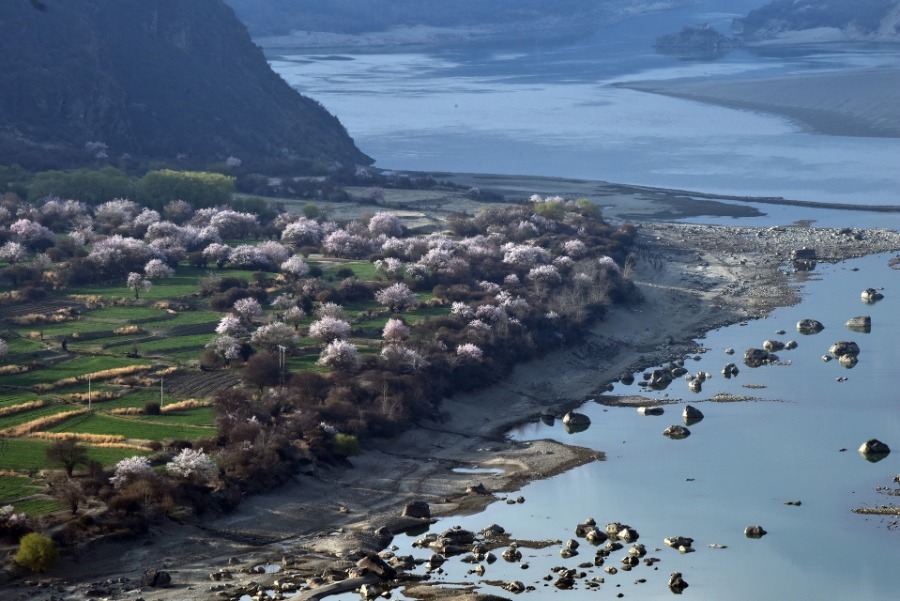
The Qinghai-Tibet Plateau, often called the “Third Pole” of Earth, is a region of immense ecological significance, with its unique topography and climate nurturing diverse ecosystems and exceptional biodiversity, profoundly influences the climate and ecological systems across China and the entire Northern Hemisphere.
Xizang is the main part of the Qinghai-Tibet Plateau, and has been protecting the plateau’s environment under the guidance of Xi Jinping Thought on Socialism with Chinese Characteristics for a New Era.
The Qinghai-Tibet Plateau is a land of breathtaking grandeur: vast forests, expansive grasslands, majestic glaciers, and intricate networks of rivers and lakes. Its ecosystems, ranging from glaciers and snow-capped mountains to forests, grasslands, wetlands and deserts, are an essential component of the Earth’s natural resources. The plateau’s glaciers and permafrost play a crucial role in maintaining regional and global ecological balance, acting as a vast natural reservoir.
Large-scale ecological restoration projects have significantly increased forest coverage in the region, which now stands at 12.31 percent, while comprehensive grassland vegetation coverage has reached 47.14 percent. In 2024 alone, Xizang afforested 1.06 million mu (about 70,667 hectares) and rehabilitated 6 million mu (400,000 hectares) of degraded grasslands. In recent efforts, Xizang has expanded its afforestation and grassland rehabilitation initiatives, including landmark projects in the southern and northern mountains of Lhasa.
Biodiversity is the bedrock of ecological balance and stability. Xizang’s conservation efforts have led to a resurgence of iconic high-altitude species. For example, the Tibetan antelope population has rebounded to around 300,000, while the number of black-necked cranes is close to 10,000. Yunnan snub-nosed monkeys have increased to 800 and the kiang population exceeds 100,000. Even brown bears, wolves and white-lipped deer are making a noticeable comeback, with increasing sightings near human settlements. These conservation achievements, alongside initiatives to protect native and endangered plants, have played a crucial role in preserving Xizang’s rich natural heritage.
Xizang has also made significant strides in pollution control and enhancing environmental quality, by implementing a range of environmental protection measures, including air, water and soil conservation. A substantial land area of Xizang is now designated as an ecological protection zone, ensuring the preservation of its natural environment. The percentage of days with excellent air quality in Xizang remains above 99 percent, and the water quality of major rivers and lakes meets or exceeds Grade III standards. Also, Xizang has established its first artificial forest carbon sink monitoring demonstration base and completed its first green electricity transaction.
The renowned Tibet University plays a pivotal role in advancing ecological research, integrates inter-disciplinary expertise to address national and regional strategic need, and highlights Xizang’s unique ecological conditions and contributes to broader ecological security and sustainability goals.
Xizang’s ecological environment is marked by its overall integrity and minimal human disturbance. However, its fragile ecosystems, simplistic structures and limited resilience make the region highly sensitive to global changes and human interference. Once damaged, their natural recovery is extremely difficult. Therefore, building a robust ecological security barrier and an ecological civilization highland on the Qinghai-Tibet Plateau is a long-term and demanding mission that requires sustained investment, scientific research and institutional innovation.
First, the region should enhance the integrated management of its ecosystems — covering mountains, rivers, forests, farmlands, grasslands, deserts and glaciers — by developing a comprehensive theoretical and technical framework, which will lay the foundation for effective conservation.
Additionally, the establishment of an ecological monitoring system and fostering data-sharing mechanisms will support both fundamental and applied research, while increasing the number of scientific studies will deepen our understanding of the impact of global changes on plateau ecosystems, informing more effective conservation strategies.
Besides, the management of nature reserves should be improved by refining institutional frameworks, recruiting professional teams, and ensuring precise ecological oversight, and ecological restoration policies should be based on local conditions while aligning with national standards to ensure sustainability. And the development of the Xizang national botanical garden and key national ecological laboratories will further enhance research and governance capabilities.
Finally, fostering cooperation across regions and sectors in ecological protection, through clearly defined responsibilities, data-sharing platforms, and coordinated governance, will strengthen Xizang’s position as a global ecological sanctuary. By embracing these initiatives, Xizang will not only consolidate its status as a global ecological stronghold but also contribute to a harmonious and sustainable future for both nature and humankind.
The author is a professor at Tibet University and a deputy to the 14th National People’s Congress.
The views don’t necessarily reflect those of China Daily.
If you have a specific expertise, or would like to share your thought about our stories, then send us your writings at opinion@chinadaily.com.cn, and comment@chinadaily.com.cn.