



When AI has the answers
AI-powered learning systems have proved to be a boon for both students with special educational needs and their teachers. now the task ahead is to create safe spaces for AI use. Faye Bradley reports.








The rise and rise of DeepSeek has sparked debates over, among other things, the role of artificial intelligence (AI) in education. While many schools across China have embraced the idea of using DeepSeek's AI learning models, others worry that AI could be undermining the natural intelligence of students.
AI-powered learning models are particularly useful for students with special educational needs (SEN).
Victor Wong, school supervisor of the Aoi Pui School in Hong Kong's Hung Hom, says that since "SEN students often require a very structured setting and a lot of individualized attention", the use of technologies that help "to increase the efficiency of teachers and allow them to focus more on teaching content" becomes a necessity.
The school uses an AI system to identify the unique learning needs of each of its students, who are made to wear an "emotion wristband" that records their clinical data during school hours. Based on its analysis of the data on the wristbands as well as those collected by a sensor that records environmental shifts in the classroom, the system can direct students toward specific tasks, selected from more than 10,000 options. This helps to significantly reduce the time needed to develop individualized teaching plans.

Both sensors continuously monitor various factors in the learning environment as well as physiological responses from students, offering a real-time, comprehensive overview of their emotional and physical states. The system is quick to detect irregular behavior in a child and alert the concerned teachers, enabling them to act fast.
When it comes to subjects like art and music, in which teaching is often less structured, the system helps to reduce a teacher's workload by monitoring the emotional states of students.
The Aoi Pui School has its own Art Tech Hub, set up with support from the Van Gogh Heritage Foundation. This is where students can enjoy AI-generated immersive art and virtual-reality experiences. "The AI engine processes artworks by students to create immersive experiences," says Wong, adding that when it comes to art appreciation, SEN students often benefit from a heightened "sensory stimulation".
At the Art Tech Hub, students can also get help from AI to improve their artworks. Wong says, "Our main focus is to build on what our students create. We try to ensure that the technology we use doesn't overshadow the creations of our students."

Tech and empathy
In Hong Kong, more than 90 schools have adopted an AI-powered essay correction tool, co-developed by students from the Chinese University of Hong Kong and the Hong Kong Polytechnic University, and funded by the Hong Kong Science and Technology Parks Corp.
As more and more schools embrace AI-based learning tools, there is also a growing need for bringing SEN teachers up to speed.
"There is a strong need for educator training in order to use AI ethically, productively, and in evidence-based practices," says Cherry Yum Yen-na, associate professor and acting head of the Department of Special Education and Counselling at the Education University of Hong Kong. "International organizations like the United Nations Educational, Scientific and Cultural Organization and the World Health Organization offer training programs that prepare educators for practicing inclusive use of technology. Continued research in this area is crucial to supporting our knowledge base of how and when to use these new tools."
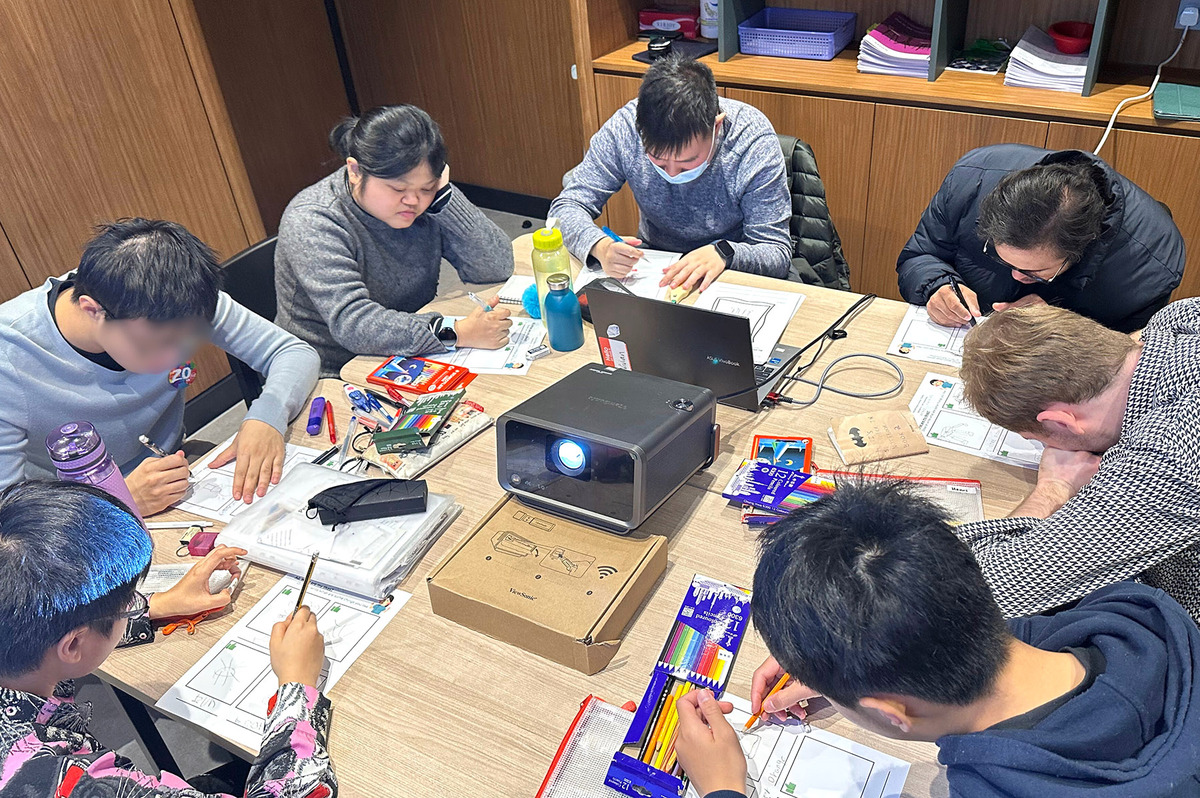
Gabriel Lai Hok-hang, the head of Special Educational Needs at the Nesbitt Centre in Hong Kong's Sai Wan district, says, "Unsupervised use of technology could lead to misunderstandings or misinformation. To address this, we are developing a course for our staff members who will be teaching it to our learners in order to ensure that both parties can engage with AI in a safe, informed and productive way."
He hastens to add, however, that the Nesbitt Centre "remains committed to keeping human connection at the core of our work, balancing technology with the empathy and personal touch that our team provides."
Building a shared network
Most educationists associated with SEN institutes agree that the latter's dependence on AI-powered learning models can only increase in the future.
Lynne Mulholland, vice-chair of Special Needs Network Hong Kong, says, "I believe new developments in AI will help personalize the learning process in keeping with a student's learning pace and style. It will also track behavioral problems and offer tailored intervention if needed."
Yum agrees that "assistive technology has greatly benefited from AI development". However, on the flip side, "schools vary in how much of these new technologies they adopt because of both financial and human resource implications and other considerations".
A possible solution is to set up a common AI-based repository of learning solutions that can be accessed by a network of SEN schools.
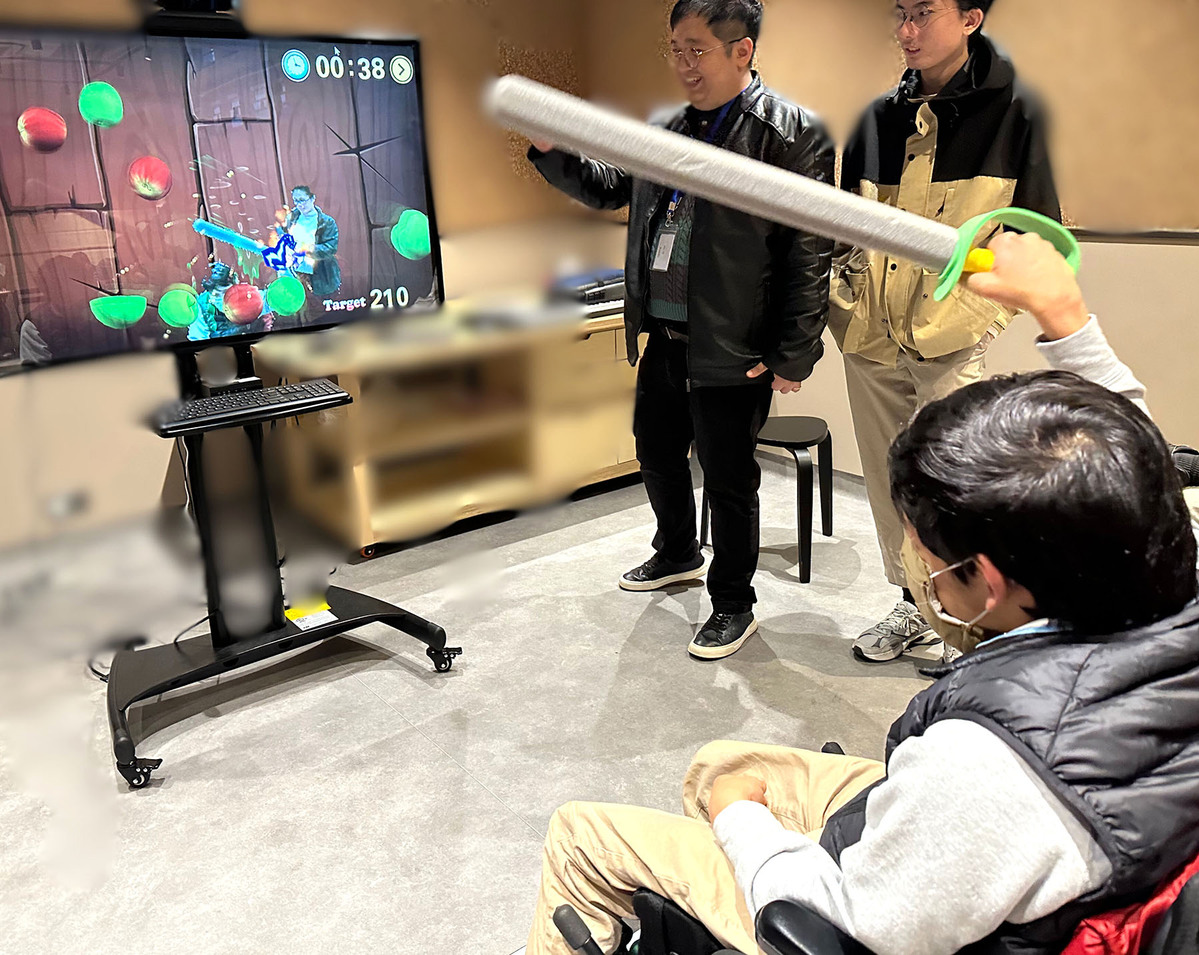
Kenneth Sin Kuen-fung, the director of Centre for Special Educational Needs and Inclusive Education at the Education University of Hong Kong, and his team have been working on the idea of developing a platform and customized learning materials for students with intellectual disabilities. The project is supported by the Quality Education Fund - started by the Hong Kong Special Administrative Region government in 1988 to finance education reform.
On the basis of its analysis of students' responses to a set of questions, the AI-powered platform can recommend the next steps in their learning process. Sin says that "the generic skills of students are greatly enhanced" during their time spent with the learning interfaces, and that they also gain in terms of "motivation and confidence".
However, it will be awhile before "individual schools are able to develop their own tailor-made AI resources, "Sin says. His suggestion is that schools consider forming "learning clusters "in order to share resources and funding. He also recommends that the local government make a more concerted effort to support the SEN experts associated with research and development programs at the city's universities.

Security matters
One of the major roadblocks in the way of SEN schools adapting to AI-based learning systems en masse is that the needs of each student are unique. SEN schools are quite different from each other as well. Many of them specialize in a particular area of learning difficulties, putting less emphasis on others as a result. Yum says, "Schools need technological solutions that cater to their students, and their curriculum, along with their existing areas of focus. So it is not as if one size fits all."
Another commonly cited concern regarding installing AI-powered learning systems in schools has to do with ensuring data privacy and maintaining ethical standards, especially seeing that many SEN students are physically and emotionally vulnerable. Yum points out that "these AI tools may collect information that students or parents have not consented to giving away, and how such information is used may not be explicitly agreed upon". She says that prior to installing an AI-based learning system in schools covered by the local government's Pilot Scheme on On-site Pre-school Rehabilitation Services - which supports kindergartners with additional learning needs - the development team spent several months improving the system's data security.
"And of course, consultations and collaborations with policymakers, service providers, and school leaders are also necessary for adopting these innovative approaches."





- Xinjiang reports highest foreign trade growth in China
- Harbin authorities demand return of pensions paid out to deceased
- Global research project on AI guardrails launched in Beijing
- Partnering with China, embracing opportunities
- China's cyberspace regulators announce measures for protection of minors
- Beijing's 'Rocket Street' promoted at aerospace conference













