



From war rescue to Xiaohongshu connection: How ordinary people bridge China and America







At the age of 9, Thomas Marcia discovered a photo of his father, James Marcia, with his friends in China. Before that, Thomas only knew his father as a US military pilot who participated in the Doolittle Raid during World War II.
The picture was a silent testament to an extraordinary act of courage that transcended nations. And that's when he began to learn about the moving stories between American pilots and the Chinese people that rescued them.
The Doolittle Rescue
In retaliation for the Japanese attack on Pearl Harbor, 16 US Air Force bombers struck Japan in 1942. On their way back, with fuel depleted, Lieutenant Colonel James Doolittle and his men had to parachute into Eastern China occupied by the Imperial Japanese forces.
Historical records from the US National Archives and Chinese local chronicles document what followed: thousands of ordinary Chinese farmers, teachers and villagers risked their lives to shelter the airmen from Japanese patrols. Through coordinated efforts by Chinese resistance groups, 64 American service-members were guided to safety—a feat celebrated as one of the war's greatest rescue operations.
In October 2018, Thomas visited Shangrao, Jiangxi province, where his father's B-25 aircraft had crash-landed. Walking on the terraced hillsides, he studied wartime maps at local museums showing escape routes used by the rescued airmen. "I finally grasped the depth of the Chinese people's courage," he said.
Renewing the bond
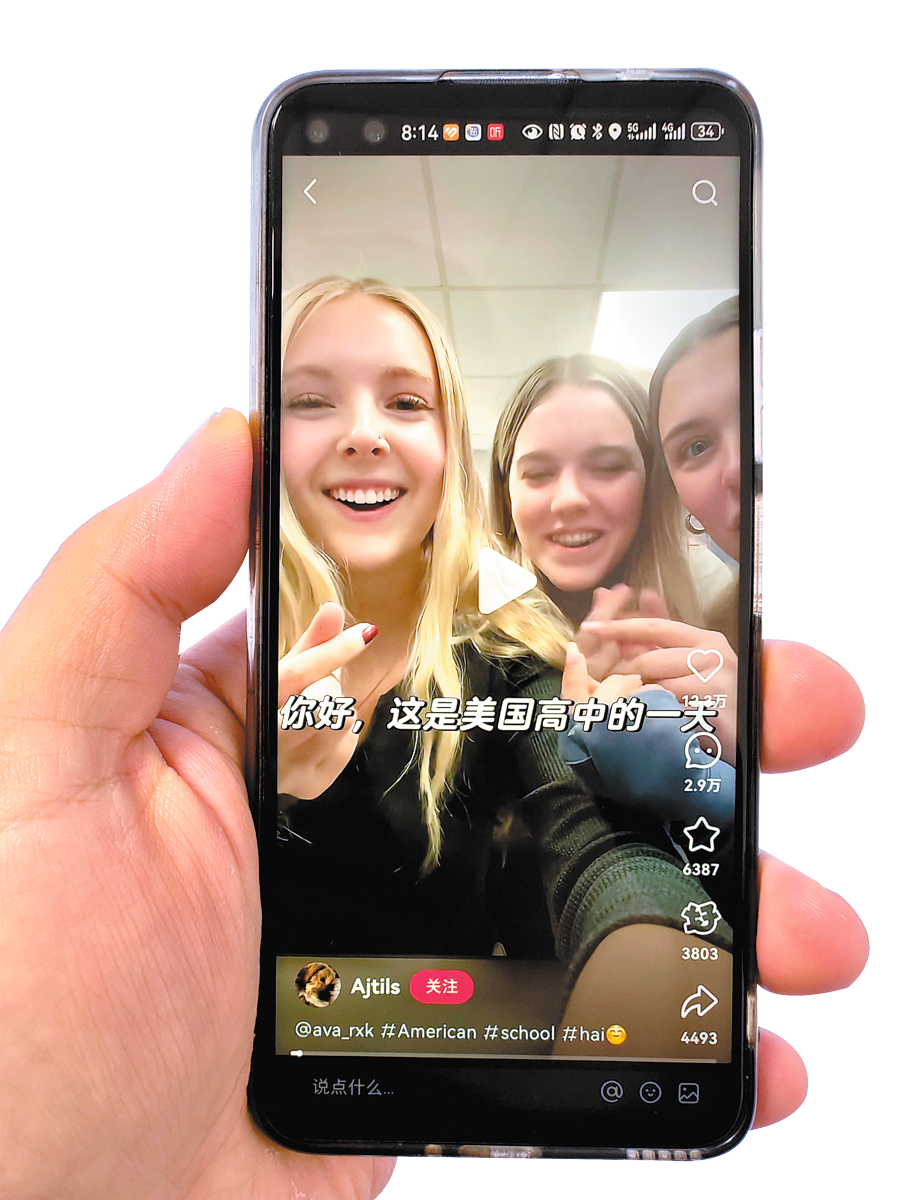
This wartime bond now finds unexpected echoes in the digital age. Recently, a huge number of US TikTok users flooded Chinese social media app "Xiaohongshu" (also known as Red Note). From monthly salaries and dinner recipes to dental costs and math homework, Chinese and Americans share literally everything about their way of life.
There are also videos showing a Suzhou textile worker teaching a Chicago art student about traditional Chinese weaving, and parents in Shanghai and Utah collaborating to compile a "vaccination handbook for minors". These exchanges reveal surprising similarities, foster mutual understanding and strengthen emotional bonds.
Although thousands of kilometers apart, and despite biased media reports about China in the West, the Chinese and American people share a lot in common. Both deal with similar issues, strive for a better tomorrow, and long for happiness.
Bridging eras, bridging division
In these conversations, echoes of 1942 resurface. The Doolittle rescue wasn't just a military cooperation—it was ordinary people choosing humanity over fear. Today's online chat, though not as dangerous as flying a jet, is equally valuable in terms of seeking common ground despite differences. Just as Thomas Marcia put it: "History tells us that US-China relations should be better. Strengthening US-China people-to-people interaction and friendship is the best way to improve US-China relations."
While geostrategic and trade issues are manipulated to score political points, interactions between people are growing stronger—in livestreamed cooking tutorials where Mid-westerners master dumpling folds, and climate forums where Shanghai and San Diego scientists jointly seek a greener future. The lesson of Shangrao villagers endures: Courage isn't just facing danger together, but daring to believe in partnership when the world insists on division.
The author is a commentator on international affairs, writing regularly for Xinhua News, Global Times, China Daily, CGTN etc. He can be reached at xinping604@gmail.com.
The views don't necessarily reflect those of China Daily.
If you have a specific expertise, or would like to share your thought about our stories, then send us your writings at opinion@chinadaily.com.cn, and comment@chinadaily.com.cn.





