



More stability essential for Sino-US ties







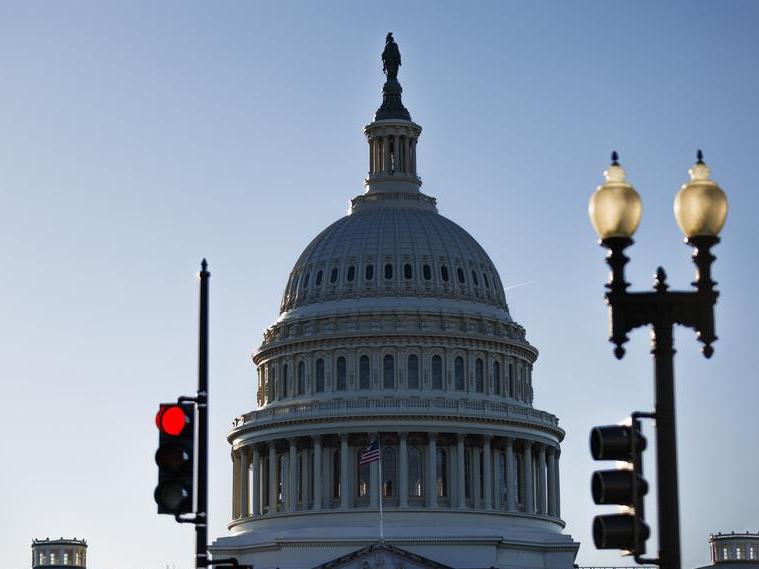

Despite US President Donald Trump saying the United States and China can "together solve all of the problems of the world", the US president signed an order on Tuesday increasing previously imposed 10 percent tariffs on Chinese goods to 20 percent.
China immediately retaliated by announcing 15 percent tariffs on chicken, wheat, corn and cotton imports from the US, and 10 percent tariffs on "sorghum, soybeans, pork, beef, aquatic products, fruits, vegetables, and dairy products". Also, China's Ministry of Commerce said it had added 15 US companies, including drone-maker Skydio, to its export control list, meaning Chinese companies will be barred from exporting dual-use equipment to those companies.
The US administration made fentanyl an excuse to impose new rounds of tariffs on Chinese goods, and has been continuously playing the "Taiwan card", approving new rounds of arms sale to the Chinese island. For example, the US State Department has deleted a statement on its website which said Washington does not support "Taiwan independence", challenging the one-China principle. Also, during his visit to five Central American countries in February, US Secretary of State Marco Rubio said Washington will reduce Beijing's influence in the Western hemisphere, especially on issues such as the Panama Canal and 5G technology.
All these moves can date back to the National Security Strategy in 2018 during Trump's first presidency, which the Joe Biden administration intensified in order to outcompete China. And by appointing China hawks in his cabinet, especially in his security team, the US president has made clear his goal of winning the competition with China.
China has no intention of replacing the US as the global leader. But it should firmly defend its right to development in the face of the US' persistent containment policy.
The fierce trade conflict during Trump's first presidency failed to contain China's rise, it is unlikely that the US administration this time will succeed in getting concessions from China. In 2024, the US' total trade deficit hit a new high, up about 50 percent from 2017 when Trump launched the tariff war, while its trade deficit with China decreased by about 20 percent during the same period. In contrast, China's foreign trade hit a new high, up about 50 percent from 2017.
With various favorable factors converging, 2025 has become a pivotal year for global investment, and to reassess China's global competitiveness. China's continuous rise shows tariff and trade conflicts cannot solve the US' problems, nor check China's development march, because despite Sino-US trade accounting for a declining share of China's overall trade, the trend of growing bilateral trade has not substantially changed, indicating Sino-US trade is resilient to non-market intervention.
China has drawn lessons from its interactions with Trump's first presidency, and has become more adept at handling frictions. An apt example is the way in which China has been dealing with the US: it has become more resilient to the US administration's dirty tricks, including punitive tariffs, while leaving room for negotiations.
However, China is not the lone target of the US administration, as it has launched tariff wars against pretty much all major trade partners, which could significantly disrupt the global economy, even dismantle the multilateral trading system.
Many European countries have realized the danger their transatlantic ally poses, and adopted a pragmatic approach toward China. An Indian scholar even said that it is necessary to offset the risks posed by the US' trade policy by deepening trade ties with China. The US administration's "America First" strategy has turned the US into a major source of risks and uncertainties. As a result, more and more countries are choosing to strengthen cooperation with China to reduce the economic and political risks.
Moreover, the US president started withdrawing the US again from international treaties and organizations, which could severely undermine global efforts to deal with common issues such as climate change and artificial intelligence global governance. As a matter of fact, German President Frank-Walter Steinmeier has warned that the "absence of rules must not become the guiding principle of a new world order". Against this background, the leadership of and the constructive role played by China, which advocates for equitable multipolarity, has become indispensable for fostering inclusive global development.
Sino-US relations are the most important bilateral relations in the world. Sino-US cooperation can help address a lot of global issues. But the point is: Is Washington willing to cooperate with Beijing? Given the present situation, many may consider persuading Washington to do so as a mission impossible. But the two countries should at least maintain strategic stability and prevent bilateral relations from deteriorating.
It is to be hoped that the two countries, on the basis of mutual respect and equality, will hold talks to keep bilateral ties on the right track. China is responding with certainty to the US' uncertainty and taking firm countermeasures against the US' unilateral, selfish moves. But it remains committed to promoting win-win cooperation.
The author is a member of 14th National Committee of the Chinese People's Political Consultative Conference and a professor at University of International Relations. The views don't necessarily reflect those of China Daily.
If you have a specific expertise, or would like to share your thought about our stories, then send us your writings at opinion@chinadaily.com.cn, and comment@chinadaily.com.cn.





