


Xinjiang's sands reveal fascinating finds







In 2024, archaeologists cleared the remains of nine houses in its southern area and unearthed fragments of Buddhist statues and painted murals, as well as carved wooden Buddha hands, suggesting the site's possible, early association with Buddhism, says Niu Jianzhe, associate research librarian at the National Museum of China, which excavated the site with the Xinjiang institute.
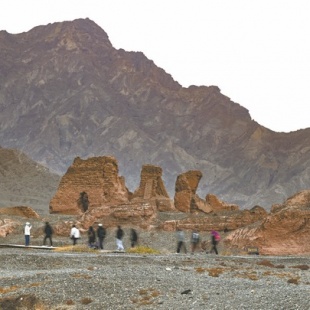
Bashbaliq City, or the Beiting ruins in Jimsar county, Changji Hui autonomous prefecture, used to be a political, military and cultural center on the Silk Road along the northern foot of the Tianshan Mountains from the Tang to Yuan dynasties. It's the largest and best-preserved ancient city in this area.
Cui Jiabao, assistant researcher at the Institute of Archaeology, CASS, says she believes the large government office building that she and colleagues excavated in the northeast of the outer ring last year will advance studies into the ancient city's evolution.
Guo Wu, a researcher at the CASS institute who is leading the excavations of Beiting ruins, said during an academic seminar on China's frontier archaeology in late December that besides its primary military and political functions, Beiting also served significant religious and cultural roles.
"Several major religions once thrived here. While Buddhism was the dominant faith, multiple religions coexisted harmoniously," he adds.
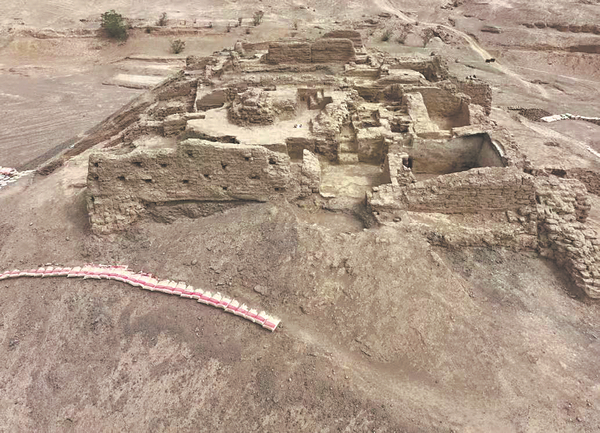
The Mo'er Temple site in ancient Shule, located in the desert outskirts of Kashgar, is believed to have been first built in the 3rd century, and fell into ruin around the 10th century, contemporaneous with the period of the Three Kingdoms (220-280) to the late Tang Dynasty in the Central Plains.
Archaeological efforts since 2019 have revealed the Buddhist temple's layout and development over a period of 700 years, providing a typical case of the early adaptation of Buddhism in China, and the influence of the Central Plains architectural style, according to Xiao Xiaoyong, archaeology professor at the Minzu University of China.