



Viable surrogate
The expansion of BRICS has strengthened the grouping's economic and geopolitical leverage, offering an alternative to Western-led institutions







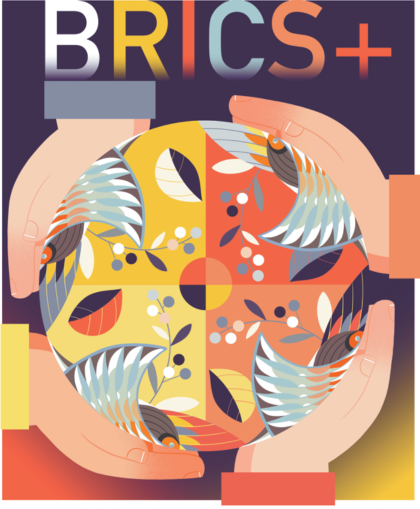
The recent expansion of the BRICS grouping — originally comprising Brazil, Russia, India, China and South Africa — to include new members Egypt, Ethiopia, Iran, Saudi Arabia, the United Arab Emirates and most recently Indonesia, marks a decisive shift in global governance. Often referred to as the "BRICS Plus" model, this enlarged bloc reflects the growing ambition of emerging economies to establish an alternative to Western-dominated international institutions. By reshaping trade, investment and diplomatic alignments, the "BRICS Plus" bloc is challenging the traditional dominance of the Global North and offering a new vision of multilateralism.
At the heart of this transformation lies China, which has played an important role in driving the BRICS agenda toward an expanded and more influential platform. Through economic partnerships, infrastructure projects and strategic partnerships, Beijing is positioning itself as a leader in redefining global governance to better accommodate the interests of the Global South. The implications of this shift are profound, signaling a gradual but significant redistribution of geopolitical power.
The inclusion of major energy producers such as Saudi Arabia, the UAE and Iran has significantly enhanced the global influence of the "BRICS Plus" model. Together with Russia, these nations now form a powerful bloc with substantial influence over global energy markets. Given that oil and gas remain central to international trade and economic stability, the influence of the "BRICS Plus" bloc in setting energy prices and supply chains could challenge traditional Western institutions such as the International Energy Agency and the Organization for Economic Cooperation and Development.
Moreover, the presence of Egypt and Ethiopia strengthens the "BRICS Plus" model's geopolitical weight in Africa, a continent that has long been a battleground for influence among major powers. By incorporating African economies into its fold, the "BRICS Plus" model provides an alternative to Western financial institutions such as the World Bank and the International Monetary Fund, which have historically imposed structural adjustment policies that many developing nations view as restrictive and unfavorable.
The New Development Bank — BRICS answer to the World Bank — has already started offering financing alternatives to Global South countries, reducing their dependence on Western-controlled financial mechanisms. With the expansion of the grouping, the NDB could further increase its capital and lending capacity, giving developing nations more room to maneuver when it comes to funding large infrastructure and development projects.
One of the most significant aspects of the "BRICS Plus" model is its commitment to reducing reliance on the US dollar in global trade. The expansion of BRICS to include some of the world's largest oil-exporting nations provides a foundation for non-dollar energy trade, a move that could gradually undermine the petrodollar system. Already, China and Russia have promoted bilateral trade in yuan and rubles, and India has increased its rupee-based trade with some BRICS members.
Saudi Arabia's potential acceptance of yuan payments for oil, alongside the UAE's increasing trade in local currencies, signals a gradual shift away from dollar dependence. If the "BRICS Plus "model successfully implements a multi-currency trade settlement system, it could accelerate the move toward a multipolar financial system where regional currencies and digital payment platforms play a more significant role.
This has broad implications for global trade and finance, as countries outside the Western financial orbit may increasingly look to the "BRICS Plus" bloc as an alternative. If this trend continues, it could reduce the effectiveness of US sanctions, which rely heavily on the global dominance of the dollar and the SWIFT payment system.
China, as the largest economy within the "BRICS Plus" bloc, has played a pivotal role in expanding the bloc and shaping its vision. China's Belt and Road Initiative has already established deep economic ties with several "BRICS Plus "members, financing large-scale infrastructure projects across Africa, Latin America and Asia. The integration of new "BRICS Plus "members allows China to foster deeper trade and investment networks.
China's approach to global governance, as seen through its Global Development Initiative, Global Security Initiative and Global Civilization Initiative, promotes a more decentralized and multipolar international system. Unlike Western models that emphasize market liberalization and political conditionality, China advocates for "win-win cooperation", prioritizing economic development without interference in domestic governance.
Moreover, China's State-led development model offers an alternative to Western neoliberal policies. This appeals to many "BRICS Plus" nations, particularly those seeking to industrialize while retaining control over their national economic strategies.
As China continues to lead the "BRICS Plus" bloc toward greater financial and trade autonomy, it is also reinforcing its own global leadership. By promoting local currency trade, alternative payment systems, and infrastructure connectivity, Global South countries may position "BRICS Plus" as a viable alternative to the Western-led financial order.
While the "BRICS Plus" model presents a compelling vision for a new global order, several challenges remain. The bloc consists of nations with diverse political systems, economic priorities and strategic interests, which could make coordination difficult. For instance, India and China have ongoing border tensions, and Russia's geopolitical tensions with the West have added complexities to the diplomatic alignment of "BRICS Plus" members.
Additionally, integrating new members requires institutional adjustments, as the bloc must develop governance frameworks to ensure smooth decision-making and equitable economic cooperation. Balancing the interests of energy-rich nations such as Saudi Arabia with industrial powerhouses such as China and India will require careful negotiation.
Another key challenge is whether the "BRICS Plus" model can effectively implement its de-dollarization strategies. The global financial system is still deeply entrenched in dollar-based transactions, and moving away from it requires robust financial infrastructure, trust among member states, and time.
Finally, while the "BRICS Plus "model has been effective in challenging Western dominance, it must also prove its ability to deliver tangible economic benefits to its members. The success of "BRICS Plus" hinges on whether it can create a more inclusive, sustainable, and functional global economic system that addresses the development needs of its diverse members.
By incorporating major energy producers and emerging markets, the "BRICS Plus" grouping has strengthened its economic and geopolitical leverage, offering an alternative to Western-led institutions.
China's leadership in shaping the "BRICS Plus" model reflects its broader ambitions to redefine multilateralism, promote the South-South cooperation, and create new financial and trade structures that reduce reliance on Western economic systems. While challenges remain, the expansion of the "BRICS Plus" model represents a bold step toward greater economic sovereignty for developing nations and a more balanced global governance framework.
As the "BRICS Plus" model continues to evolve, its success will depend on whether it can foster deeper cooperation, overcome internal differences, and establish mechanisms for sustainable growth. If it succeeds, it could reshape international relations for decades to come, positioning the Global South as a formidable force in shaping the future of global governance.

The author is a visiting senior fellow at Firoz Lalji Institute for Africa at the London School of Economics and Political Science and a senior fellow at the African Center for Economic Transformation. He is also deputy executive director of the Global South-North Centre. The author contributed this article to China Watch, a think tank powered by China Daily.
Contact the editor at editor@chinawatch.cn.





