



Sales push as brands brace for tough 2025
Flurry of discounts, interest-free loans and promos signal fierce contest is on







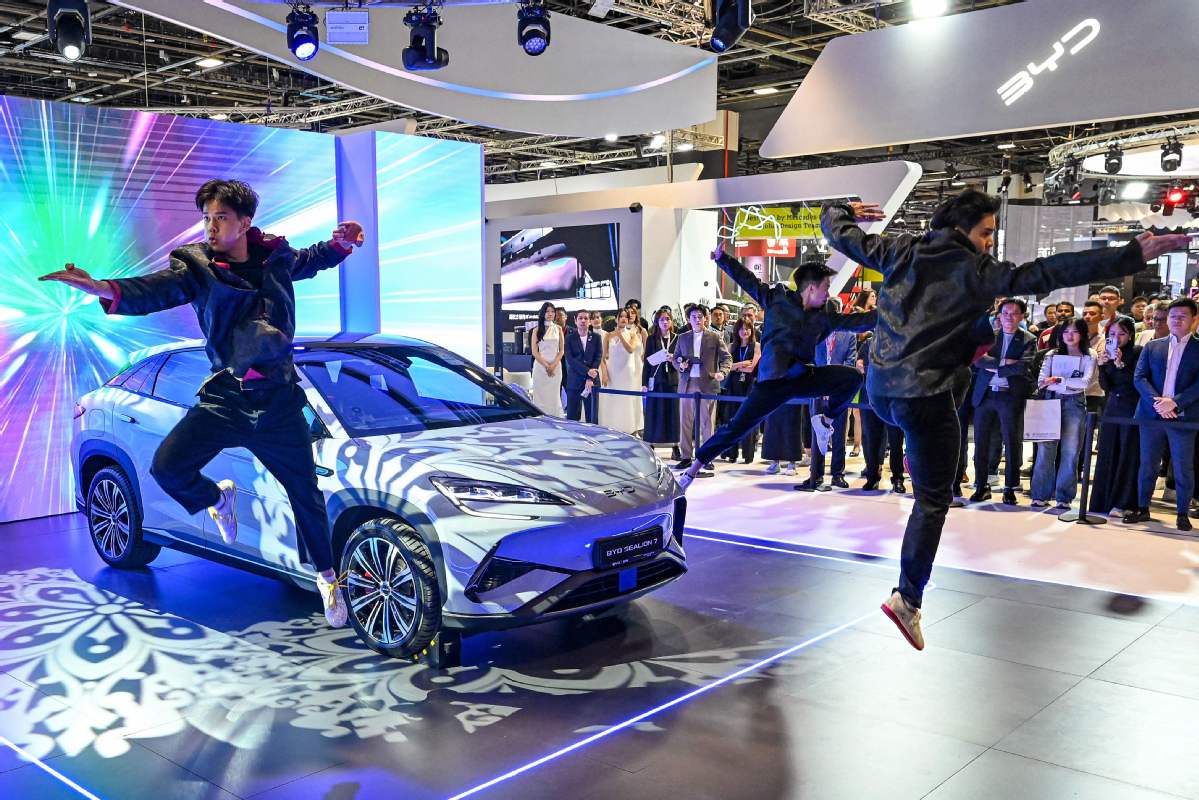
Right after the Spring Festival holiday, automobile markets in China have become hectic, touting new features, offering discounts and even appearing in movies to woo potential car buyers.
Tesla announced on Wednesday, the first working day after the weeklong holiday, a time-limited discount of up to 8,000 yuan ($1,098) on its Model 3. On the same day, Xpeng unveiled five-year installment and interest-free loan offers.
But at the head of the pack was Nio, whose offer — which includes interest-free five-year loan plans — came days before the Spring Festival holiday ended.
Meanwhile, Great Wall Motor's Tank, BAIC's Arcfox and Dongfeng's off-road brand Mengshi have either starred in Chinese New Year blockbusters including Ne Zha 2 or partnered with their producers in publicity campaigns.
Behind the diverse tactics is the same sense of urgency: after a brutal 2024 they believe the vehicle market this year will be more cruel, despite the China Association of Automobile Manufacturers expecting the overall market size to go up 4.7 percent to 32.9 million units.
The elimination phase has begun and many of the car manufacturers are struggling to "beat the count", said analysts from consulting firm McKinsey in a report released on Thursday.
"Those which cannot come up with decent electric vehicles in one or two years, and those which are deep in the red but cannot offer a convincing strategy to go green, will be forced to leave the race," they said.
In the bigger picture, Chinese brands, whose rise is the defining feature of the current market landscape, are relatively safe.
Over the past five years, the number of Chinese car brands selling more than 600,000 vehicles annually jumped from 11 in 2020 to 13 in 2024, signaling a dramatic shift toward greater market concentration.
More tellingly, for the first time, Chinese brands have broken into the ranks of those with sales exceeding 1.2 million units annually — a mark that was once the exclusive domain of foreign brands.
In January, seven out of the 10 bestselling carmakers in the country were Chinese; Geely topped the chart, followed by BYD and Changan.
These domestic brands have not only capitalized on China's rapid push toward NEVs but positioned themselves as leaders in the transition to intelligent mobility.
However, smaller Chinese brands, especially startups, are yet to gain a firm foothold. There are currently 37 active NEV brands in China. Of them, 12 are independent startups and the rest, such as Zeekr, Voyah and Avatr, are offshoots of larger traditional manufacturers.
Now at least five of the NEV brands have become profitable. Those who cannot go green in the next 12 to 18 months, or at least come up with a feasible plan, may trigger speculation, said McKinsey.
This is particularly true after Jidu, a partnership between Geely and Baidu, and Neta got into financial trouble in late 2024, leaving car owners and even employees nowhere to resort to.
For foreign carmakers, the picture is far from rosy. Once the undisputed leaders of China's car market, their position is becoming precarious.
A combination of technology lag, reduced brand loyalty and aggressive pricing strategies from domestic players has eroded their dominance, according to McKinsey.
It projects the market share of foreign carmakers, which once commanded over half of all car sales in China, to fall to just 30 percent by the end of this year from 40 percent now.
The decline is a direct result of the seismic shift toward electric vehicles and smart driving technology — areas where many foreign brands have struggled to keep pace.
The profit margins of joint-venture carmakers have taken a significant hit. McKinsey's analysis reveals that, from 2017 to 2023, the profits of the top 10 leading Chinese joint-venture companies dropped by 34 percent in the country.
For many foreign brands, the situation is compounded by a weakening consumer base, especially as new domestic models with cutting-edge features flood the market.
Some foreign companies, such as Volkswagen and its premium Audi brand, have responded by forming strategic partnerships with Chinese manufacturers, seeking to import Chinese technological innovations into their own models.
However, these collaborations, though beneficial in the short term, are unlikely to be a silver bullet, said McKinsey analysts.
They said the strategy may help bridge the gap in the short term, but it does little to address the core issue: foreign brands are increasingly irrelevant to a generation of Chinese consumers that are growing more attached to homegrown offerings.
New tech prospects
Looking to the future, the next frontier in China's automotive revolution is clear: intelligent driving and smart in-car experiences.
In 2024, intelligent driving technologies — once seen as futuristic — have become mainstream, with major manufacturers offering vehicles equipped with features that can drive themselves on highways and in cities.
The market for intelligent driving technology is growing at a blistering pace, and consumers are increasingly embracing these innovations.
A McKinsey poll shows that 76 percent of respondents tried smart driving in 2024, up from 65 percent in 2023.
Despite the rising consumer interest, however, McKinsey cautions that the industry faces challenges.
While intelligent driving technologies are rapidly improving, they have yet to find a sustainable business model.
The growing trend of "free" software upgrades, for example, has left carmakers struggling to monetize these features.
More promising is the rise of the "smart cockpit", where cars transform from mere transportation tools into living rooms.
As intelligent driving systems become standard, the focus is shifting to in-car experiences, with carmakers investing heavily in creating more personalized, intuitive environments for consumers, said McKinsey.



















