


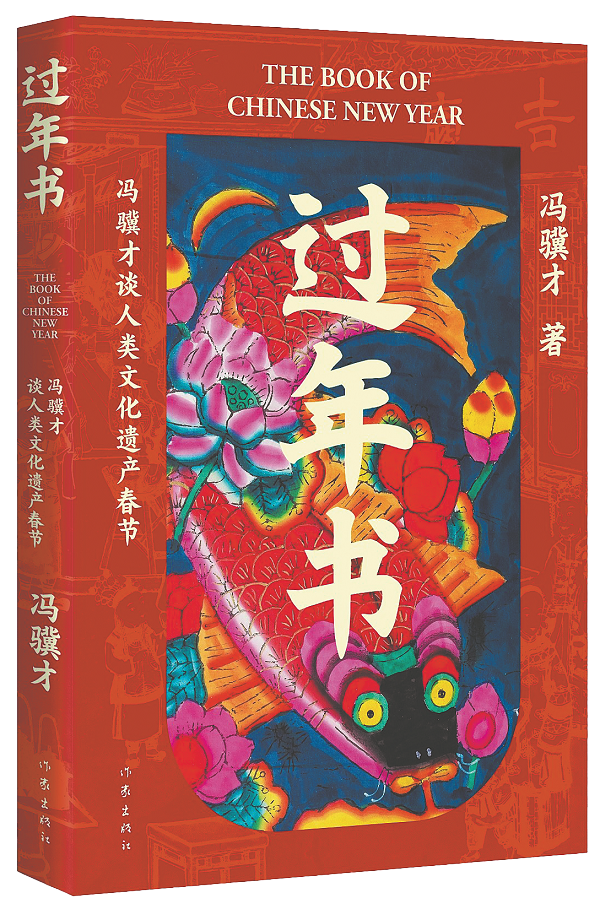
Guo Nian Shu, or The Book of Chinese New Year, by renowned author Feng Jicai was released by the Writers Publishing House ahead of Spring Festival.
Spring Festival was designated by UNESCO as an Intangible Cultural Heritage in December. Feng, one of the main team members responsible for the application, started compiling the book immediately.
The book includes over 50 articles and interviews by Feng on the topic of Chinese New Year, such as Painted Faces and Eight Things About Spring Festival, along with 30-plus color illustrations that comprehensively explain the cultural significance of the national holiday through memories, customs and the preservation of related folklore. It serves as an introductory guide to understanding the holiday.
"Chinese New Year is the most significant festival in the hearts of the Chinese people," Feng writes in the book.
In the past, even the poorest families would cook a pot of meat, prepare two bottles of wine, and invite someone to write auspicious phrases on red paper as spring couplets to paste on their doors. Girls would buy red strings to tie their hair and boys set off small firecrackers.
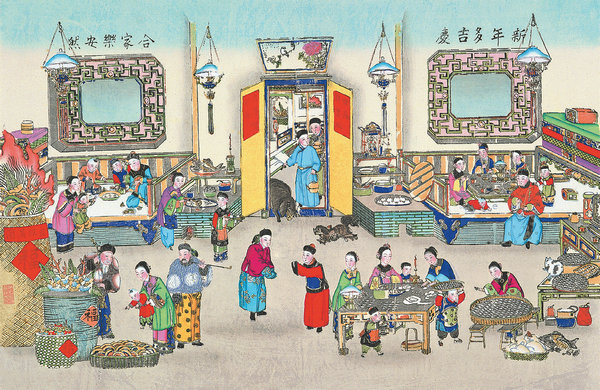
"For the reserved and warmhearted Chinese, each New Year is a burst and deepening of national emotions," he writes.
The book is divided into five parts: lyrical essays about the Chinese New Year, articles of thoughts and reflections, articles about New Year customs and "New Year art" from the past 20 years of folk culture preservation, and present speculation, insights and suggestions about Chinese New Year, including articles, speeches and interviews.
Xing Dengyu, the book's editor, says that it offers Feng's memories and reflections on Spring Festival, his efforts in preserving its cultural heritage, and related discussions. It is an excellent entry point for readers to understand the culture of the Chinese New Year, Xing adds.
Feng, born in Tianjin in 1942, is a contemporary Chinese writer, painter and cultural scholar. Covering a wide range of subjects and forms, his works have been translated into more than 20 languages, including English, French, German, Italian, Japanese, Russian, Spanish and Arabic, with more than 60 translated editions published overseas, winning numerous awards domestically and internationally.
"In recent years, I've particularly wanted to compile The Book of Chinese New Year because I've written so much about the topic, whether in novels, essays or miscellaneous writings. Coming from an agrarian era, my feelings and memories of the New Year are profound. The New Year is like a vat of old wine, rich and intense in Chinese life and culture, and every Chinese person has tasted it," he writes in the book's preface.
However, during the last century's social openness, lifestyle changes and the influence of Western culture, traditional customs gradually loosened and the flavors of Chinese New Year faded. Feng worried that people might unconsciously lose the beautiful traditions.
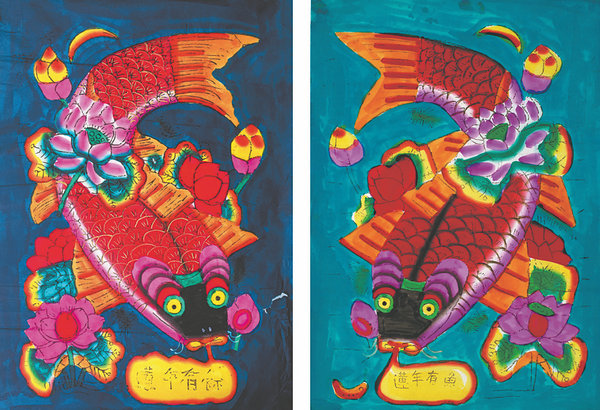
To him, if Chinese people were to lose the customs of Chinese New Year, it would not just be about missing a New Year's Eve dinner but losing the brilliant and diverse culture created over thousands of years across different regions, embodying the Chinese nation's persistent pursuit of reunion, filial piety, harmony, peace and happiness.
"Therefore, I began to care, think, speculate and explore the essence, nature, significance and irreplaceable reasons for Chinese New Year, writing articles or speaking to the public," he writes. "I also conducted fieldwork to preserve important New Year customs such as flower fairs, paper-cutting, and New Year paintings. I expressed my opinions on various social topics related to the New Year, such as the Spring Festival Gala, Spring Festival travel rush, text message greetings and firecrackers.
"My intention is to protect and pass on the traditional New Year culture," he concludes in the foreword.








