



New Year rituals foster forgiveness, renewal







The Book of Changes says:"Daily renewal is a sign of abundant virtue." This axiom perfectly applies to our era of rapid changes and sudden twists. Superficial changes are not akin to genuine newness; they may simply signal stale, meaningless cycles.
The time around Chinese New Year is the period when we stop and learn to distinguish true novelty from mere trendiness. True novelty is the fruit of time; it comes from patient maturation, from the fact of observing and discerning the long-term changes that make cultures, societies and civilizations evolve and progress.
Throughout history, nations and cultural communities have gradually shaped rituals that express their particular spirit, their inventiveness as well as their capacity to reform and renew themselves. Rituals are markers in space and time; they help us find our setting in the world and to continue our journey as a community.
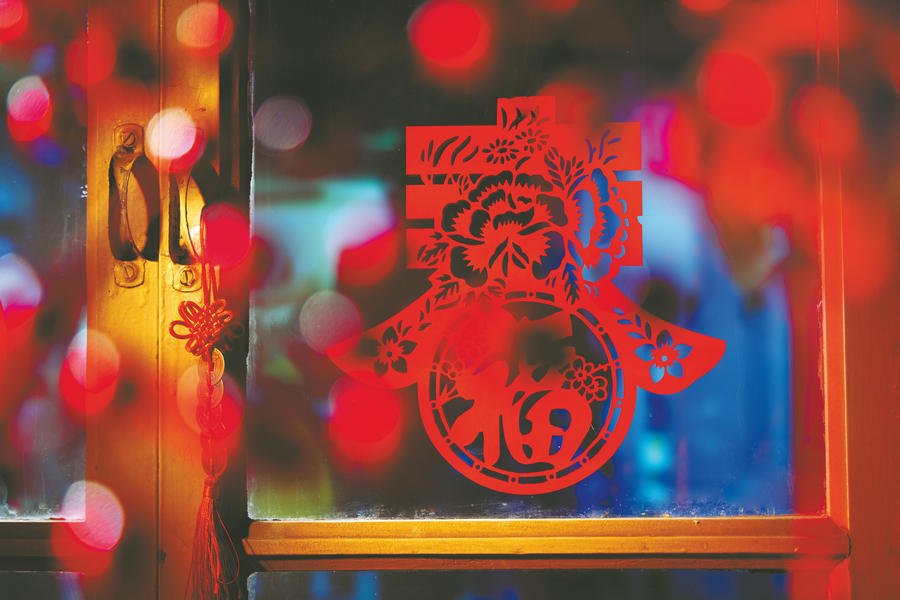
In China, the rituals surrounding Chinese New Year are loaded with special meaning. Wishing each other a Happy New Year, settling one's debts, sharing a festive meal, wearing new clothes, cleaning the house, all this means casting off the old to ring in the new.
In many ways, the rites that mark Chinese New Year can be read as a way of marking reconciliation in the household and the neighborhood. One does not always need words and lengthy explanations to repair relationships. Spending time together, conforming to time-honored customs, toasting each other, exchanging red envelopes, all these little gestures are a way to effectuate implicit reconciliation, and strengthen the family's and the neighborhood's atmosphere, whatever the tensions and misunderstandings that sometimes may have arisen.
In China, in particular, but also in other societies and cultures, cohesiveness is largely the product of regular communal celebrations. As noted and analyzed by Chinese thinkers from the time of Confucius, rituals foster and celebrate a group of people's renewed desire to live together. Rituals are a kind of social cement.
This fact was emphasized by a Western sociologist very much influenced by the reading of Chinese thinkers. Erving Goffman observed that "interaction rituals" permeate everyday life. Non-respect for them could become a major cause of deterioration of social relations. Not shaking hand the proper way, not bowing in respect when an occasion demands, or not thanking someone when thanks is due, or not holding the door for someone can still be forgiven when coming from someone foreign to the group culture, but its infringement by an insider needs to be compensated by a restorative rite, of which the simple act of quickly apologizing is the most basic expression.
If the above observations are relevant for other societies, Chinese thinkers were the first to theorize them. For Xunzi, a ritual, when properly performed, not only expresses and fosters virtue, it also manifests social distinctions and redistributes resources accordingly. It nourishes human life, which it embellishes and refines. It progressively transforms the human mind and contributes to nurture vital breath. It leads one on the path to sagehood. Rituals also play a cosmic function, as heavenly order and social harmony go hand in hand: "By ritual, Heaven and Earth harmoniously combine. It honors forefathers and ancestors, and it exalts lords and teachers." (Xunzi, On Ritual).
Particularly solemn in its expression, the reverence shown by Xunzi toward ritual forms and observances is far from being an exception: Confucian thinkers always emphasized that rituals were a privileged way to shape both the personal and collective body through regular observances, to institutionalize ethical care and the sharing of resources, to make human society coordinate with the cosmic order, and also to govern in a spirit of humanness.
Chinese thinkers' focus on ritual is still relevant. Korean philosopher Han Byung-Chul has lamented what he calls "the disappearance of rituals", basing himself on his long experience in Germany and other countries. Han compares rituals to a house in which one needs to settle down: the latter helps us to locate our existence in space, as it orders it around a central point. As Han sees it, the disappearance of rituals deeply disrupts the sense of identity and relationships. Somehow, when rituals disappear, we are left homeless.
In contemporary China, the family rituals that surround Chinese New Year somehow differ from one household or region to another; still, they all share in the same spirit. They continue to foster reconciliation and renewal. They constitute the "home" around which existence revolves and takes its meaning. When we celebrate the Year of the Snake, rejoicing with friends or kinfolk, let us be alert to the symbolic weight of the little gestures we perform and offerings we give. And let us attach renewed significance to the greetings we exchange: Happy Chinese New Year to all of us!
The author is a professor and doctoral adviser in the School of Philosophy, Fudan University, Shanghai. The views don't necessarily represent those of China Daily.
If you have a specific expertise, or would like to share your thought about our stories, then send us your writings at opinion@chinadaily.com.cn, and comment@chinadaily.com.cn.





