



Better Sino-US ties best option for Trump







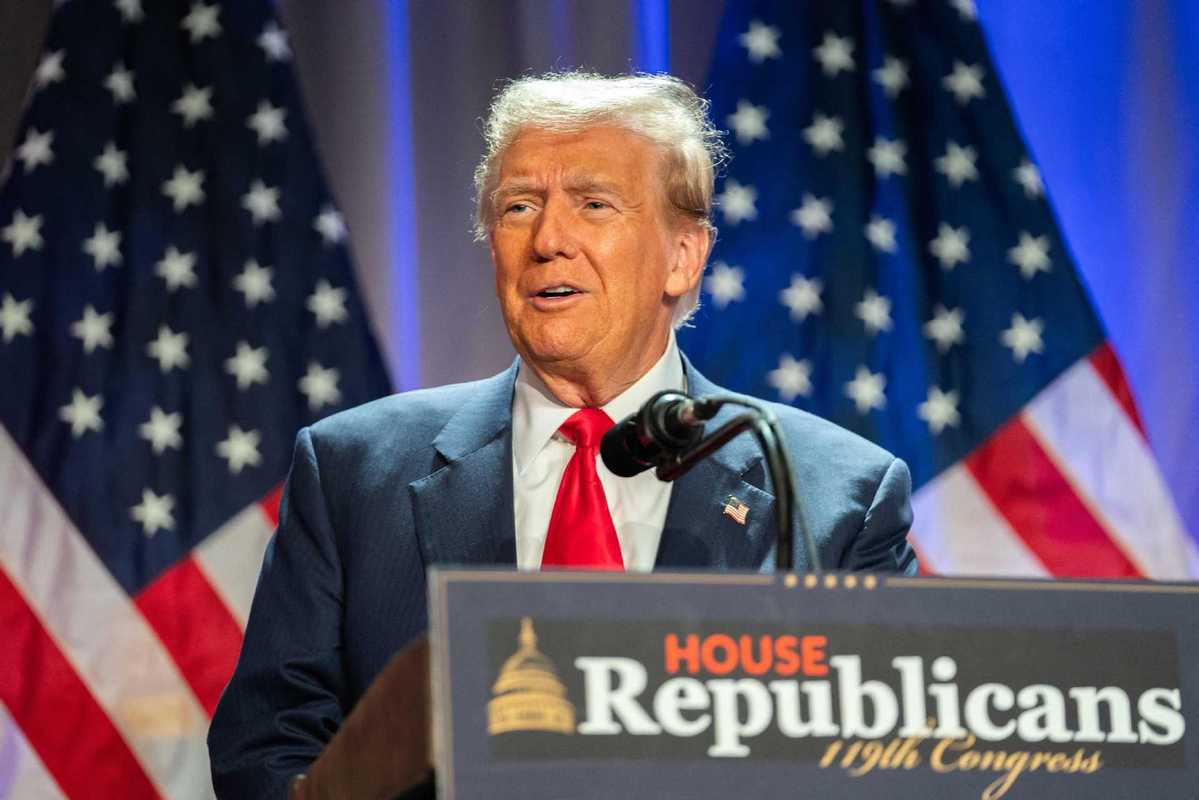
Donald Trump's victory in the US presidential election heralds the start of a new era in the United States. The majority of US citizens have made a choice by rejecting the Democrats' long-standing vision of the future of the US; in its place will now be Trump's "Make America Great Again" agenda that aims at controlling the US' borders, rolling back progressive social policies, promoting traditional values and focusing on the US' own interests in international relations.
From a historical perspective, this turn was inevitable. Despite its many successes, the Democrats' agenda has brought many contradictions to US society. Trump's MAGA agenda is a necessary step to iron out those contradictions.
However, as the saying goes, the devil is in the details. Whether Trump's agenda will succeed depends on the policies that his government will implement. In the economic arena, reindustrialization is one of his central policy goals. The first Trump administration believed Chinese exports and technological competition hindered the US from rebuilding its manufacturing sector. As a result, it adopted a protectionist approach toward China, a policy the Biden administration inherited. However, its success has been very limited.
This policy rests on three pillars. On the trade side, high tariffs are imposed on goods imported from China; on the technological side, there is export control on high-precision semiconductors and other hi-tech products; and on the investment side, US companies are forbidden from investing in several key Chinese hi-tech sectors while Chinese EV companies are forbidden from investing in the US.
However, the high tariffs have not reduced China's exports to the US. Although direct trade between the two countries has declined, China's exports to the US, counted by the rule of origin, have actually increased, mainly because many Chinese companies have moved their production capacities to third countries and are exporting to the US from there. In addition, the US' trade deficit with China remains substantial.
The US' investment policy has garnered more success through the US CHIPS and Science Act and the Inflation Reduction Act, but it remains to be seen whether that will lead to the fulfillment of the country's reindustrialization goal. China has developed strong technological and production capacities in green technologies, but the US' tight national security policy has kept Chinese investment away from the country.
The US' export control on hi-tech products has increased the difficulty for Chinese companies to obtain key components. But it also served as a wakeup call for China to gear up its investment in those products. There are early signs of success, as China's self-sufficiency in semiconductors has increased since 2018, and the country leads in photonic semiconductors that have the potential to be a substitute for NVIDIA's high-performance GPU chips.
Better approaches exist for the US to rebuild its manufacturing sector. One of them is to open its domestic market to Chinese investment. China now has a clear edge in green technologies, including solar panels, wind power equipment, and other related products. China's EV industry is not only the largest, but also the most advanced in the world. Thanks to its great saving propensity, China has become a capital-surplus country. Chinese companies are fully prepared to invest in the US.
Allowing Chinese investment in the US will bring several benefits to both countries and the world. For the US, Chinese investment will accelerate the country's pace of reindustrialization, boost employment, and support local growth. It will also bring advanced green technologies that the US is trying to build domestically. For China, investing in the US will lessen domestic competition and stabilize Sino-US relations. For the world, cooperation between China and the US will send a positive signal to other countries, reducing the anxiety of having to choose between the world's two largest economic powers.
Trump sent positive signals when he said during his campaign that he would welcome Chinese EV companies to invest in the US as long as they hired workers from the US. His proposal of higher tariffs on Chinese exports was aimed at bringing manufacturing back to the US. A shortcut for him to realize this goal is to keep his promise to allow Chinese investment into his country.
The national security concern is not something that can't be dealt with. Tesla's operation in China provides a good template. By storing its data inside China, Tesla has got a full-fledged permit from the Chinese government to operate on Chinese soil. The US can adopt a similar arrangement.
In the last 50 years, it was always a Republican president — from Richard Nixon to George Bush Jr — who either dared to change the course of US policy toward China, or to stabilize Sino-US relations for the good of both countries. Now it is Trump's turn.
The author is liberal arts chair professor, Peking University. The views don't necessarily reflect those of China Daily.
If you have a specific expertise, or would like to share your thought about our stories, then send us your writings at opinion@chinadaily.com.cn, and comment@chinadaily.com.cn.





