


Cultural 'seed bank' explores richness of Chinese civilization








GUANGZHOU — The Guangzhou branch of the China National Archives of Publications and Culture, a newly established landmark in the southern Chinese metropolis of Guangdong province, stands as both an architectural masterpiece and a repository of the profound richness of Chinese civilization.
The archive, opened in July 2022, comprises its Beijing headquarters and branches in Guangzhou, Xi'an in Shaanxi province and Hangzhou in Zhejiang province. They collect print and digital works that embody the essence of Chinese civilization, serving as a seed bank of the country's culture.
The Guangzhou branch, or Wenqinge, is 90 kilometers from the city's downtown area and integrates the lush greenery and clear waters typical of southern China into its grand buildings.
In front of the main building — a seven-story tower — is a tranquil pond accompanied by an ancient tree and a large inkstone, creating a scene reminiscent of traditional Chinese paintings.
"To protect the tree, which is over 200 years old, we realigned the central axis of the architecture and designed a space for it to flourish in the middle of the pond, inadvertently creating the most stunning view," says chief architect He Jingtang, an academician of the Chinese Academy of Engineering.
Within the exhibition area, an antique-style sailboat model highlights the rich history of Guangzhou. The southern coastal city served as a crucial starting point for the ancient Maritime Silk Road and is a trade port that has remained open for over 2,000 years.
Wenqinge boasts a rich collection of historical texts in various languages that explore Chinese culture and history. These works illustrate the cultural exchanges that occurred between the East and the West along the ancient Maritime Silk Road.
Highlighting a particular book published in Italian in 1585, Huang Zhen, who works in the research and publicity department of Wenqinge, says: "Historia del Gran Reino de la China was originally written in Spanish, drawing from the accounts of missionaries who traveled to Guangdong and Fujian provinces. It was one of the most comprehensive and widely read works about China in that period."
The Maritime Silk Road not only facilitated economic and cultural exchanges but also accelerated migration. From the late 19th to the early 20th century, a significant number of people from China's southern coastal regions migrated to Southeast Asia, driven either by necessity or a hope for better opportunities.
Among the precious collections at Wenqinge are the qiaopi letters, remittances and letters sent home by overseas Chinese through nongovernmental channels, financial institutions and postal services. They are unique records of the challenging and often tumultuous history of earlier generations of overseas Chinese.
According to Zhang Weitao, director of the Guangzhou branch of the CNAPC, the branch has collected over 3.6 million items and publications through various means, including donations and entrusted acquisitions. A significant portion of these materials focuses on the history of overseas Chinese, underscoring Guangzhou's role as a key hometown for these emigrants.
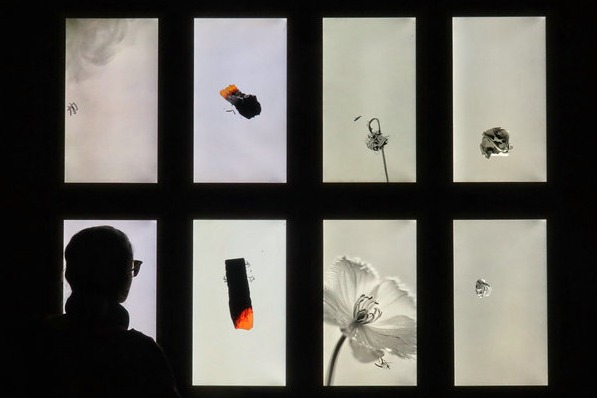
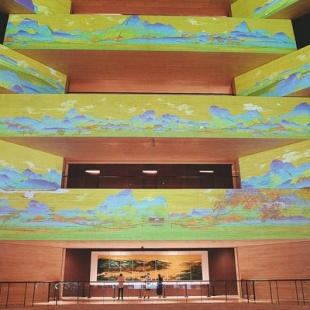
The Guangzhou branch is also exploring the integration of archives and technology, applying advanced technologies such as naked-eye 3D tech and holography to exhibitions and displays.
One of its most eye-catching high-tech displays is a graph system of Song Dynasty (960-1279) paintings, which not only allows for multidimensional and immersive displays of existing Song paintings but also enables visitors to create their own Song-style paintings using AI technology.
"Traditionally, 'archives' refer to printed editions and different editions of books," Zhang says. "The CNAPC has enriched the meaning of the word. It now refers to various carriers that bear the imprints of Chinese civilization."
The national archives can be seen as "a repository, museum and encyclopedia" of Chinese culture, he says.
"In the future, we will continue to enrich our collection, promote the scientific and safe preservation of the archives, and enable the inheritance and creative use of these resources," Zhang adds.