



Japan's defense expansion triggers concerns







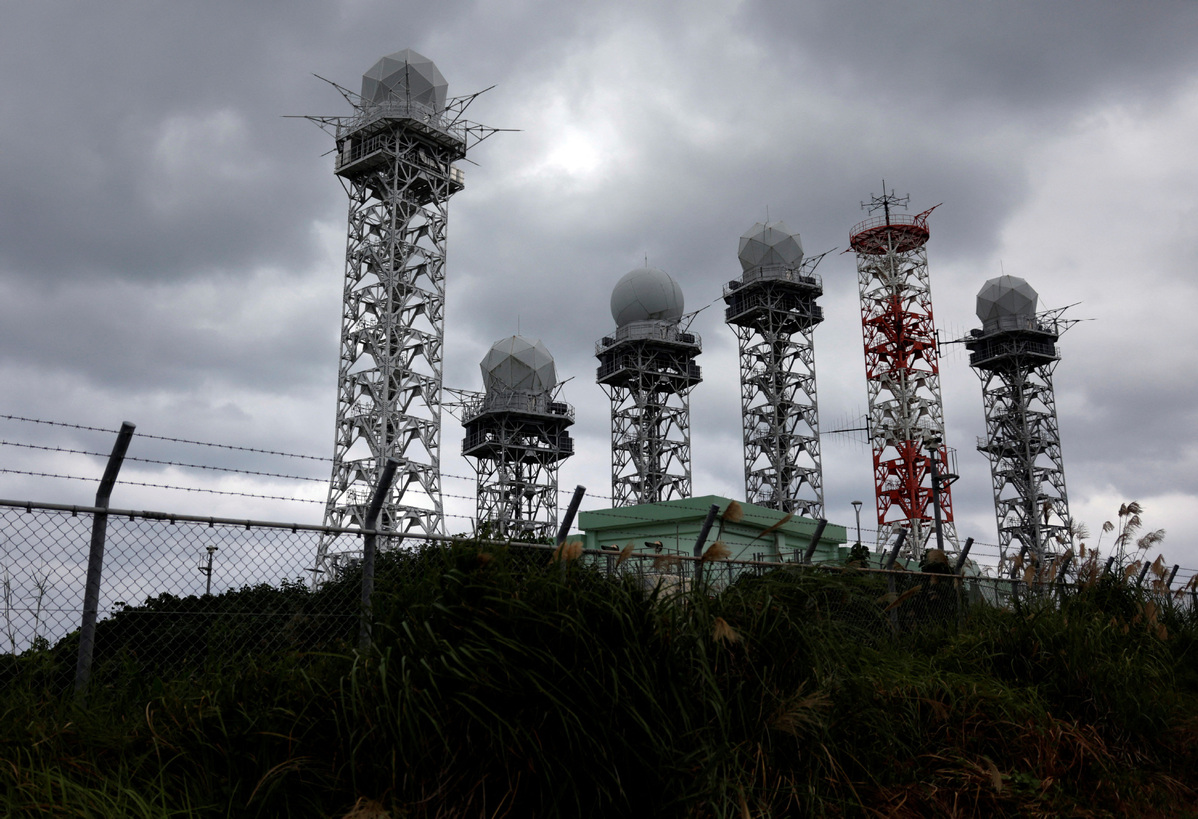
Japan's efforts to expand its defense industry both domestically and internationally could heighten tensions in the region and spark an arms race, experts warned.
Under its Official Security Assistance program, Japan plans to supply defense equipment and provide assistance to the Philippines, Indonesia, Mongolia and Djibouti in the financial year 2024, which ends in March 2025, the newspaper Asahi Shimbun said.
Launched in April 2023, the OSA program aims to assist nations that "share Japan's values and face similar diplomatic challenges" in countering China's so-called expanding military presence in the region.
Tokyo is also revising its "Three Principles on Transfer of Defense Equipment and Technology", which regulate the export of military equipment. These principles include prohibiting certain overseas transfers, limiting permissible cases through stringent review and transparency, and ensuring proper oversight to prevent unauthorized use or third-party transfers.
In December 2023, Japan amended its export guidelines to allow domestically produced defense platforms, including lethal weapons, to be exported to licenser countries such as the United States. As part of this policy, Japan agreed to supply missiles for the Patriot PAC-2 and PAC-3 systems to replenish US stockpiles.
In March, Japan revised its arms export policy further, permitting the sale of next-generation combat aircraft developed jointly with the United Kingdom and Italy under the Global Combat Air Programme.
Potential markets for the jets include 15 countries with which Japan has defense partnership agreements, such as the US, Germany, India and Vietnam, according to the Associated Press.
Additionally, Japan, Britain and Italy are reportedly considering inviting Saudi Arabia to join the fighter jet development program as a financial contributor, Kyodo News reported.
Analysts observed that Japan lifting its export ban on fighter jets marks a major departure from its post-World War II security policy, which traditionally prohibited arms exports.
Jumpei Ishimaru, a research assistant at the International Institute for Strategic Studies' Japan Chair Programme, noted in an online analysis that the revised defense export policy provides a pathway for Japan to expand its presence in the global arms market, potentially bolstering its domestic defense industry.
Japan's military build-up since 2022 has fueled a surge in domestic orders, with some companies reporting a more than 300 percent increase in new contracts, according to a Dec 2 report released by the Stockholm International Peace Research Institute.
SIPRI data revealed that arms revenues for five Japan-based companies, including Mitsubishi Heavy Industries and Kawasaki Heavy Industries, rose by 35 percent to $10 billion in 2023.
Lu Hao, an associate research fellow at the Chinese Academy of Social Sciences' Institute of Japan Studies, warned that Japan's efforts to lift restrictions on weapons exports and revitalize its defense industry could contribute to regional instability.
"Tokyo's aggressive armament expansion will likely trigger an arms race, escalate security conflicts and undermine regional peace and stability," warned Lu.
To encourage investment in its defense industry, Japan has raised the profit margin for defense-related government orders from 8 percent to 15 percent, a significant shift in a country where defense spending was once considered taboo under the Constitution, which renounces war, Nikkei Asia reported.
Defense and aerospace startups in Japan are attracting growing interest from US venture capitalists as Tokyo accelerates efforts to strengthen its defenses.
Major industry players like Mitsubishi Heavy Industries, Kawasaki Heavy Industries and IHI are forecasting a combined $9.82 billion in defense-related revenues for the fiscal year ending March 2025, according to Nikkei Asia. Mitsubishi Heavy has been designated by Japan's Ministry of Defense as the prime contractor for key projects, including the development of standoff missiles and other critical defense systems.
Mitsubishi Heavy Industries President Seiji Izumisawa told Nikkei Asia that Japan's defense sector is undergoing rapid expansion in response to the country's national security initiatives, with annual revenues projected to reach 1 trillion yen ($6.7 billion) during the medium-term business plan through March 2027.
Traditionally, Japanese defense contractors have struggled to secure direct financing from banks, relying instead on government funding through the defense ministry for capital investments. However, this dynamic is shifting as startups increasingly play a pivotal role in the global defense industry.
In response, the Development Bank of Japan has committed $63.7 million in financing for defense-related startups over five years, through 2025.
Lian Degui, director of the Center for Japanese Studies at Shanghai International Studies University, noted that Japan's defense policies align closely with US strategic objectives. "The United States has consistently supported, requested and even encouraged Japan to bolster its defense capabilities and increase defense spending," he said.
"Japan is leveraging US pressure as a pretext to enhance its military capabilities, modernize its weapons systems, and pursue its long-held ambitions of becoming a 'normal country' or even a 'political and military power'," said Lian.
While Japan publicly maintains an exclusively self defense-oriented policy, its consistent increases in military spending, weapons development, and procurement of long-range arms have undermined this stance and challenged the constraints of its Constitution, Lian observed.
Wu Jinan, a senior researcher at the Shanghai Institutes for International Studies, added that the use of Japanese weapons in overseas conflicts could blur the lines of integrated force application, potentially conflicting with Article 9 of the Japanese Constitution.
"Japan's recent military buildup and increased arms exports are unlikely to achieve the security improvements it seeks," Wu remarked.










