Urban village renovation efforts to step up pace







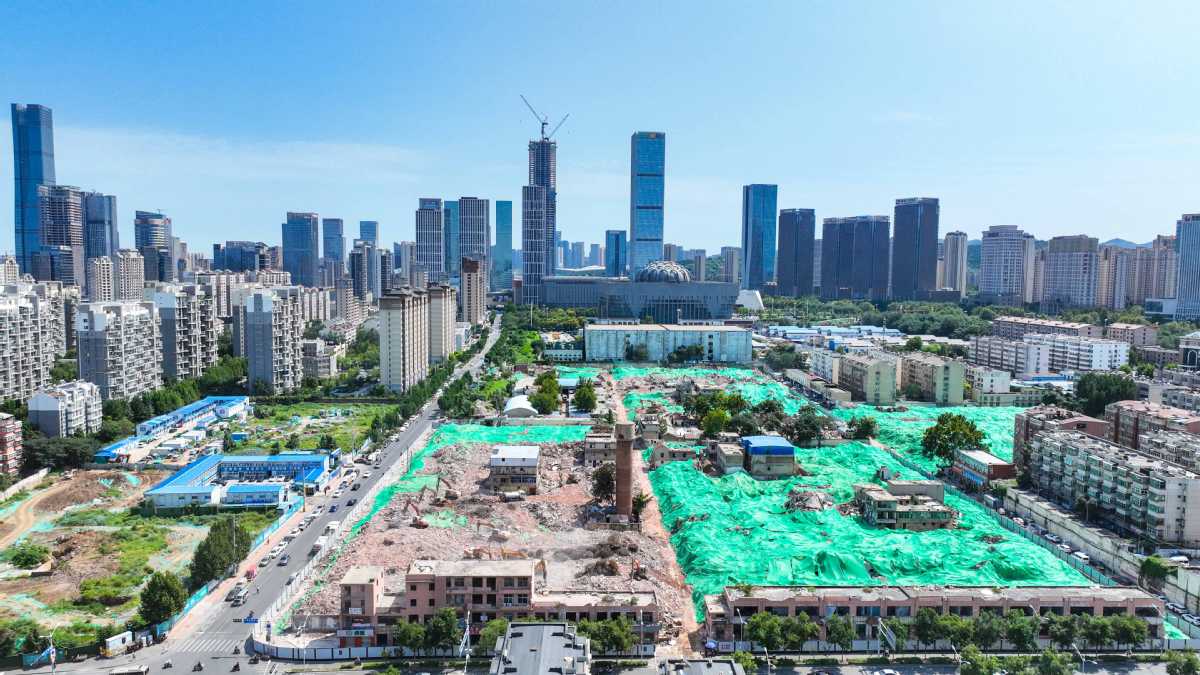
China will push ahead with its urban village renovation program, which will cover a much wider geographical area and shift toward monetary compensation, in an effort to stabilize the real estate sector and help the country hit its annual growth target, analysts said.
In a major policy shift, China is expanding its support for urban village redevelopment to nearly 300 cities from the previous 35 major ones, according to a notice issued by the Ministry of Housing and Urban-Rural Development and the Ministry of Finance.
"As cities have expanded, many new urban villages have sprung up, often with suboptimal land use, safety concerns and inadequate public services," said Li Yujia, a researcher on residential policy. "Redeveloping these areas is crucial for achieving equitable urban development."
Beyond just improving physical infrastructure and housing, the urban village transformation initiative also aims to facilitate the integration of new urban residents — often migrant workers and their families — into the fabric of the city, Li added.
Prior to the notice, Chinese authorities had rolled out an initiative to renovate 1 million more homes in urban villages and dilapidated housing in October, noting that the number of homes in urban villages alone that require redevelopment in 35 major cities has reached 1.7 million units.
With the expanded scope of the urban village redevelopment initiative, the number of eligible projects is expected to grow substantially, paving the way for the transformation of an additional 1 million homes, said Chen Wenjing, director of policy research at the China Index Academy.
According to the latest notice, projects included within the expanded program's scope can now benefit from a range of supportive measures, such as inclusion in local government special bond financing, access to special-purpose loans from policy-oriented financial institutions, and tax and fee incentives.
The policy support is already being swiftly exercised on the ground. In a recent development, Guangzhou, Guangdong province has secured the first specialized urban village redevelopment loan in the province, with China Development Bank and Agricultural Development Bank of China set to provide an initial 250 million yuan ($34.54 million) in dedicated financing.
The notice also emphasizes the need for local governments to consider the existing inventory and projected future supply of commercial housing stock within their respective real estate markets while implementing monetized resettlement models.
Monetized resettlement models include pure monetary compensation, residents' self-purchase and government-led acquisition of existing commercial housing units for resettlement purposes.
An urban village redevelopment project in Guangdong's Foshan has also received a 1.19 billion yuan specialized loan from the two aforementioned policy banks to fund the purchase of resettlement housing.
The monetized approach shortens the transition period for those in the process of being resettled. Rather than waiting for new housing units to be constructed, residents can quickly find and move into alternative accommodation of their choosing, said Yan Yuejin, deputy head of the Shanghai-based E-House China R&D Institute.
Meanwhile, it is expected to help accelerate the absorption of existing housing inventory in the market, Yan said.
If 1 million homes in urban villages and dilapidated housing are monetarily resettled at an average size of 100 square meters per unit, that could drive roughly 100 million square meters of residential sales. This would account for approximately 10 percent of the total market volume, according to a study by the China Index Academy.
The influx of this pent-up demand entering the market is expected to substantially enhance overall transaction activity, said Chen, who is with the academy.
A portion of this 1 million unit resettlement pool could translate into actual home sales by the end of this year and throughout 2025, providing a tangible boost to new property transactions. Furthermore, the report notes that there is potential for the scale of this resettlement program to expand even further in the future, according to the academy.