Development banks can help resolve global crises








After the survival crisis at the end of the 20th century, the revival and expansion of the multilateral development bank (MDB) system, led by the World Bank, has become one of the most prominent transformations in the global development financing system since the 2008 global financial crisis.
Following the adoption of the United Nations 2030 Agenda for Sustainable Development, multilateral development banks (MDBs) set a goal to increase their capital mobilization capacity from "billions to trillions", reflecting the emergence of a development finance paradigm that lies between government and market forces. More fundamentally, this shift is driven by the growing challenges of financing gaps on the demand side of international development.
In the context of global security, economics and health as well as the environment, the implementation of the UN 2030 Agenda faces significant challenges. Only 17 percent of its targets have been met on schedule, leading to calls for comprehensive reforms of the MDBs in order to make them "better, bigger, and more effective" in tackling these challenges.
This year marks the 80th anniversary of the establishment of the Bretton Woods institutions. This year has also seen the MDBs' reform becoming a top agenda in global governance. From the just-concluded G20 Summit in Rio de Janeiro, Brazil, to the UN Future Summit and the ongoing 29th Conference of the Parties to the UN Framework Convention on Climate Change (COP29), all global forums have identified the MDBs' reform as essential to resolving various global issues.
The MDBs have evolved into "omnibanks" with a broader mission scope, which now includes not only poverty alleviation but also crisis relief, peace-building, climate action, providing better healthcare and other global public goods.
Significant progress has indeed been made in the reform of the MDBs. First, their scale has become "larger." According to the G20 Independent Expert Group, various MDBs have enhanced their capital adequacy through reforms such as lowering equity to loan ratios, introducing hybrid capital, and leveraging shareholder members' guarantees. These reforms are expected to significantly increase the lending capacity of the MDBs, with a total increase of $357 billion by 2030, a 30 percent increase compared with 2019. This includes an additional $150 billion in loan capacity for the International Bank for Reconstruction and Development.
The MDBs are also offering increasing technical support to improve the investment climate in developing countries, so as to mobilize private resources. For example, the World Bank has released data on sovereign default and recovery rates over the past 40 years, as well as private sector default data in a bid to enhance investors' confidence.
Second, the MDBs have made significant strides in building a more cohesive system. The World Bank, with its mission of promoting international development, is no longer working in isolation. It is now part of a broader system of more than 30 regional and sub-regional development banks, including larger ones such as the Inter-American Development Bank, the Asian Development Bank, the African Development Bank, the Islamic Development Bank, the European Bank for Reconstruction and Development, and newer institutions like the Asian Infrastructure Investment Bank and the New Development Bank.
The World Bank, which has the largest multilateral concessional financing window and knowledge capability, remains the central node in this system and maintains its leadership position. Under the leadership of the new World Bank President, Ajay Banga, the heads of the MDBs have said efforts would be made to strengthen mutual recognition of procurement standards. They have also launched a shared platform for project data sharing and co-financing, marking a new milestone in the integration of the MDB system.
Third, the MDBs are becoming more flexible in terms of responding to the increasingly turbulent and uncertain development landscape. At the World Bank annual meeting, Banga highlighted several measures taken by the bank to make its operations faster and simpler. For example, the average project approval time has been reduced from 19 months to 16 months; the goal is to shorten it further to 12 months by June 2025.
However, these reforms fall far short of both external expectations and their objectives. Amid rising geopolitical conflicts and competition, the reform of the MDB system faces various fundamental challenges.
Under the new narrative of strategic competition, the substantial expansion of the MDBs — leveraging billions of dollars to mobilize trillions of dollars — faces structural obstacles. In the broader trend of global economic debt, the MDBs' growth must rely on greater fiscal support from shareholder countries, and it is unlikely that they can achieve large-scale mobilization of private resources or meet the climate goals purely through financial innovations or policy coordination. Several studies suggest that MDBs' efforts to mobilize private resources so far have been like "a drop in the ocean".
However, general capital increase is not yet on the agenda of most MDBs, especially the World Bank, due to its implications on power sharing with emerging economies. The Brazilian presidency of the G20 this year, under the theme of "Building a Just World and a Sustainable Planet" strongly advocated for more equitable global governance, especially the reform of the Bretton Woods institutions. But the implementation of reforms remains uncertain.
Besides, the headwinds against economic globalization fundamentally are undermining the global development mission of the MDBs, and developed economies are according priority to trade protectionism, and "de-risking" in their policy agendas. Plus, their global development policies are increasingly aimed at serving their own strategic economic interests, creating a "siphoning effect" rather than development opportunities for developing countries.
Also, developed economies are increasingly using earmarked funding mechanisms under the MDBs while being unwilling to contribute to core resources of the MDBs, making the system more fragmented. Worse, the re-election of Donald Trump as US president has cast a cloud on the contributions of the MDBs in the future.
While MDB reforms call for better coordination and helping developing countries improve their investment climate to mobilize resources, such actions often are used as a convenient way of "avoiding the real issues".
Moreover, growing nexus between security and development since the Sept 11, 2001, attacks, has led MDBs to become deeply entangled in the geopolitical games under the integrated peace-building framework. As a result, more resources are being diverted to resolve humanitarian crises, crowding out funding for long-term development priorities like infrastructure.
While the MDBs have grown "bigger", the real question remains: How can they become "better" and "more effective"? As geopolitical complexities increase, finding an answer to this challenge becomes ever more difficult.
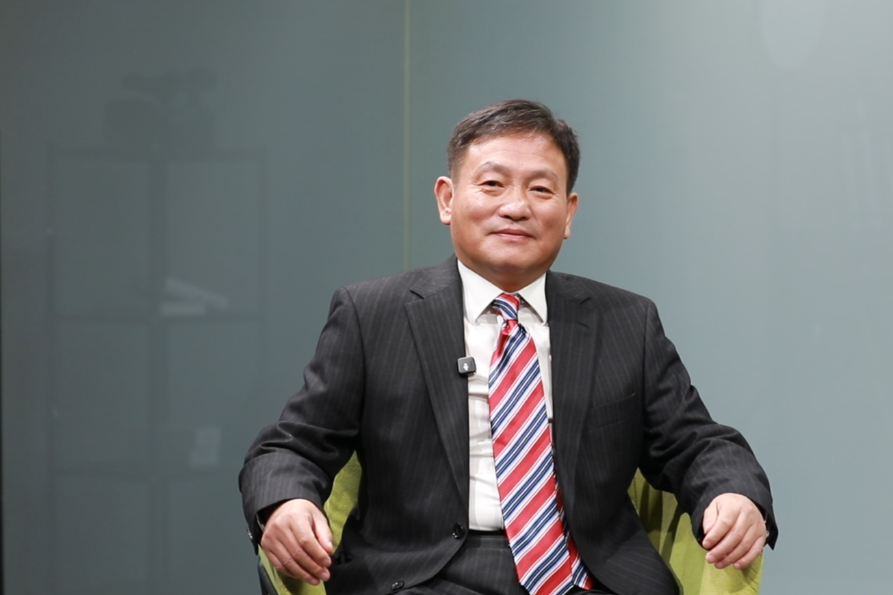
The author is deputy director at the Institute for World Economy Studies, Shanghai Institutes for International Studies. The views don't necessarily represent those of China Daily.
If you have a specific expertise, or would like to share your thought about our stories, then send us your writings at opinion@chinadaily.com.cn, and comment@chinadaily.com.cn.