Blaming others for its woes won't solve US problems








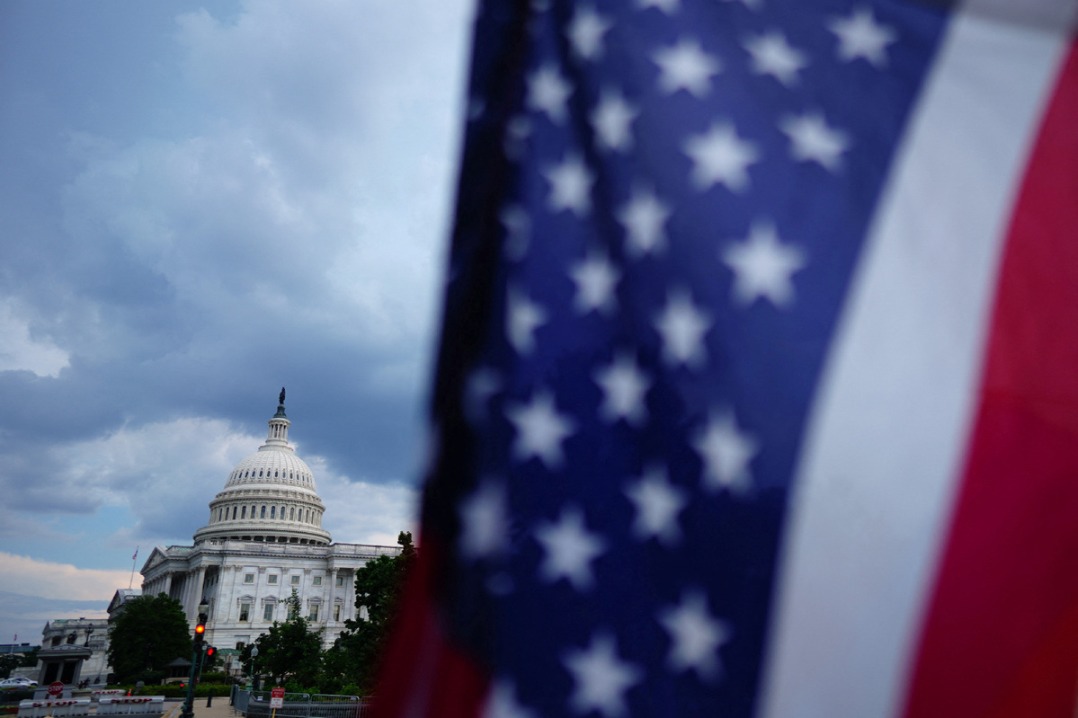
Former US president Donald Trump won the presidential election partly due to the support of millennials and voters in the Rust Belt spurred by Trump's running mate, J.D. Vance, a promising US political star.
So, what drives Vance? His best-selling memoir, Hillbilly Elegy, offers insights. The autobiographical book captures Vance's journey from a small town in the Rust Belt to Yale Law School. Marked by four main themes, Hillbilly Elegy provides a window into Vance's beliefs and values, and sheds light on the stories behind the 2024 US presidential election.
The book Hillbilly Elegy puts emphasis on character. Vance admires the integrity of his community — their kind acts including helping strangers dig cars out of snow and greeting everyone with warmth, their respect for traditions such as paying respect to funeral processions, their deep connection to the roots — as seen in him feeling uncomfortable in revealing his prestigious school background even as a student — and their sense of gratitude, like Vance's appreciation for his mentor, Amy Chua, who advised him to apply for an editor's position in pursuit of a feeder judge's post and to give priority to his relationship with his girlfriend over a distant job opportunity. He says these were the best pieces of advice he received in his life.
Vance's emphasis on character is based on a simple yet powerful principle: people's goodwill toward each other, as was evidenced in the spirit of the Flying Tigers, which remains a testament to the enduring friendship and mutual support between China and the US. Vance says in his book that his great-grandfather served in World War II, fighting against the Japanese in the Pacific.
The memoir of the vice-president-elect highlights the importance of resilience, narrating the story of two generations on the move: his grandparents left small-town Jackson in Kentucky's Appalachian Mountains in the late 1940s for Middletown, a steel town in Ohio where they built a middle-class life during the manufacturing boom. Decades later, Vance himself moved from Middletown to New Haven, San Francisco, and then to Washington, D.C., and other cities. He doesn't shy away from sharing his difficult childhood: his parents divorced early, and he was raised by his mother, a nurse with a long history of drug abuse and a chaotic life.
Studies and personal accounts suggest children from a background such as that of Vance often give up on themselves. Yet his grandparents, particularly his strong-willed, cigarette-smoking, gun-toting grandmother, provided him with a rare sense of security to overcome his painful childhood experiences.
During his formative, high-school, years, Vance put his faith in the mantra "hard work pays off", working at a grocery store, laboring at a tile company one summer before enrolling in Yale and shining in academics at the university with the help of mentors such as Chua, and his girlfriend and spirit guide, Usha. These experiences laid the foundation for his ability to handle the challenges he faced later in life.
What's more, Vance has said it is important for the US to properly handle the drug crisis at home. Synthetic opioids are the leading cause of drug-related deaths among people aged 18-49 in the US. And Vance says in the book that his grandmother once questioned the priorities of a society that "could afford aircraft carriers but not drug treatment facilities" for people like his mother. This gives rise to a bigger question: Why does the US squander taxpayers' money on freedom-of-navigation operations in the Asia-Pacific instead of spending on drug treatment and rehabilitation at home?
As a country that has effectively combated drug trafficking and abuse, China offers a successful drug-combating model. Pooling resources to address the US' opioid crisis could be a shared goal, especially given the common challenges both countries face.
Graham Allison, a professor at Harvard, has said Sino-US relations should transcend zero-sum, "either-or" games. With pressing global challenges like climate change, AI regulation and drug control, only by working together can the two countries build a safer, more prosperous world. Even history tells us that cooperation benefits all, while conflict harms everyone.
The book Hillbilly Elegy also talks about responsibility. Vance has criticized the culture where individuals increasingly blame society or government for personal setbacks. He shares two stories: that of a friend who quit his job because he hated waking up early in the morning, and blamed his failure on "Obama economy"; and a co-worker who took long bathroom breaks during office hours. So blaming job losses in the US on "Obama shutting down coal mines or "Chinese grabbing all jobs" is ridiculous.
Following Vance's logic, blaming China for all the US' woes is an effort to create a false sense of crisis? If the real objective is to push the US and China toward the "Thucydides trap", the American people should question whether both countries falling into the trap is in their best interest. And people in general should remember that blaming other countries or external forces for domestic issues rarely addresses any of the issues.
The author is an associate professor at the Party School of the Hainan Committee of the Communist Party of China. The views don't necessarily represent those of China Daily.
If you have a specific expertise, or would like to share your thought about our stories, then send us your writings at opinion@chinadaily.com.cn, and comment@chinadaily.com.cn.