



Building a fair world order







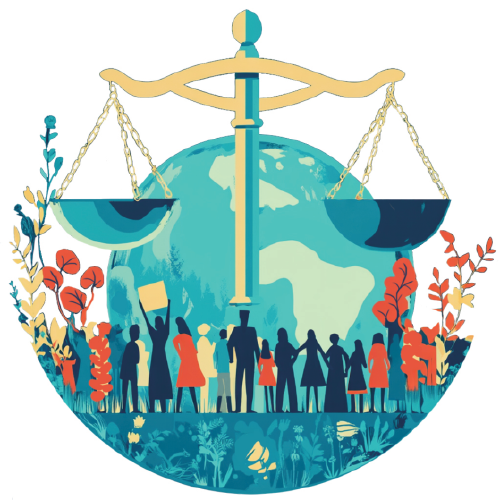
While the multipolar world order is still honing its craft, several key issues must be addressed to achieve the true progress we so emphatically strive for in public policy
As we grapple with the twists and turns of today's geopolitical realities, responding intelligently to even unintelligent foreign policy actions, while trying to reconcile them with domestic policy needs, becomes increasingly challenging. At this inflection point, the global majority is facing numerous policy issues, which require rigorous scrutiny of the existent politico-economic situation and careful consideration of a world order reform rooted in multipolarity.
Complex interdependence has been a constant in international affairs, but it has never been as pronounced as it is today, largely due to the increased interconnectedness among countries, with globalization and the digital revolution serving as the primary drivers of this ever-increasing complexity. At this largely unfair turn of events under the unipolar system the politico-economic situation becomes increasingly concerning with each passing day, particularly due to the crisis in Ukraine and Israel's war on Gaza.
These two events stand out primarily because they are key contributors to increased awareness of the true nature of unipolarity and what it has always represented. In other words, the current world order is less about upholding "Western values" in public policy and more about maintaining global supremacy. This has led to growing support for a multipolar world order among sovereign states that no longer wish to subordinate their national security and sovereignty, instead seeking fair and just treatment in global geopolitics.
While it is not an overnight process, multipolarity is steadfastly setting the stage for the future mise-en-scène of the global order. In retrospect, this process spans nearly three decades, with political discourse crystallizing in the late 1990s through the influence of two countries: China and Russia. In a 1997 joint statement on a multipolar world and the establishment of a new international order, both countries expressed their determination to strive for an international order based on the Five Principles of Peaceful Coexistence. Since those years, the process has evolved into a larger alliance, bringing together more than two countries. The BRICS economic bloc and the Shanghai Cooperation Organization represent major milestones in the realization of a multipolar world order. However, amid the growing alignment toward multipolarity, the workings of this world order remain largely inchoate. As the multipolar world order takes shape, the political constellation of forces must carefully address several issues that have led to complete disillusionment with unipolarity.
So, what are the key issues we need to address in the multipolar world order?
The first question to consider is whether states can establish a more just and fair system of governance that serves more than just a select few, both in their foreign and domestic policies. Thus, the first issue is defining value systems that do not amount to doublespeak. The current system, established by the Western countries, has often been the opposite of what it claims to be. The liberal international order, being the backbone of the unipolar world order, has been less about liberalism and more about restricting freedom. It has been used skillfully to enforce the West's own interpretation of what things mean and impose that on the rest of us. As a result, various forms of gaslighting, deception, and atrocities have occurred in the decades following World War II. Replacing Taliban with Taliban is a prime example among many.
The current structure of the unipolar system necessitates concomitant scrutiny of several themes to ensure that the emerging world order does not become a similar system under a different name. As such, a more just and fair system urgently requires states to examine the problem of Western-centrism in economic development in the era of multipolarity and multilateralism. The issue of Western-centrism in economic development is an old topic but it remains new. Historical examinations of economic development strategy reveal a demoralizing picture in which global development paradigms, have primarily served the interests of the imperial core. As a result, the world's moral code has been for sale for a considerable amount of time, leading to political mercantilism in public policy. To maintain its supremacy, the unipolar system has placed the unprincipled and unqualified opportunists in high positions within government under the guise of "democracy." It also pertains, in most cases, to the Western-established international organizations. Despite sounding like an oxymoron, it is a poignant reality. Interestingly enough, this trend has adversely affected not only the Global South but also Western countries, albeit to a lesser extent. Many are of the opinion that the current politico-economic system is rigged against them while the political establishment has become increasingly detached from the public. As a result, we are witnessing increased conflicts, disorder, and chaos around the globe. This outcome leads us to another key issue: trust, which is at an all-time low and requires careful examination.
It is at this crucial point in human history that the Global South is grouping together to form the multipolar world order. Another question that the governments of the Global South need to consider is whether the system can deliver on its aspirations and promises. In this pursuit, another key issue we need to address is the two-tier justice system within the existing international legal framework. For instance, the principles of "self-determination" and "sovereignty" have often been in conflict with each other and have been skillfully utilized by the West for its political advances. At this point in time, the interests of powerful states within the unipolar world order ostensibly outweigh or undermine the principles of fairness and justice. To rectify this situation, states within the multipolar system must overhaul the mechanisms that define the workings of the international legal system. Another issue deserving attention is the concept of the "rules-based international order", fervently promoted by the West to justify its profound violations of international law.
Sovereign states should also be cautious of the claim that the new multipolar world will be "a real democracy", first because the whole business of democracy has become tainted over the past decades. Second, it was never the ideal form of governance, even at its inception. Numerous acts of malfeasance have been committed in the name of democracy. In the words of Aldous Huxley, "the perfect dictatorship has the appearance of a democracy".
In the end, the question of "What is the better world order?" has been a topic of discussion for a significant period. This moment in history is unique, however, because the global majority has never been so empowered to make choices of their own will. In this sense, the world is changing, driven by countries united by common vulnerabilities. However, concerns remain, and in the fight against the current hegemon, the multipolar coalition must be cautious not to become a monster itself. To rephrase, while the idea of a multipolar world order sounds promising, its success hinges on how well it is implemented. This time, in the multipolar world order, let us choose good over evil by effectively navigating the key issues facing humanity that stem from our differences.
The author is a policy analyst and researcher at the Social Research Center in Baku, Azerbaijan. The author contributed this article to China Watch, a think tank powered by China Daily.
The views do not necessarily reflect those of China Daily.
Contact the editor at editor@chinawatch.cn.





