



What Trump augurs for Sino-US ties







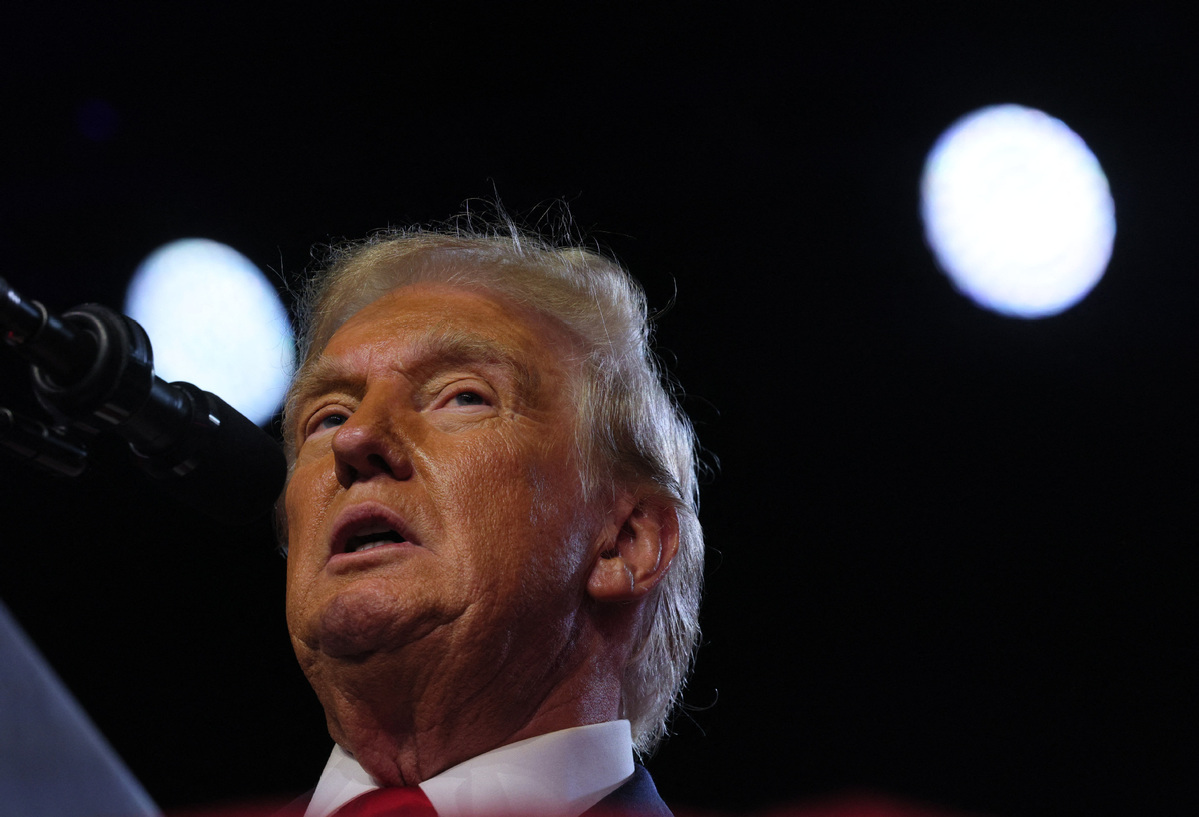
The rhetorical heat remains. The partisan smoke has not yet cleared. Nonetheless, it is surprisingly sure that Donald Trump, the 45th US president, will return to the White House as the 47th US president with a surprisingly decisive victory. US presidential elections have consequences and while Sino-US relations will be one among many, it will be a big one.
It is no exaggeration that nothing matters more for global peace and prosperity, over and above the obvious well-being of the American and Chinese peoples, than good, stable relations between the two largest economies of the world. Everyone wins when Sino-US relations are good; everyone loses when Sino-US relations are not stable.
Consider the background in US politics. It is probative, even revelatory, that while Democrats and Republicans fight over almost every imaginable issue, promulgating radically opposing worldviews, they are remarkably unified in taking a tough stand on China.
In fact, the two major political parties try to outdo each other in being (or just appearing) "tougher" on China. "Soft on China", on the other hand, can be a career-wrecking epithet.
Why American attitude toward China has been toughening over the past 10 years or so is beyond the scope of this article, but to assume it is all some deep-seated conspiracy to isolate, weaken and contain China would be to miss essential features of Sino-US relations that could help reverse the deterioration.
Yet the US' China policy was not much featured in the harsh, disputatious election campaign — other than some unsurprising rote rhetoric. This relative unimportance is a good thing. Sure, both Trump and Democrat candidate Kamala Harris criticized the other's China policy, but far more substantial in their non-stop, calumnious debates were, domestically, illegal immigration, the economy, abortion, wokeness, taxation, the list goes on, and internationally, the Russia-Ukraine and Israel-Palestine conflicts. That China played the undercard in the campaign rhetoric is a good thing as it affords the winner greater flexibility in optimizing the China policy in the real world.
Over the years, Trump's approach to China has been both consistent and, well, simplistic. On the one hand, he has long blamed weak US policy toward China as responsible for the decline of American manufacturing, an oft-repeated charge that few economists support. On the other hand, Trump professes appreciation and a kind of admiration for the Chinese leader.
Trump is rightfully called "transactional" in that he seeks to make what he believes to be favorable deals for the United States and his perceptions of how such deals would enhance his own image. "Transactional" meaning ideology-free; some would say "values-free".
Trump would not likely care much about "human rights" or "minority rights" in China. He would not focus on China's domestic issues, only those that, in his worldview, affect the US. He would care about drug interdiction, balance of trade, economic competition, and the like.
Trump relishes trade war. He has described himself as "Mr. Tariffs." He sees tariffs as the go-to, first policy prescription for various global ills, whether those of adversaries or allies. He is correct that tariffs would hurt other countries but incorrect that tariffs would overall help the US.
Trump will almost certainly raise tariffs, across the board and with special intensity on Chinese goods. The consequences of such tariffs would almost certainly lead to lower economic efficiencies globally and higher prices for American consumers. However, Trump being Trump, he would seek to make some kind of grand deal with China.
It is usually the case that one can forecast a US president's foreign policy by assessing the background and policy positions of those he picks for the top foreign policy positions, such as secretary of state, national security adviser, and other senior roles. This truism is less true for Trump, who has a history of flouting expert advice, dismissing senior personnel as if actors auditioning for bit parts, and going with his gut instincts.
Moreover, Trump seems to have learned questionable lessons from his first presidential term, when many of his former senior staff turned against him, leveling withering criticisms, and so now he prizes personal loyalty above professional competence, a worrying hierarchy of priorities for a US president. I suspect that those deemed most loyal to Trump are those most likely to hold rigid positions opposing China. Yet Trump is bold and fearless and likes to surprise.
What to do? My three-fold prescription for Sino-US relations is simple — I offer both sides the same advice: Don't make things worse, such as by pushing against mutual "redlines"; do find small areas of cooperation, such as fighting illegal drugs, organized crime, epidemics, AI risk, and climate change; and allow time to pass peacefully and to work its calming magic.
The Chinese and American peoples will support it. And the peace and prosperity of the world depend on it.
The author is chairman of The Kuhn Foundation and creator/host of Closer To Truth on science and philosophy, and a recipient of the China Reform Friendship Medal.
The views don't necessarily reflect those of China Daily.
If you have a specific expertise, or would like to share your thought about our stories, then send us your writings at opinion@chinadaily.com.cn, and comment@chinadaily.com.cn.





