With the support of its long-standing academic tradition, the study of ancient Chinese classics has achieved evident development in the past 30 years. Meanwhile, encouraging progress has been made over the past decade in the field of Western classical studies in China, despite the fact that the field is still in its early stages.
Classical studies scholar Liu Xiaofeng says that the academic progress seen in the study of Western classics will surely help the study of ancient Chinese classics take on a fresh look.
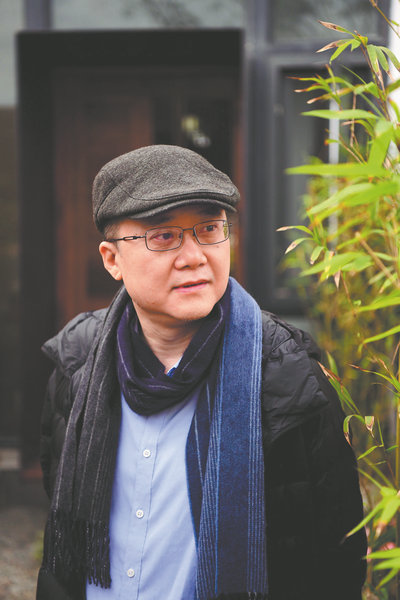
The professor at the School of Liberal Arts of Renmin University of China expounds on his idea of promoting the field of Chinese classical studies, one that integrates the study of ancient Chinese classics and Western classical studies, as the inaugural World Conference of Classics is set to be held in Beijing from Wednesday to Friday.
The three-day event, co-organized by the Chinese Academy of Social Sciences, China's Ministry of Education and Ministry of Culture and Tourism, as well as the Ministry of Culture of Greece and the Academy of Athens, is joined by more than 400 Chinese and foreign scholars, discussing the enduring intellectual legacy of ancient civilizations and its relevance in the modern world.
Liu will address the conference clarifying that classical studies, both in the East and the West, reexamine the past with a modern perspective and offer wisdom for contemporary society.
According to Wu Fei, professor of philosophy at Peking University, "classical studies" in the West usually examine ancient Greek and Roman civilizations in terms of their languages, literature, history and culture. However, Western scholars these days have increasingly realized the need to involve the studies of other ancient civilizations into the realm of classical studies.
In China, there have long been debates within the academic circle on topics such as: What should China's classical studies deal with? Should the comprehensive study of ancient Chinese classics be called "Chinese classical studies"? Which ancient periods should be considered within the scope of classical studies?
Wu suggests that the World Conference of Classics serves as an opportunity to present recent progress made by Chinese scholars in the fields of Western classical studies and the study of ancient Chinese classics, fostering a more profound and comprehensive dialogue between Chinese scholars and the international classical studies community.
But more importantly, he says the conference will provide inspiration in helping China's classical studies clarify its scope and positions and make its way to the country's higher education system as a formal discipline.
According to him, although many Chinese universities have founded study centers focusing on classical studies, there's still a long way to go in training students, developing dedicated research teams and establishing sustainable communication with other disciplines such as literature, history, philosophy and archaeology.
In Wu's perspective, China's classical studies should cover Western classical studies and the study of pre-Qin period (before 221 BC) Chinese classics. While the historical and modern interpretation of the spirits of ancient Greece and Rome shall be included, the understanding and interpretation of the pre-Qin Chinese classics since the Han Dynasty (206 BC-AD 220) should also be considered within the scope of classical studies.
Liu says that Chinese scholars engaging in Western classical studies should be well-versed in China's ancient classics and hold respect for traditional Chinese culture. Similarly, scholars specializing in ancient Chinese classics should also have a solid knowledge base of Western classical studies.
He adds that nowadays, Chinese scholars on humanities, even those focusing on ancient Chinese classics, have more or less received some academic training in modern Western academic concepts and methods. Yet, that doesn't necessarily mean they are familiar enough with ancient Western classics.
To explain what can possibly be a proper way to cultivate a comprehensive background in classical studies, Liu takes the example of the RUC's experimental undergraduate program on classical studies, which he founded in 2010.
The students of this program are required to take lessons in philology, learning ancient Chinese language, classical Greek and Latin, as well as literature and history, apart from intensive reading on ancient Chinese and Western classics alike.
Liu says that one student of this experimental program, whose undergraduate thesis features Athenian lawmaker and poet Solon and who speaks classical Greek and Latin, has received a doctoral degree in ancient Chinese philosophy.
According to him, under the modern classification system, the ancient Chinese classics have been observed in disciplines such as history, philosophy and Chinese literature. Yet, by promoting "Chinese classical studies", scholars like him aim to integrate the ancient classics studies scattered in these disciplines.
Wu says that the current classification system results in the lack of an overall perspective in ancient Chinese classics studies, and some important aspects are absent.
For example, it's not enough to examine classics like the Shi Jing, also known as The Book of Songs or the Classic of Poetry, simply as a literature work, the Spring and Autumn Annals as historical records, and I Ching (The Book of Changes) as a philosophical work.
"Classical studies scholars should first of all have a comprehensive understanding of the classical civilizations, before they delve into a specific domain," Wu says.
He will deliver a presentation comparing the philosophy of Aristotle and Confucius at a sub-forum of the conference, and expects to draw inspiration from his international counterparts in order to reexamine Chinese classical traditions.
Speaking of the future of China's classical studies, both scholars emphasize the comparison and resonance between the East and the West, and new thoughts generated in the pursuit of understanding ancient classics in the way ancient people did and interpreting the classics in a modern context.
"It is only after a relatively long period from the classical times and when people come to recognize these works as historical classics with significant relevance to modern society, that classical studies as a discipline can be established," Wu says.
"What's important is not how much of the modern spirit recognized today can be traced in the ancient times, but how ancient wisdom can provide richer dimensions and perspectives to examine and better address contemporary issues."