



A transformative shift in African political systems







The deepening cooperation between China and Africa in the area of political governance marks a significant milestone in the historical relationship between the two regions. This partnership reflects the evolving dynamics of global politics, where the rise of the Global South is reshaping geopolitical landscapes.
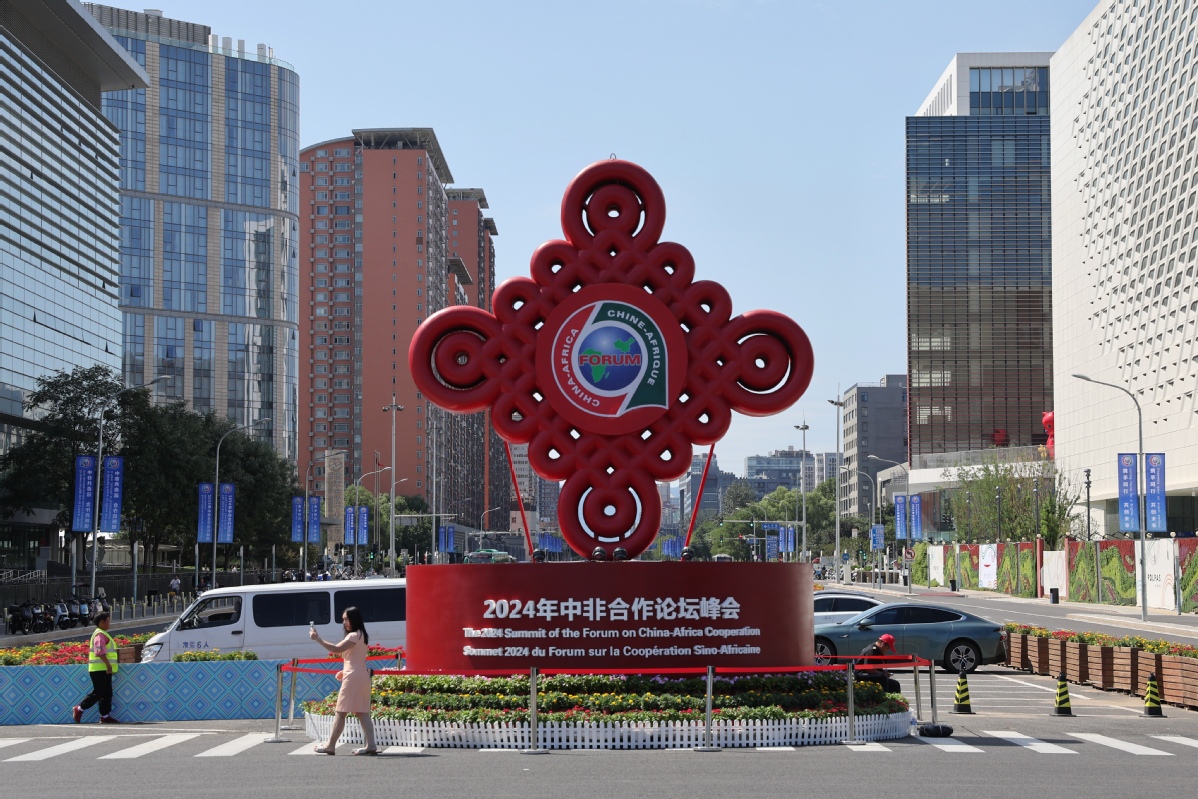
As highlighted by the 2024 Summit of Forum on China-Africa Cooperation held in September, China's offer to enhance governance collaboration with Africa — through experience-sharing, leadership academies and cross-continental studies — signifies a transformative shift in African political systems.
China's relationship with Africa is not a recent development. Since the era of decolonization, China has supported Africa with infrastructure, trade and education. However, the focus has now expanded to governance, reflecting a maturing relationship that moves beyond economic ties to deeper political engagement. This new phase builds on decades of mutual trust, established during Africa's liberation struggles, when China provided moral, political and material support to various African liberation movements seeking independence.
The significance of this shift is profound, especially as it aligns with the growing aspirations of African nations to chart their governance paths while learning from China's experiences. With the rise of the Global South, countries in Africa seek governance models that reflect their unique political realities, and China's success in maintaining political stability and economic growth offers invaluable lessons.
One of the most striking developments from the FOCAC summit in Beijing in September is China's commitment to build a platform for governance experience sharing with African countries. This platform, backed by the establishment of 25 centers focused on China-Africa studies, represents a critical step toward building a knowledge network that can foster African autonomy in political governance.
African nations have diverse political systems mainly hinged on the failed liberal democracy imposed upon us by imperialist powers, from one-party states to multiparty democracies, each with its own unique serious challenges. The China-Africa governance platform offers African leaders the chance to draw lessons from China's governance structure — particularly its capacity to maintain stability, execute long-term plans, and implement policies with remarkable efficiency.
China's ability to manage its development process while maintaining political cohesion, despite the challenges posed by rapid industrialization and modernization, resonates deeply with many African nations. The opportunity to exchange ideas, policies and strategies within this platform allows African leaders to enhance governance while adapting lessons to their local contexts.
China's offer to train 1,000 members of African political parties and leverage African leadership academies to cultivate governance talent marks a significant assistance to the future of African leadership. This initiative recognizes that governance reforms cannot be successfully implemented without the participation of well-trained and visionary leaders.
One of the key aspects of China's governance model is its long-term vision, embodied in initiatives like its five-year plans. African leaders trained under this program would be exposed to China's meticulous planning process and experience firsthand how China manages to marry political direction with developmental goals. Moreover, the training of political cadres would not only bolster governance in individual countries but also foster a shared sense of purpose across the continent. The collective training of leaders from different nations could encourage regional collaboration and unity, which are crucial for addressing transnational challenges like conflict, migration, and economic disparities.
China's growing influence in African governance should be understood within the larger context of global power shifts. For years, Africa has largely relied on Western models of governance, which often came with stringent conditions. However, the African political landscape is complex, and these models have not always produced the desired outcomes, sometimes leading to instability and governance failures. China's engagement presents a refreshing alternative. It promotes a more pragmatic approach, emphasizing development and stability married to ideology-driven governance.
Chinese President Xi Jinping's remarks about building a China-Africa knowledge network for development illustrate that this partnership is not about imposing China's model on Africa but about creating a dialogue where African nations can learn from China's experiences while maintaining their own agency. In a world where Western powers still exercise significant influence over African political systems, the rise of China offers African countries a more diversified pool of governance ideas.
As the global order becomes more multipolar, Africa's role in international politics will increasingly depend on its internal political stability and governance structures. Strengthening governance through collaboration with China can place African nations in a better position to engage on the global stage. As the region becomes more politically stable and economically vibrant, it can offer more cohesive policies, making it a stronger player in international negotiations.
Furthermore, Africa's collaboration with China in governance reflects the aspirations of a new generation of African leaders who are keen on moving away from external dependencies and toward self-reliance. The knowledge-sharing network proposed by China aligns well with these aspirations, enabling Africa to craft governance models that reflect its own values, priorities, and realities.
The deepening cooperation between China and Africa in governance is a landmark development that should be celebrated. It moves the relationship beyond mere economic exchanges into a realm that touches the core of African development — political governance. While some may argue that China's involvement could come with risks, particularly concerning political autonomy, the partnership's focus on experience-sharing, training and dialogue suggests that it is based on mutual respect and benefit.
For African nations, this collaboration with China presents an opportunity to break free from outdated governance models that have stifled progress. By learning from China's successes — and its challenges — African leaders can gain invaluable insights that will help them steer their nations toward political stability, development, and sustainable growth in the 21st century. This partnership could, in time, prove to be a turning point in Africa's quest for self-governance and global relevance.
The author is the National Vice-Chairperson of the Communist Party of Kenya.










