


Forum highlights modern relevance of traditional Chinese culture







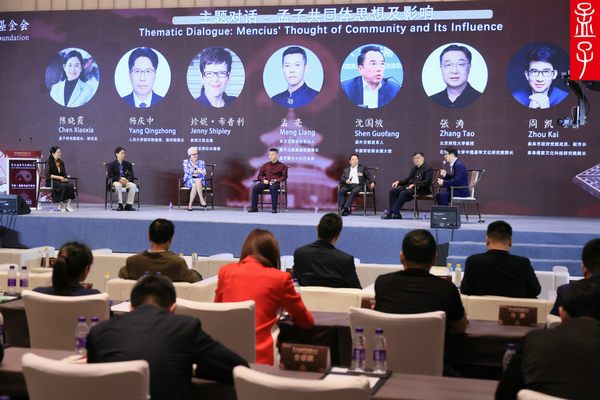
The 5th Oriental Civilization Forum, hosted by the Mencius Foundation, was held on Saturday in Beijing.
With keynote speeches and thematic dialogues, the event gathered dozens of experts, scholars, and business leaders from home and abroad to discuss the contemporary relevance of the wisdom of Mencius (372-289 BC), traditional Chinese medicine (TCM), and I-Ching (Book of Changes).
Zhang Tao, dean of the China Institute of Yijing Culture at Beijing Normal University, said that I Ching first discussed the principle of "Unity of Heaven and Man," which then became the paramount principle in Confucianism, Buddhism, Taoism, and TCM, and shaped the way Chinese people deal with the relationship between man and nature.
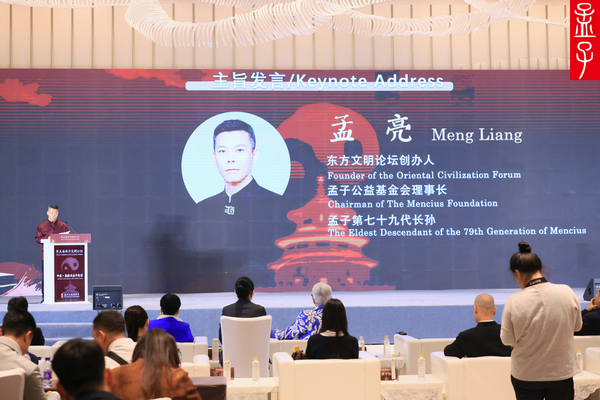
Meng Liang, founder and chair of the Mencius Foundation, argued in his speech that I-Ching, a foundational text for the Confucian and Daoist philosophical traditions, is a treasure trove in ancient Chinese civilization, still exerting a profound influence on our culture, thoughts, and lives.
"Even though Mencius did not make any reference to I Ching in his work Mencius, his remarks are full of the influence of the ancient classic," Meng said.
For example, Mencius exhorted rulers to practice benevolent governance for the general welfare of the governed, and this is in line with the statement that "the great virtue of heaven and earth is called life (sheng)" in I Ching.
According to Chen Xiaoxia, president of the Mencius Institute, Mencius, who lived after Confucius (551-479 BC), promoted and enriched Confucianism, which advocated the political principle of governing the country through benevolence and winning people's support through virtue, to create a society of great harmony where everyone lives in fraternity and mutual assistance. Chen argued that Mencius' political thoughts are still relevant today for building a global community.
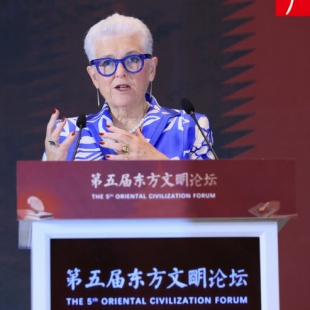
Jenny Shipley, New Zealand's former prime minister and a board member of the BOAO Forum for Asia, said in her speech that Mencius' thoughts offer a moral and ethical framework that remains highly relevant as we embrace the complex but exciting future ahead of us.
She argued that Mencius's thoughts on benevolent governance underscore a focus on personal accountability, professional integrity, and moral leadership. "If we as leaders applied these simple parameters today, we would seek to undertake significant self-reflection and self-improvement before making important and far-reaching decisions that could have potentially significant unintended consequences."
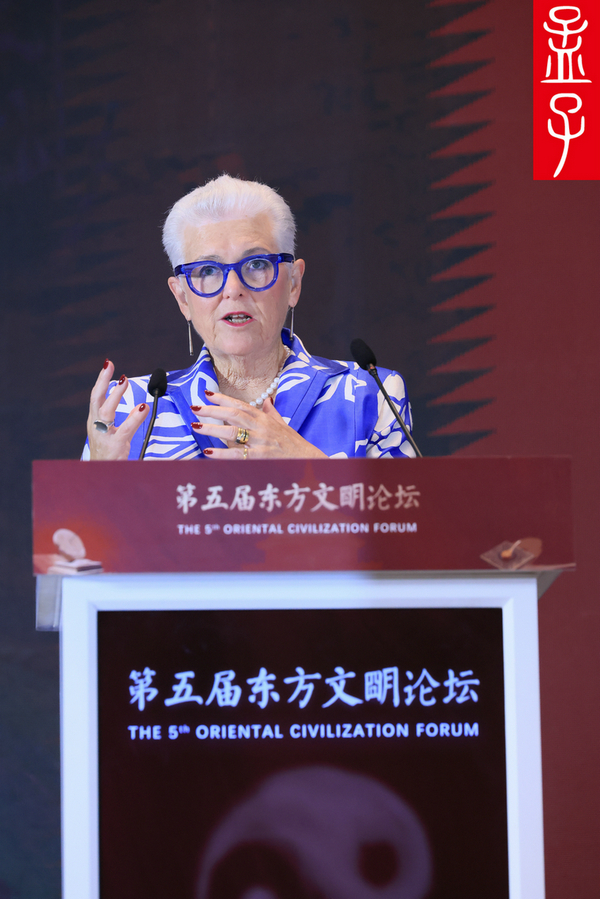
Shipley also hailed Mencius' people-oriented philosophy for leaders to better grasp the opportunities and manage the risks posed by new global challenges like artificial intelligence. "While AI can bring efficiency and optimization, leaders must ensure that AI complements human decision-making rather than replace it entirely, especially in areas that require moral discernment, such as healthcare, law, and governance," she said.
Koh Hock Kiat, founder and director of Singapore Xiang Institute, said that nowadays, especially in Southeast Asia, more and more entrepreneurs are learning Confucianism. He believed that contemporary new Confucian entrepreneurs were the pillars of the great rejuvenation of the Chinese nation and builders of re-globalization and modern business civilization.
The "Oriental Civilization" series forums, initiated in 2017, aim to disseminate the thoughts of Confucius and Mencius, improve understanding of different civilizations, address bias and controversy, expand common ground, and contribute to the world's sustained peace and prosperity, according to their organizers.