



Sci-tech program mirrors deepened Sino-African agricultural cooperation







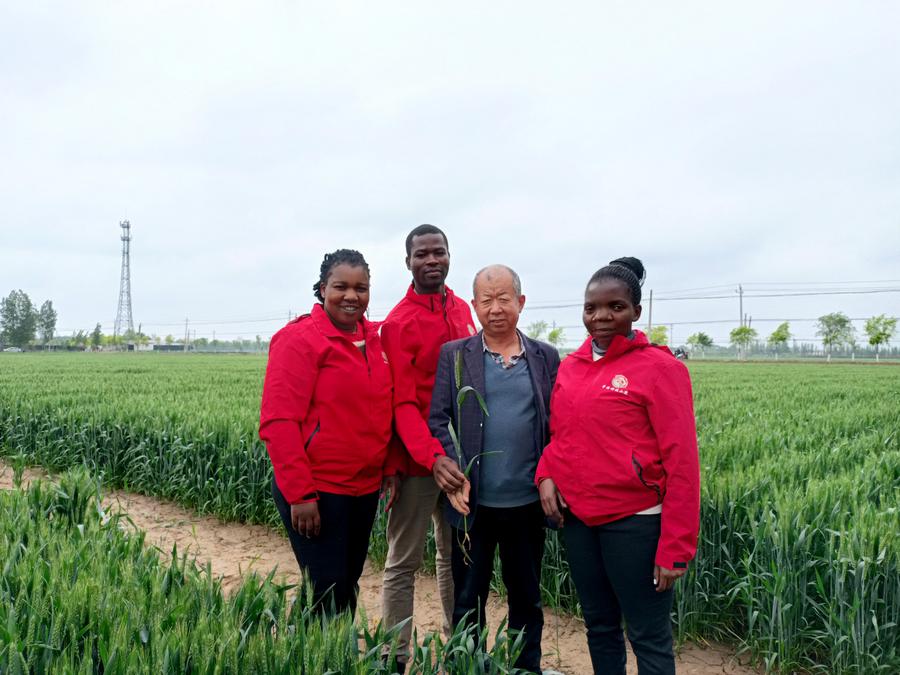
BEIJING — Francina Lerato Kuwali, a 35-year-old student from Malawi at China Agricultural University, returned recently with the exciting news that she and her classmates had helped local farmers in her country achieve a maize yield of 9,000 kilograms per hectare, nearly three times the local average.
Over the past year, they have applied the agricultural techniques learned at CAU to assist 30 farmers in Malawi with maize cultivation, as part of the cultivation plan under the cooperative postgraduate education program called "China-Africa Science and Technology Backyard".
Launched in 2019, the program is being implemented by CAU in both China and Africa. It aims to foster high-quality agricultural talent in African countries through agricultural practice and technical exchanges, leveraging China's experience to support Africa's agricultural development.
Supported by institutions such as the World Bank, the Bill and Melinda Gates Foundation, and the Food and Agriculture Organization of the United Nations, the program draws master's students in agriculture from Africa, including exceptional faculty and students from partner institutions, young professionals from government, and technical managers from the agricultural industry.
Agriculture is the backbone of Malawi's economy.
At the same time, the biggest challenge lies in low yields and unaffordable machinery or fertilizers, said Kuwali, who works as an agricultural extension worker and who came to CAU in 2022 in the belief that she might learn from China's excellent experience in the area.
Given the similarities between African and Chinese agricultural production, such as the dominance of smallholder farmers and relatively low productivity levels, the program aims to explore and develop a new talent cultivation model for China-Africa agricultural cooperation, said Jiao Xiaoqiang, head of the program and an associate professor at CAU's college of resources and environmental sciences.
"Our main goal is to create a model that can be shared in Africa, helping local farmers acquire, understand and apply technology, and to explore a new path for the green transformation of African agriculture and food security," he said.
Notably, the program has proved pragmatic and effective, following a tailored training plan. Students spend the first year in China learning theory and practical skills, the second year applying Chinese agricultural techniques in Africa, and the third year back in China completing their research and thesis.
Since its establishment, the sci-tech backyard program has recruited 91 practice-oriented agricultural talents focused on green agricultural development across 12 African countries. So far, 36 of them have completed their studies, and many graduates have returned to Africa to conduct research on the front lines of agricultural production in their home countries.
CAU, in collaboration with domestic partners, has established seven sci-tech backyards in countries such as Zambia, Tanzania and Malawi.
The deepening Sino-African agriculture cooperation has not only enhanced crop production, but also helped achieve several broader goals in Africa, including advancing agricultural technology, improving nutrition and health, and contributing to poverty-reduction efforts.
In 2021, CAU, in collaboration with the local government of the Morogoro Region in Tanzania, started an agricultural project called "Small Beans, Big Nutrition".
By introducing the maize-soybean intercropping technique and methods for making soy products to local villagers, the project aims to supplement the local diet to improve the nutrition levels of women and children in the region.
Maize is a staple food in Tanzania, but it lacks essential nutrients needed for human growth, such as proteins, vitamins, tryptophan, and lysine. Data show that in 2023, 30 percent of Tanzanian children under five suffered from stunted growth.
Soybeans are high in protein and rich in vitamins, minerals, and beneficial plant compounds, making them a suitable choice for nutritional supplements for the local population.
Therefore, soy milk — a new addition to the local diet — is gaining popularity among villagers in Morogoro, especially after project members demonstrated how to make it using soy milk makers purchased locally.
"Soy milk is nice, especially for children to improve their health, and the project should reach as many people as possible," said Rozalia Grayson Rwegasira, an official from the Morogoro regional commissioner's office.
Smallholder farmers in Africa are eager for technological advancements and environmentally friendly solutions from Chinese agricultural research institutions to enhance their resilience against natural disasters caused by global climate change, according to Prasanna Boddupalli, director of the global maize program under International Maize and Wheat Improvement Center.
From the perspective of Tamani Nkhono Mvula, a Malawian agriculture expert, one of the biggest gaps in African agricultural development is the issue of agricultural research and development, while the increase in productivity largely comes from investment in science and technology.
The deepening agricultural cooperation in local communities, exemplified by the sci-tech backyards, has not only boosted those technologies that are tailor-made for various challenges, including plant diseases, insect pests and climate damage, but also helped cultivate the capabilities of African residents regarding sci-tech innovation.
"In recent years, we have trained a group of high-quality professionals who understand agriculture, love rural areas and care about farmers in Africa. Through them, advanced Chinese agricultural technology has been implemented in Africa, enhancing the spontaneous development capacity of local farmers, and helping them increase food production and incomes," said Jiao, head of the backyard program.
Xinhua




















