


Safeguarding the cultural landscape








Let the tech work
Some scholars elaborated on the role technology can play in protecting cave temples. For example, Feng Wei, a computer science professor at Tianjin University, introduced the application of artificial intelligence in inspecting minor changes in cave temples, a significant step in preventive conservation.
According to Feng, preventive conservation means periodically observing the state of cultural relics to see if they have minor changes, then analyzing the reasons for such changes and working on the external reasons so that changes can be relieved or stopped, thus protecting the relics.
However, cultural relics, movable or immovable, are characterized by their long life span and slow changes that are not visible in a short time, says Feng. That poses challenges for preventive conservation at the beginning.
Feng and his team then studied the timely detection of minor changes in cave temples and invented an AI-empowered method to accomplish this task, which can also be used for other types of cultural relics.
They believe comparing images of the same cultural heritage is the most common and effective way for observing changes and analyzing the three fundamental elements that can lead to changes in imaging — camera, light conditions and changes in the cultural relics themselves.
As a result, they have worked to control the former two elements to make them the same as before so that the new image can be compared and judged as to whether the relics have changed.
But it is not easy to keep the two conditions unchanged since "minor changes in each one can lead to a big difference in images", says Feng. For example, the fast upgrading of cameras makes it difficult to find the same camera from decades ago to take a picture. That's where AI comes in.
"AI can learn from the historical image and create a virtual camera lens model. Then, the virtual lens can cooperate with modern cameras to restore the original camera and its pose when taking the old photo, keeping the camera factor unchanged," says Feng.
With the help of AI, the original light conditions can also be reproduced.
The team invented the equipment to finish the task, which included a robotic platform, a specialized camera and a custom-made controlling software. "We put the equipment in place and use a historical image to lead the robotic platform to restore the camera to the original pose and reproduce the light conditions to take a new photo. Then AI can compare the changes," says Feng.
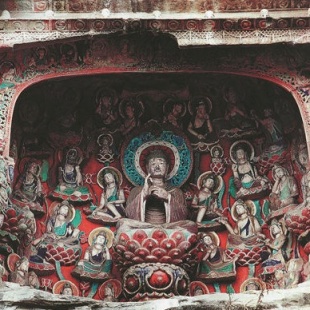
Now, his team has fixed more than 100 point locations in 11 caves among the Mogao Caves, taking photos every year for more than a decade to follow the state of change. "In a cave with murals of more than 100 square meters, we can discover changes as small as a dozen microns," says Feng.
They have discovered during more than a decade's time that in some areas "cave diseases" are frequent, the average deterioration speed of the murals in the caves open to the public is over 10 times faster than those not.
"This has provided scientific data to support people's decisions in creating a balance between developing tourism and protecting the cave temples," says Feng.
He believes AI also has a bigger role to play in the knowledge related to cave temples. "The materials about cave temples may not be easy to understand for many tourists who often require the help of tour guides. But AI may help in creating new explanation devices and help facilitate education about the caves," says Feng.