



Unsettling behavior







NATO’s push into the Asia-Pacific is threatening the peace and stability of the region
The Asia-Pacific region has been a key contributor to global stability thanks to its sustained peace, stability and prosperity since the end of World War II. However, the United States’ “Indo-Pacific” strategy, hyping-up of security cooperation between European and Asian countries, and pushing for NATO’s Asia-Pacific expansion are disrupting the peace and stability of the Asia-Pacific, damaged the economic and trade environment in the region, and exacerbated global concerns about a new Cold War.
The US began to push for NATO's Asia-Pacific expansion at the 2006 NATO Riga Summit. The then-US ambassador to NATO Victoria Nuland proposed the concept of “global partnership”, aiming for NATO to establish contact mechanisms with the “Asia-Pacific Four”, namely Japan, the Republic of Korea, Australia and New Zealand. However, the process proceeded rather slowly until the Joe Biden administration took office in 2021.
Taking up the baton of the Donald Trump administration’s anti-China policies, the Biden administration has attempted to accelerate NATO’s expansion into the Asia-Pacific and integrate its security cooperation systems in the US, Europe and Asia, so as to enhance its competitive advantages and respond to the “China challenge”.
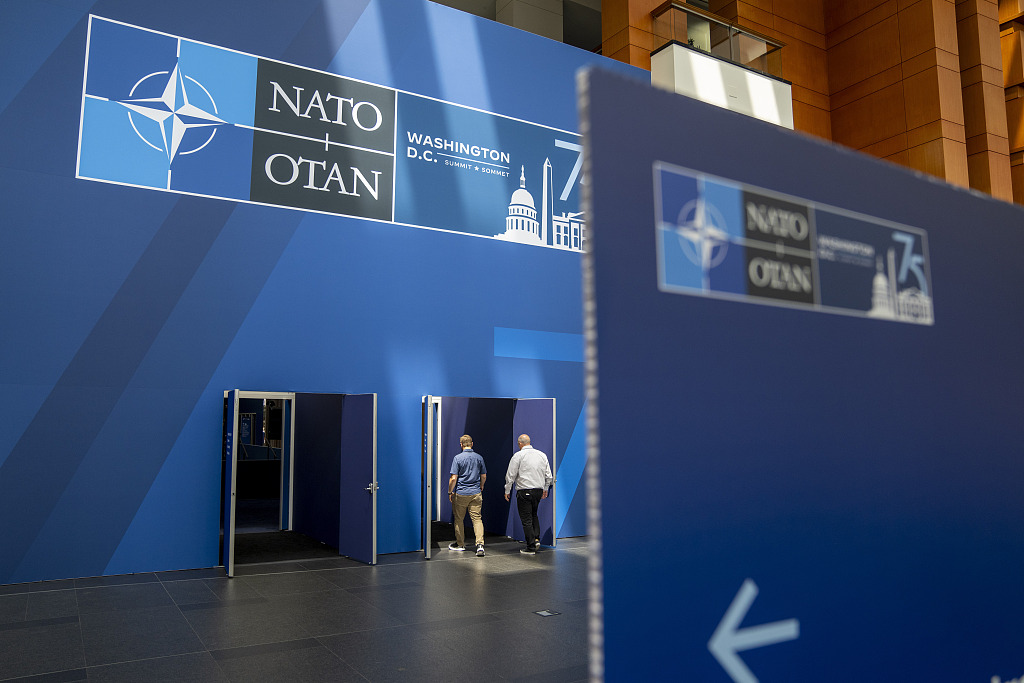
The US hosted the NATO Washington Summit in July, which, for the third consecutive year, invited leaders of the Asia-Pacific Four to participate. The summit has remarkably strengthened NATO’s security and strategic interactions with Asia-Pacific countries, and underlined strong and deepening cooperation between NATO and “Indo-Pacific” countries.
NATO’s Asia-Pacific expansion runs counter to the wishes of countries in the region and contradicts NATO’s own positioning as a regional defensive alliance. Most importantly, it poses harm to the Asia-Pacific region from various aspects.
First, NATO’s attempts to expand to the Asia-Pacific have stirred up unease and discontent among regional countries. Unlike overly enthusiastic Japan and some other countries, most Asia-Pacific countries prefer to enhance cooperation with both China and the US, rather than choosing sides.
A survey conducted by the ISEAS-Yusof Ishak Institute in Singapore in April showed that members of the Association of Southeast Asian Nations “do not want to choose sides at all”, but if “forced to align itself with one of the strategic rivals”, more than half of respondents “preferred China over the US”.
A recent article by the Lowy Institute, an international policy think tank in Australia, stated that some thought leaders in Southeast Asia had a negative view of the US geopolitical presence and showed little or no confidence in the US security role.
In 2024, Indonesia’s newly elected president Prabowo Subianto noted that Indonesia will continue to maintain strong cooperation with China while striving to expand and deepen close relations with the US.
Second, NATO’s expansion into the Asia-Pacific could introduce bloc confrontation and an arms race into Asia. This not only raises security risks in the region, but may also disrupt the decades-long peace, stability and regional economic integration, as well as hinder economic growth in the region.
But encouraged and orchestrated by the US, some Asia-Pacific countries are opening Pandora’s box of a new arms race in the region.
On the unilateral level, the US continues to increase military spending in the Asia-Pacific. The US 2024 fiscal year budget assigned an all-time high of $9.1 billion to the China-targeting Pacific Deterrence Initiative. Other countries such as Japan and Australia also reported record military budgets.
As a result, arms purchases in the Asia-Pacific have skyrocketed. The Stockholm International Peace Research Institute found that the Asia-Pacific saw the most prominent increase in arms purchases between 2018 and 2022.
On the multilateral level, the AUKUS security partnership among the United Kingdom, the US and Australia continues to upgrade nuclear-powered submarine cooperation. The US, Japan and the ROK are carrying out more substantive and regular trilateral military cooperation. The White House even issued a statement to welcome the growing military spending and contributions to global security from NATO’s “Indo-Pacific” partners.
Finally, NATO’s Asia-Pacific expansion has also heightened concerns about a new global Cold War. Recent NATO summits have been characterized by their conspicuous Cold War mentality, belligerent rhetoric and hyping-up of a “China-Russia threat”. In June 2021, at his first NATO summit after taking office, Biden staged an anti-China show by making a speech in Brussels accusing China of attempting to undermine transatlantic unity and posing a long-term systemic challenge to collective security.
Since then, NATO has increasingly mentioned China in its documents in unfriendly tones. These smears and exaggerations have fanned geopolitical tensions, raising global concerns about returning to the Cold War or entering a new Cold War.
The Asia-Pacific region is a universally acknowledged global economic contributor. With one-third of the world’s total population, it contributed over 70 percent of the world economy and nearly half of global trade from 2013 to 2023. It also registered the world’s fastest growing GDP. The International Monetary Fund's April 2024 Regional Economic Outlook report projected that the Asia-Pacific will contribute about 60 percent of global growth in 2024, remaining the world’s most dynamic region.
The prosperity and stability of the Asia-Pacific did not come easily. The current international and regional hotspot issues and non-traditional security threats have exposed the Asia-Pacific and all of humanity to more risks. The US and NATO should remember the lessons learned from how NATO’s eastward expansion triggered the Ukraine crisis, stop meddling in the Asia-Pacific, and work toward global peace and development.
The author is an assistant research fellow at the Institute of American Studies at the China Institutes of Contemporary International Relations. The author contributed this article to China Watch, a think tank powered by China Daily.
The views do not necessarily reflect those of China Daily.
Contact the editor at editor@chinawatch.cn.





